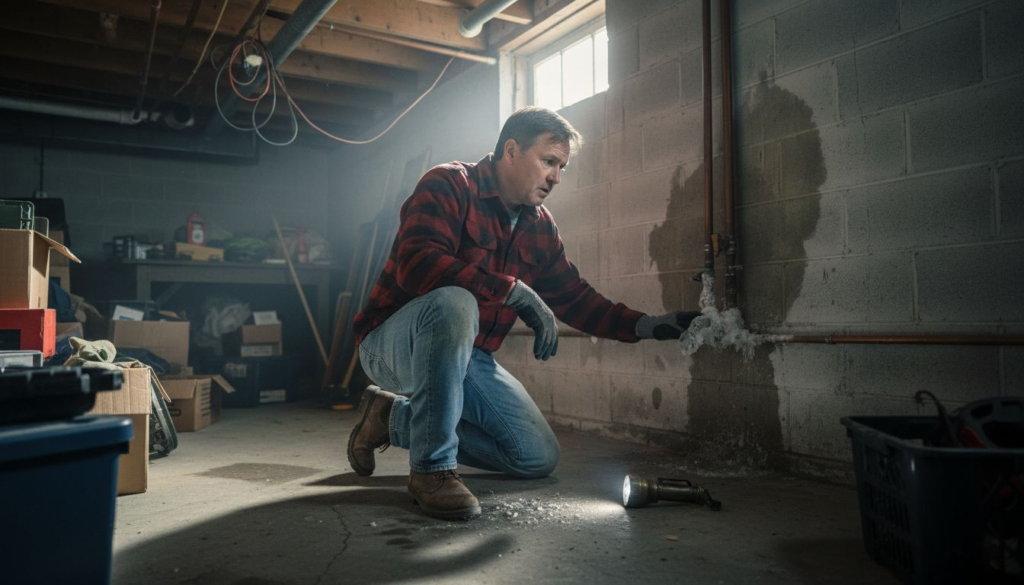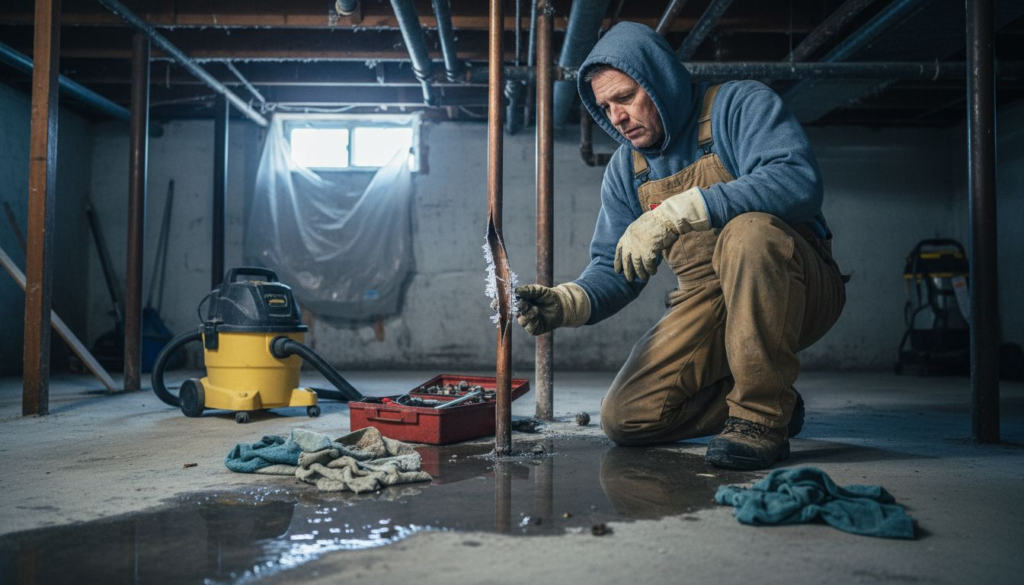
Picture a morning in Belleville when a toilet won’t flush or a cold snap leaves your pipes frozen just as you start your day. Plumbing problems can disrupt your routine, threaten your property, and cost a fortune if not addressed quickly. For homeowners, knowing the basics of plumbing systems gives you power to spot trouble, take smart action, and minimize emergency calls. This guide breaks down how your plumbing really works, helping you handle issues confidently before reaching out for local professional help.
Table of Contents
- Core Definition of a Plumbing System
- Main Types of Residential Plumbing Systems
- How Plumbing Systems Function in Homes
- Local Codes and Permit Requirements
- Risks of Diy Plumbing Repairs
- Common Residential Plumbing Issues to Avoid
Key Takeaways
| Point | Details |
|---|---|
| Understanding Plumbing Systems | A plumbing system is vital for delivering fresh water and removing waste; it’s crucial to distinguish between supply and drainage systems. |
| Importance of Local Codes | Compliance with local plumbing codes and permits in Belleville is essential to prevent costly repairs and ensure safety. |
| Risks of DIY Repairs | Attempting plumbing repairs without expertise can lead to severe damage and health risks; hiring professionals is often more cost-effective. |
| Preventive Maintenance | Regular inspections and maintenance can catch small issues before they become major problems, saving homeowners money in the long run. |
Core Definition of a Plumbing System
A plumbing system is the network of pipes, valves, fixtures, and other components that transport water and remove waste within your home. Think of it as your house’s circulatory system for water. Building plumbing systems are distinct from municipal water distribution networks because they operate entirely within your property lines, which means you own and maintain them. The system serves multiple critical functions: it delivers fresh, potable water to your kitchen, bathrooms, and laundry areas, removes wastewater safely away from your home, and sometimes circulates water for heating and cooling purposes.
What makes your Belleville home’s plumbing unique compared to community water systems is the complexity created by small pipes and indoor infrastructure. Your plumbing uses various materials like copper, PVC, and PEX pipes, each with different durability and cost characteristics. The pipes inside your walls have a higher surface area relative to the water flowing through them, which means water quality can be affected by potential contaminants that accumulate on pipe surfaces over time. This is why understanding how plumbing systems work helps you recognize when something isn’t right. For instance, if water tastes metallic or discolored, it could signal issues with your copper pipes corroding or sediment buildup in older lines.
Your plumbing system also includes the often-overlooked components that keep everything running smoothly: shutoff valves that let you stop water flow during emergencies, traps that prevent sewer gases from entering your home, and venting systems that allow air to move through the pipes so water drains properly. Without proper venting, you might notice slow drains or gurgling sounds coming from your pipes. Modern plumbing is built on principles that have evolved over centuries, but the core goal remains unchanged: deliver clean water when you need it and remove waste safely before it becomes a health hazard.
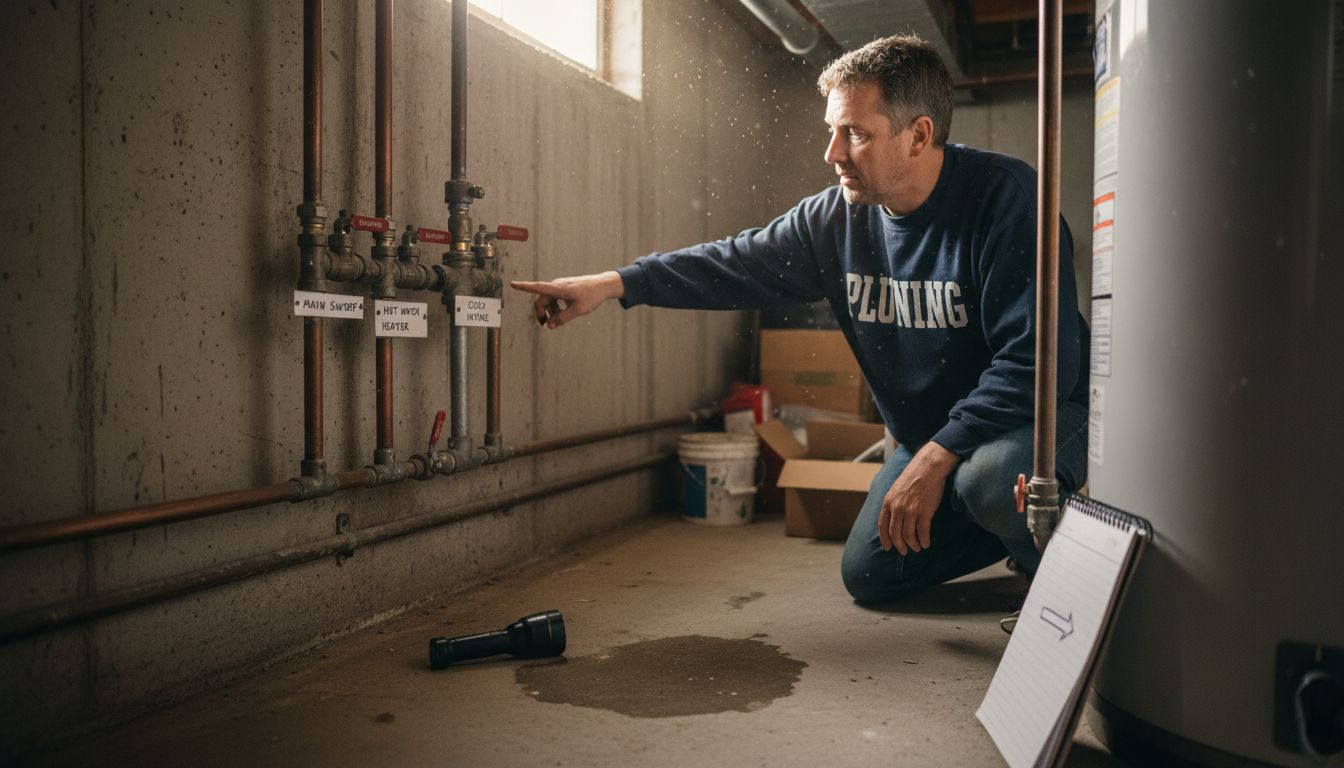
Pro tip: Locate your main water shutoff valve today and label it clearly so any household member can find it within seconds during a pipe burst or emergency, which could save you hundreds of dollars in water damage.
Main Types of Residential Plumbing Systems
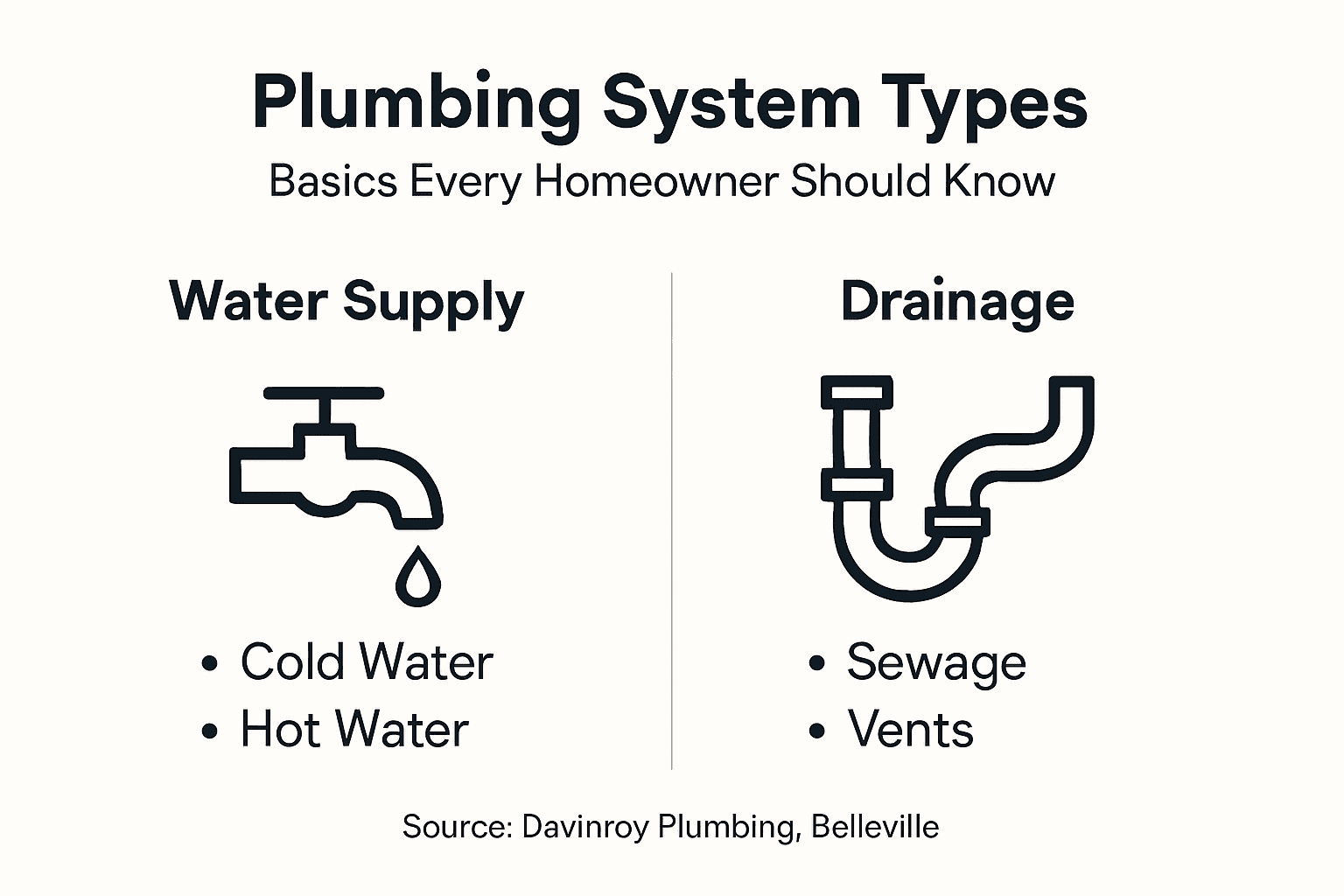
Your home’s plumbing operates through two distinct but interconnected systems working simultaneously. The water supply system brings fresh water into your house from either the municipal water line or a private well, pressurizing it through pipes to reach every fixture where you need it. The drainage system does the opposite, removing wastewater and stormwater away from your home and safely disposing of it through either a municipal sewer line or a septic system. Understanding these two systems helps you recognize which one is causing problems when something goes wrong, which saves time when you call for repairs.
Within the drainage system, there are five main types of drainage pipes that work together in your Belleville home. Soil pipes carry raw sewage from toilets and must connect directly to your main sewer line or septic tank. Waste pipes handle greywater from sinks, showers, and washing machines, which is less hazardous than sewage but still requires proper disposal. Vent pipes allow air to flow through the system so water drains efficiently and sewer gases escape safely through your roof rather than backing up into your home. Rainwater pipes direct water from gutters and downspouts away from your foundation. Anti-siphonage pipes maintain the water seal in your P-traps, those curved sections under sinks that prevent foul odors from entering your living spaces. Each pipe type serves a specific purpose, and they’re designed to work together seamlessly.
Here’s a summary of key drainage pipe types and their roles in residential plumbing:
| Pipe Type | Main Purpose | Risk if Fails |
|---|---|---|
| Soil Pipe | Remove sewage from toilets | Sewage backup or leaks |
| Waste Pipe | Carry greywater from fixtures | Clogs, odors, overflow |
| Vent Pipe | Allow air into drain system | Slow drains, foul smells |
| Rainwater Pipe | Divert water from gutters | Foundation damage |
| Anti-Siphonage | Preserve water seals in traps | Sewer gas entry |
The water supply system is equally complex on the delivery side. Cold water enters your home at the meter, splits into two paths: one goes directly to cold water fixtures, while the other gets heated by your water heater and distributed to the rest of your plumbing network. Both paths include shutoff valves at critical points so you can isolate sections for repairs. Your supply pipes are under constant pressure, typically between 40 and 80 pounds per square inch, which is why leaks in these lines can flood your home quickly. Understanding this pressure difference is important because it explains why supply leaks spray water while drainage leaks drip slowly.
Pro tip: Label each shutoff valve in your home with waterproof tape indicating which fixtures or rooms it controls, so you can stop water to problem areas without shutting off your entire house during emergencies.
How Plumbing Systems Function in Homes
Your home’s plumbing operates on two fundamental principles that work in opposite directions. The supply side uses pressure to push fresh water where you need it, while the drain side uses gravity to pull wastewater away from your home. Water arrives at your meter under pressure from the municipal system, then splits into two paths: cold water lines that go directly to fixtures, and hot water lines that pass through your water heater first. This pressure system is what allows water to flow upstairs, around corners, and to multiple fixtures simultaneously without you having to do anything manually.
Understanding how pressure and gravity work together in your plumbing reveals why certain problems occur. On the supply side, water pressure typically ranges from 40 to 80 pounds per square inch. If pressure drops suddenly, you might have a leak somewhere in your supply lines. The drain side operates completely differently, relying on gravity rather than pressure. Water naturally flows downhill through waste pipes toward your sewer line or septic system. This is why plumbers always slope drain pipes at a specific angle, usually a quarter inch per foot of pipe. Without this slope, water pools in the pipes and creates clogs or allows sewage gases to back up into your home.
Vent pipes complete this elegant system by doing something often overlooked: they allow air into the drainage system. Without proper venting, water drains slowly as it creates a vacuum behind it, or waste can siphon the water from your P-traps. Those curved sections under your sink are designed to hold a water seal that blocks sewer gases from entering your home. When vent pipes get blocked or aren’t properly sized, you might notice slow drains, gurgling sounds, or foul odors. Your Belleville home’s plumbing system is essentially a carefully balanced network where supply pressure pushes water in, gravity pulls waste out, and venting maintains the proper air pressure throughout. Every component serves a purpose, and when one part malfunctions, the entire system can suffer.
Pro tip: Run water in rarely used drains at least monthly to refill the water seal in P-traps, which prevents sewer gases from entering your home even when those fixtures aren’t in regular use.
Local Codes and Permit Requirements
Every plumbing project in Belleville, Illinois must comply with local building codes and permitting requirements. These aren’t just bureaucratic hoops to jump through. Building codes exist to protect your home from water damage, ensure proper sanitation, and prevent health hazards that could affect your family and neighbors. When you hire a plumber or plan a DIY repair, understanding what codes apply to your work helps you avoid costly mistakes and ensures your investment is protected. The city of Belleville enforces codes based on the International Plumbing Code and Illinois State Plumbing Code, which establish standards for everything from pipe materials to fixture installation heights.
Most plumbing work requires a permit from Belleville’s building department before you start. This includes replacing water heaters, installing new fixtures, rerouting pipes, or making major repairs. The International Plumbing Code regulates design, installation, and maintenance of plumbing systems to ensure public safety and health. When you pull a permit, an inspector verifies that your work meets code standards at different stages: rough-in inspection checks the pipes before walls close up, and final inspection confirms everything is working properly. Small repairs like fixing a leaky faucet or replacing a toilet typically don’t need permits, but when in doubt, call the Belleville Building Department. The cost of a permit is minimal compared to the cost of fixing code violations discovered during a home sale or after an inspection.
Working without required permits can create serious problems. If you perform unpermitted plumbing work and later sell your home, inspectors will spot violations and you’ll be liable for bringing everything up to code at your expense, which is far more costly than getting the permit upfront. Insurance companies may also deny claims related to unpermitted work. Licensed plumbers are familiar with local codes and handle permits as part of their service, which is another reason why professional work often makes sense for anything beyond minor repairs. If you’re doing work yourself, contact Belleville’s Building Department to confirm what permits you need, what inspections are required, and which code sections apply to your specific project.
Pro tip: Keep copies of all permits, inspection reports, and plumbing work documentation in a home file that you provide to future buyers, as this documentation proves your work was done to code and increases your home’s value.
Risks of DIY Plumbing Repairs
Attempting plumbing repairs without proper training can transform a small problem into a financial disaster. Many Belleville homeowners assume that plumbing is straightforward because the basic concept seems simple: water flows in, waste flows out. But plumbing systems involve precise measurements, specialized tools, and deep knowledge of how components interact. Without this expertise, you risk creating situations far worse than your original problem. DIY plumbing repairs can expose you to risks like improper installation, which leads to leaks, water damage, and even contamination of your drinking water. A single mistake with a joint connection, pipe slope, or vent sizing can compromise your entire system’s functionality.
Water damage from DIY plumbing mistakes represents one of the most expensive consequences. If you incorrectly install a new water line under your home and it ruptures, you could face thousands of dollars in repairs to your foundation, flooring, and structural components. Improper drain installation allows water to pool in pipes, creating clogs and promoting mold growth within your walls. You might not even notice the problem until extensive damage has already occurred. Additionally, attempting repairs without understanding plumbing codes and components can invalidate warranties on fixtures and your water heater. If something fails after you’ve modified the system, manufacturers won’t cover replacement costs. Unpermitted DIY work also creates liability issues when selling your home, as inspectors will identify violations and require costly remediation before the sale can close.
Beyond financial risks, improper plumbing work creates health and safety hazards. Backflow prevention is critical to keep contaminated water from flowing backward into your clean water supply, and one mistake here puts your family’s health at risk. Improper venting allows sewer gases to accumulate in your home, causing respiratory issues and foul odors. Without proper knowledge of code requirements and system design, you’re essentially guessing at solutions that could endanger your household. When you call a professional plumber to handle emergency situations, you’re not just paying for labor, you’re paying for the expertise and liability insurance that protects you if something goes wrong. A licensed plumber has spent years learning these systems and understands the consequences of mistakes in ways DIYers cannot.
Compare common DIY plumbing mistakes with professional repairs:
| Aspect | DIY Repairs | Professional Repairs |
|---|---|---|
| Expertise Required | Minimal | Extensive training |
| Typical Impact | Leaks, code violations | Code-compliant solutions |
| Cost Over Time | Higher due to damage | Lower via prevention |
| Warranty Validity | Often voided | Usually preserved |
Pro tip: Save yourself money by doing research before anything breaks, identify which repairs you can safely handle, and call a professional immediately if you’re unsure, as catching problems early costs far less than fixing damage from failed DIY attempts.
Common Residential Plumbing Issues to Avoid
Certain plumbing problems appear repeatedly in Belleville homes, and understanding them helps you catch issues before they become expensive emergencies. Clogged drains rank as the most common complaint, often caused by hair, soap buildup, grease, or objects accidentally flushed down toilets. A slow drain might seem minor, but it signals that water isn’t flowing properly through your pipes. Left untreated, a slow drain becomes a complete blockage that backs up sewage into your home or yard. Leaking pipes present another frequent issue that homeowners often ignore until significant water damage occurs. Leaks can develop anywhere in your supply lines, hidden behind walls or under floors where you can’t see them. By the time you notice water stains on ceilings or walls, extensive damage may have already happened. Poor water pressure frustrates many homeowners and typically indicates mineral buildup in pipes, issues with your pressure regulator, or leaks somewhere in the system.
Beyond these basic issues, common residential problems like faulty venting and pipe corrosion create serious functional problems. Faulty venting prevents air from flowing through your drainage system properly, causing slow drains, gurgling sounds, and foul odors backing up into your home. Pipe corrosion occurs naturally in older copper pipes or when water chemistry is imbalanced, eating through pipe walls and causing pinhole leaks. Water heater malfunctions also plague many homes, ranging from insufficient hot water to complete failure. If your water heater is more than 10 years old, problems are increasingly likely. Sediment accumulation inside the tank reduces efficiency and shortens lifespan. Rusty water coming from hot taps signals internal corrosion that requires replacement soon.
One of the most serious issues homeowners face is sewage backup, where wastewater flows backward into your home instead of away from it. This creates health hazards and contamination that poses risks to your entire family. Backup typically results from blockages in main sewer lines, tree roots invading pipes, or improper grading around your foundation. Understanding typical plumbing problems and proper maintenance helps you prevent costly repairs and maintain a functional system. Regular maintenance catches small issues before they escalate. Watch for warning signs like multiple slow drains throughout your home, unexplained wet spots in your yard, or recurring backups. These indicate systemic problems rather than isolated fixture issues and require professional attention to diagnose properly. When you notice anything unusual with your water pressure, drain speed, or water quality, don’t wait to see if it resolves itself.
Pro tip: Schedule annual plumbing inspections before problems develop, as professionals can identify corroded pipes, mineral buildup, and potential leaks early, saving you thousands in emergency repairs and water damage restoration costs.
Protect Your Belleville Home with Expert Plumbing Services Today
Understanding the basics of your plumbing system is the first step in avoiding costly emergencies like leaks, clogged drains, or sewage backups. Whether you face issues with your water supply pressure, suspect faulty venting, or need help with your hot water tank or frozen pipe repairs, professional support is crucial to keep your home safe and comfortable. The detailed concepts covered in this article highlight the importance of proper maintenance and expert knowledge to ensure your plumbing system functions flawlessly.

Don’t wait until small problems turn into expensive disasters. At Davinroy Plumbing, we specialize in hot water tank service, toilet repair, and emergency frozen pipe repair for Belleville residents. Act now to safeguard your home by scheduling a professional inspection or repair. Visit our website Davinroy Plumbing to learn more and book your service today.
Frequently Asked Questions
What is a plumbing system?
A plumbing system is a network of pipes, valves, and fixtures that transport water and remove waste within your home, operating entirely within your property lines.
What are the main types of plumbing systems in a home?
A home typically has two main plumbing systems: the water supply system, which brings fresh water into the house, and the drainage system, which removes wastewater away from the home.
What common issues should I look out for in my plumbing system?
Common plumbing issues include clogged drains, leaking pipes, poor water pressure, and sewage backups, all of which can lead to costly repairs if not addressed promptly.
Why is regular plumbing maintenance important?
Regular plumbing maintenance is essential to catch small issues before they escalate, ensuring your system operates efficiently and preventing significant water damage and costly emergency repairs.