Frozen pipes can turn a peaceful Belleville winter into an expensive nightmare for homeowners. As cold temperatures settle in, water trapped in unprotected pipes begins to freeze, expand, and create intense pressure that may lead to cracks or sudden bursts. Pipes located in unheated areas like basements, crawl spaces, or those running against exterior walls are especially at risk. Understanding where and how these problems develop helps you guard your home against costly water damage and stressful repairs.
Table of Contents
- What Are Frozen Pipes And Why They Form
- Types Of Pipes Most At Risk In Winter
- How Frozen Pipes Damage Your Home
- Financial Impact Of Burst Pipes And Repairs
- Health, Insurance, And Safety Concerns
- Proven Prevention Strategies For Belleville
Key Takeaways
| Point | Details |
|---|---|
| Frozen Pipes Pose Significant Risks | Frozen pipes can create immense internal pressure, potentially leading to bursts and extensive property damage. |
| Vulnerable Locations in Homes | Pipes in unheated areas, outdoor lines, and poorly insulated sections are most susceptible to freezing. |
| Material Matters | Different pipe materials respond variably to freezing, with copper being particularly prone to cracking. |
| Proactive Prevention is Key | Maintaining indoor temperatures and insulating vulnerable pipes can effectively reduce the risk of freezing and water damage. |
What Are Frozen Pipes and Why They Form
Frozen pipes represent a significant winter hazard for Belleville homeowners, transforming water’s normal fluid state into a potentially destructive force. Water’s unique expansion properties during freezing create immense pressure inside plumbing systems, threatening to crack or burst pipes unexpectedly.
When temperatures drop below freezing, water molecules slow down and begin forming crystalline structures, causing significant volume expansion. This expansion generates tremendous internal pressure against pipe walls, which can exceed the structural capacity of even sturdy plumbing materials. Vulnerable pipe locations include areas with minimal insulation or direct exposure to cold, such as:
- Outdoor hose bibs and water supply lines
- Pipes in unheated spaces like basements and crawl spaces
- Water lines running through exterior walls
- Plumbing in attics, garages, and kitchen cabinets adjacent to outside walls
Belleville’s winter climate makes certain residential areas particularly susceptible to pipe freezing. Homes with poor insulation, older construction, or minimal weatherproofing face higher risks. The combination of subfreezing temperatures and inadequate pipe protection can transform a minor temperature drop into a potential plumbing disaster.
Pipes can rupture with internal pressures reaching up to 2,000 pounds per square inch during freezing conditions.
Pipe material also plays a crucial role in freeze vulnerability. Copper and plastic pipes have different thermal expansion characteristics, with copper being more brittle and prone to cracking under extreme cold. Understanding these nuanced risks helps homeowners take proactive prevention strategies.
Here’s a quick comparison of how common pipe materials respond to freezing conditions:
| Pipe Material | Freeze Response | Typical Failure Risk | Suggested Protection |
|---|---|---|---|
| Copper | Brittle under cold | Prone to cracking | Heavy insulation |
| PVC Plastic | Flexible until brittle | May expand before rupturing | Moderate insulation |
| PEX | More flexible | Lower risk of bursting | Minimal insulation needed |
| Galvanized Steel | High expansion stress | Rust and crack under stress | Insulation plus rust checks |
Pro tip:Invest in affordable pipe insulation and maintain consistent indoor temperatures to significantly reduce your risk of experiencing costly frozen pipe damage.
Types of Pipes Most at Risk in Winter
Belleville homeowners should be particularly aware of the pipes most vulnerable to freezing during harsh winter months. Specific pipe locations dramatically increase freezing risks, with certain areas of your home presenting more significant challenges than others.
The most high-risk pipe locations include:
- Outdoor water supply lines and hose bibs
- Pipes in unheated interior spaces like basements and crawl spaces
- Water lines running through exterior walls
- Plumbing in attics, garages, and spaces adjacent to outside walls
- Swimming pool supply lines and irrigation system pipes
Pipe material composition also plays a critical role in freeze vulnerability. Both metal and plastic pipes can succumb to freezing, but their response to cold temperatures varies. Copper pipes, being more rigid, tend to crack more readily under extreme cold, while plastic pipes might expand slightly before potential rupture.
Winter temperatures below 20°F significantly increase the likelihood of pipe freezing, regardless of pipe material.
The geographic placement of pipes determines their freeze risk more than their construction. Pipes located in poorly insulated areas or with direct exposure to cold drafts face the highest probability of freezing. Older Belleville homes with minimal wall insulation or those with plumbing running through unprotected exterior walls are particularly susceptible to winter pipe damage.
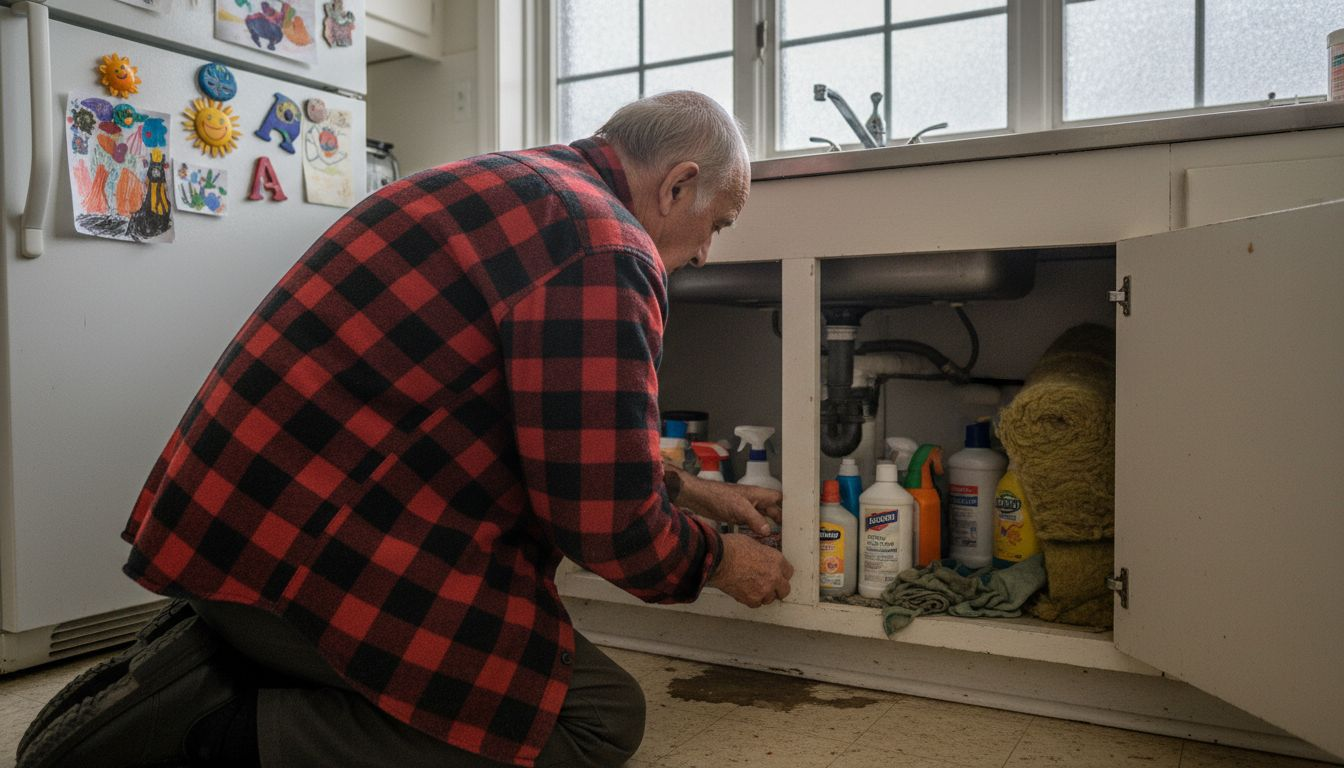
Pro tip:Conduct a thorough winter inspection of your home’s vulnerable pipe locations and invest in affordable pipe insulation to prevent costly potential repairs.
How Frozen Pipes Damage Your Home
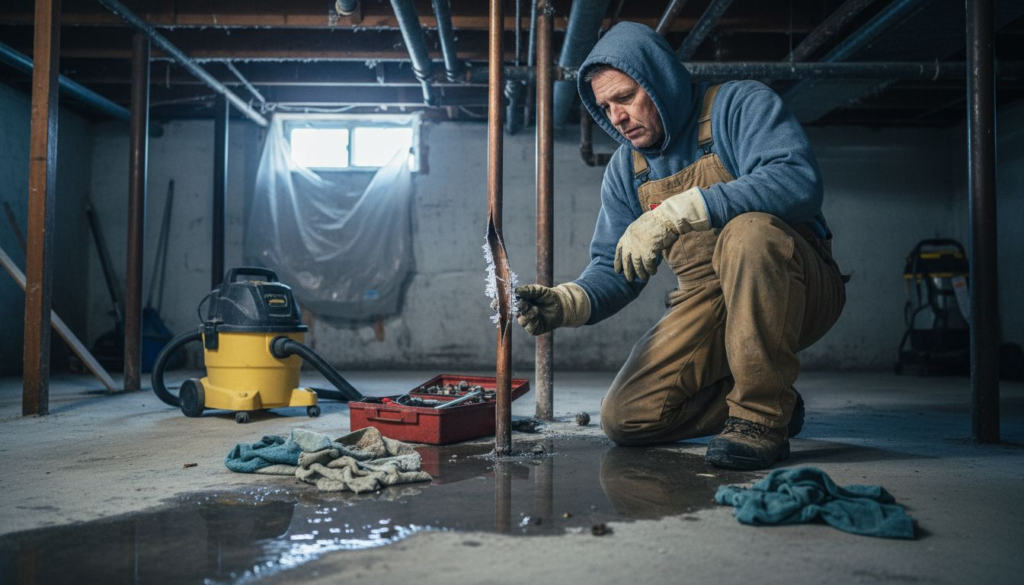
Unexpected pipe bursts can devastate Belleville homes, causing extensive and costly damage that often catches homeowners completely off guard. When water freezes inside pipes, the expanding ice creates immense pressure that can ultimately lead to catastrophic structural failures.
The potential damage from frozen pipes encompasses several devastating consequences:
- Structural wall damage from water infiltration
- Destruction of flooring materials like hardwood and carpet
- Electrical system complications
- Potential mold and mildew growth
- Damage to personal belongings and furniture
- Potential foundation weakening
Water damage from burst pipes occurs rapidly and can spread quickly through walls, ceilings, and floors. Repair costs can escalate dramatically, with minor pipe bursts potentially causing thousands of dollars in restoration expenses. A single burst pipe in an unnoticed location could lead to comprehensive home renovation requirements.
A burst pipe can release up to 100 gallons of water per hour, causing substantial damage in mere minutes.
The hidden nature of pipe damage makes it particularly dangerous. Water can seep into wall cavities, underneath flooring, and around electrical systems, creating long-term structural issues that might not be immediately visible. Older Belleville homes with aging plumbing infrastructure are especially vulnerable to these silent, destructive processes.
Pro tip:Install water leak detection devices in high-risk areas to catch potential pipe bursts before they cause extensive damage.
Financial Impact of Burst Pipes and Repairs
Infrastructure challenges create massive water system repair costs for homeowners and municipalities alike. A single burst pipe in a Belleville home can transform from a minor inconvenience into a financial nightmare, potentially causing thousands of dollars in comprehensive damage.
The potential financial consequences of burst pipes include:
- Emergency plumbing repair costs
- Water damage restoration expenses
- Replacement of damaged personal property
- Potential increases in home insurance premiums
- Structural repair and reconstruction costs
- Temporary housing expenses during major repairs
Homeowners often underestimate the cascading financial impact of pipe failures. Repair expenses can quickly escalate from hundreds to tens of thousands of dollars, depending on the extent of water damage and the affected home areas. A burst pipe in a critical location like the kitchen or basement could require complete floor replacement, wall reconstruction, and extensive moisture remediation.
Water damage repairs can range from $1,000 to $100,000, with an average homeowner expense of $5,000 for moderate pipe burst scenarios.
Older homes in Belleville face even greater financial risks. Aging plumbing infrastructure, combined with inadequate insulation and outdated materials, increases the likelihood of catastrophic pipe failures. Predictive maintenance and proactive inspection can help mitigate these potential financial disasters, potentially saving homeowners substantial repair costs.
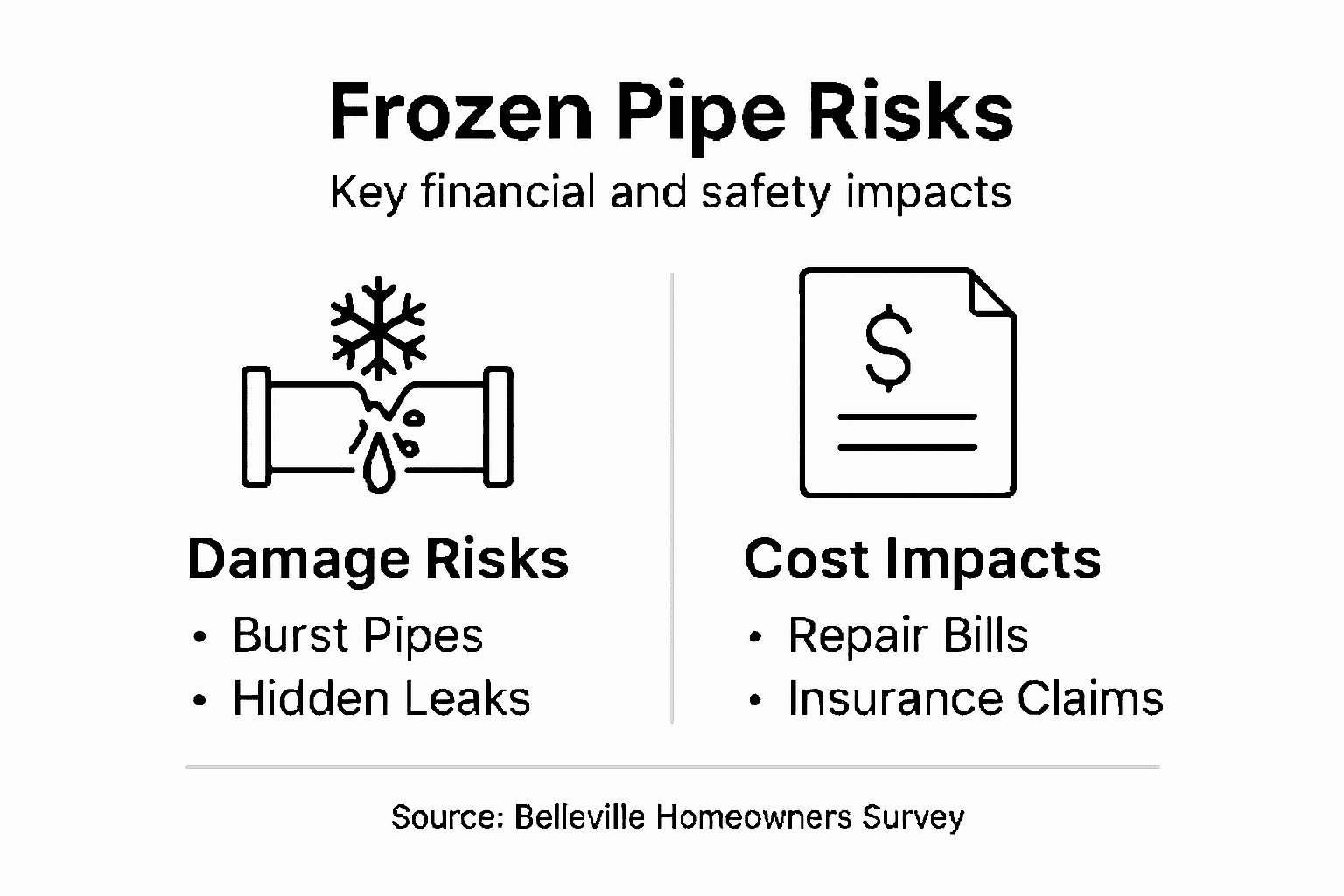
The table below outlines typical costs and impacts of burst pipes based on damage severity:
| Damage Severity | Repair Cost Range | Impact on Insurance | Recovery Time |
|---|---|---|---|
| Minor Leak | $1,000–$3,000 | May increase premium | Few days |
| Major Burst | $5,000–$25,000 | Likely premium increase | 1-2 weeks |
| Structural Flood | $25,000–$100,000 | Policy may be reviewed/canceled | Multiple months |
Pro tip:Invest in annual professional plumbing inspections to identify potential vulnerabilities before they become expensive emergencies.
Health, Insurance, and Safety Concerns
Water damage creates significant health risks for homeowners, extending far beyond simple property damage. Burst pipes can trigger complex safety challenges that impact both physical health and financial stability for Belleville residents.
The critical health and safety risks associated with frozen and burst pipes include:
- Rapid mold and mildew growth in damp areas
- Potential respiratory issues from fungal contamination
- Electrical hazards from water intrusion
- Structural integrity compromises
- Potential slip and fall dangers
- Contamination of drinking water systems
Insurance implications represent another significant concern for homeowners. Pipe burst claims can dramatically impact future premium rates and coverage eligibility. Most standard homeowners insurance policies cover sudden and accidental water damage, but repeated claims might lead to increased scrutiny or potential policy cancellation.
Mold growth can begin within 24-48 hours of water exposure, creating potential long-term health complications.
Electrical systems pose particularly dangerous risks during water intrusion. Water conducting electricity through walls, outlets, and electrical panels can create life-threatening scenarios. Belleville homeowners must understand that seemingly minor pipe leaks can quickly transform into major safety hazards requiring immediate professional intervention.
Pro tip:Develop a comprehensive emergency response plan that includes immediate water shutoff procedures and contact information for professional restoration services.
Proven Prevention Strategies for Belleville
Winter pipe protection requires strategic home preparation, especially in regions experiencing harsh cold temperatures. Belleville homeowners can implement targeted strategies to safeguard their plumbing infrastructure and prevent costly pipe damage.
Comprehensive prevention strategies include:
- Maintain consistent indoor temperatures (minimum 55°F)
- Insulate pipes in unheated spaces like attics and basements
- Seal air leaks around windows and exterior walls
- Disconnect and drain outdoor water hoses
- Install pipe sleeves or heat tape on vulnerable lines
- Open cabinet doors to circulate warm air around plumbing
Thermal management plays a crucial role in preventing pipe freezing. Homeowners should focus on creating consistent interior environments that minimize temperature fluctuations. Strategically placed insulation and careful home maintenance can significantly reduce the risk of pipe damage during cold winter months.
Preventing frozen pipes is 90% preparation and 10% emergency response.
For older Belleville homes with less efficient insulation, additional precautions become essential. Homeowners might consider professional pipe wrapping, installing supplemental heating elements, or creating temporary barriers to block cold air infiltration in high-risk areas.
Pro tip:Create a winter preparation checklist and conduct a thorough home inspection before the first freeze to identify and address potential pipe vulnerability zones.
Protect Your Belleville Home from Costly Frozen Pipe Damage Today
Frozen pipes pose a real threat to Belleville homes during harsh winter months. The buildup of pressure inside brittle copper or poorly insulated pipes can lead to sudden bursts causing overwhelming water damage, mold growth, and expensive repairs. If you want to avoid these distressing situations and keep your home safe and warm, it is critical to act before freezing temperatures hit.

Davinroy Plumbing specializes in frozen pipe repair services and offers expert solutions to prevent pipe bursts before they happen. From professional pipe insulation to maintaining reliable hot water systems, our trusted team helps you protect your home against winter plumbing disasters. Don’t wait until a pipe bursts and the damage spreads. Visit Davinroy Plumbing now and schedule an inspection to secure your plumbing infrastructure for the cold season ahead. Your home and wallet will thank you.
Frequently Asked Questions
What are frozen pipes and how do they form?
Frozen pipes occur when water within pipes freezes, causing expansion and immense pressure that can crack or burst the pipes. This typically happens during cold weather when temperatures drop below freezing, particularly in areas with poor insulation.
How can I prevent my pipes from freezing?
To prevent frozen pipes, maintain a consistent indoor temperature of at least 55°F, insulate pipes in unheated spaces, seal air leaks around windows and walls, disconnect outdoor hoses, and use pipe sleeves or heat tape on vulnerable lines.
What should I do if I suspect my pipes are frozen?
If you suspect your pipes are frozen, you should turn off your water supply immediately to prevent a potential burst. Then, gently warm the affected areas with a hairdryer or heat tape and keep the faucet open to allow water to flow once it starts to thaw.
What are the signs of frozen pipes?
Signs of frozen pipes include a lack of water flow from faucets, unusual sounds coming from the plumbing system, discoloration or bulging in walls, and frost on exposed pipes. If you notice any of these signs, take action promptly to avoid bursting.
Recommended
- Why Fix Frozen Pipes – Protect Your Home, Health, Wallet
- Why Frozen Pipes Burst and How to Prevent It
- Frozen Pipe Dangers – How They Impact Your Home
- Preventing Frozen Pipes Workflow for Belleville Homeowners
- How Do You Prevent Frozen Pipes for Chicago Homes | Chicago Home Inspect LLC
- Avoiding Main Water Shutoff Issues Through Professional Plumbing Services – Home Therapist Cooling, Heating, and Plumbing