Cold snaps in Belleville, Illinois can turn overlooked water pipes into a headache overnight. When winter hits, pipes in unheated areas like basements, garages, and crawl spaces face the highest risk of freezing and bursting. Protecting your home starts with understanding which pipes are the most vulnerable and how simple steps like better insulation and sealing air leaks can make a difference. This easy-to-follow guide offers practical tips for keeping your plumbing safe, so you can worry less and stay warm all season.
Table of Contents
- Step 1: Assess Vulnerable Pipes In Your Home
- Step 2: Insulate Exposed Piping With Proper Materials
- Step 3: Seal Air Leaks Near Piping Locations
- Step 4: Maintain Steady Heat Around Your Pipes
- Step 5: Verify Pipe Protection During Cold Spells
Quick Summary
| Key Message | Explanation |
|---|---|
| 1. Identify vulnerable pipes | Assess areas like basements and crawl spaces where pipes are at risk of freezing. |
| 2. Insulate exposed pipes | Use suitable materials like foam or fiberglass to insulate vulnerable areas effectively. |
| 3. Seal air leaks properly | Locate and seal gaps around doors, windows, and pipe entries to protect against cold drafts. |
| 4. Maintain steady temperatures | Keep your home’s temperature above 55°F to prevent fluctuations that can lead to freezing. |
| 5. Regularly check pipe conditions | Inspect insulation and monitor for warning signs like frost or reduced water flow. |
Step 1: Assess vulnerable pipes in your home
Locating and understanding the vulnerable pipes in your home is a critical first defense against potential winter pipe damage. By strategically identifying areas where freezing risks are highest, you can proactively prevent costly repairs and potential water damage.
Your home’s pipe vulnerability depends on several key factors. Pipes located in unheated areas require special attention, including those situated in:
- Basements
- Attics
- Garages
- Crawl spaces
- Areas near exterior walls
- Outdoor hose bibs
Specifically, pipes with minimal or no insulation are most at risk during cold weather. These pipes are susceptible to rapid temperature drops, which can cause water inside them to freeze and potentially burst. Pay extra attention to pipes running along exterior walls or in spaces without consistent heating.
Cold weather can transform vulnerable pipes into potential disaster zones within hours.
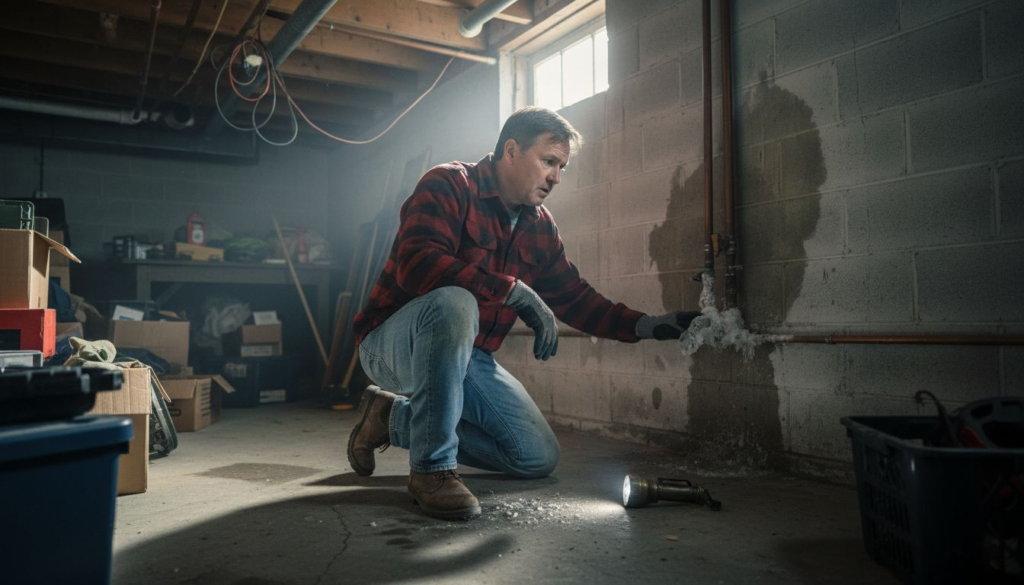
To conduct a thorough assessment, walk through your home and visually inspect pipe locations. Use a flashlight to examine pipes in dark or hard-to-reach areas. Look for signs of existing insulation and note any pipes that seem exposed or unprotected.
Pro tip: Keep a detailed sketch or digital map of your home’s most vulnerable pipe locations to guide your winterization efforts.
Step 2: Insulate exposed piping with proper materials
Protecting your home’s pipes from freezing requires strategic insulation using the right materials. Proper pipe insulation is your first line of defense against potential winter damage.
When selecting insulation materials, consider these effective options:
- Foam pipe sleeves
- Fiberglass wraps
- Tubular neoprene insulation
- Foam rubber insulation
- Spiral insulation wraps
Key steps for effective pipe insulation include:
- Measure pipe diameter accurately
- Choose insulation matching pipe size
- Clean pipes before application
- Cover entire exposed pipe length
- Seal insulation edges securely
Pay special attention to pipes located in unheated areas like basements, attics, and crawl spaces. These zones are most susceptible to temperature drops and require comprehensive coverage.
Proper insulation can reduce heat loss and prevent costly pipe repairs.
Ensure you select insulation materials designed to withstand moisture and provide adequate thermal resistance. Some materials offer better protection than others, so research your specific pipe types and home environment.
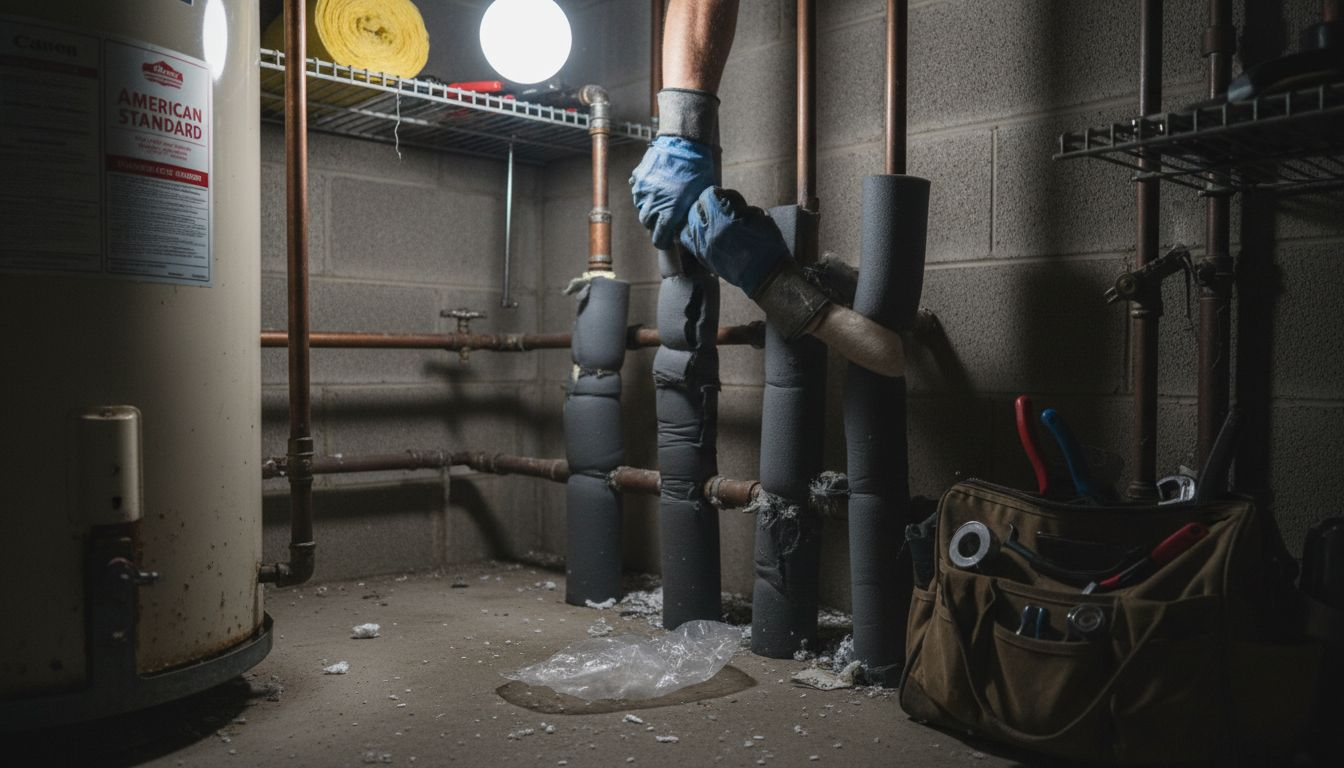
Here is a summary of pipe insulation materials, highlighting their unique strengths:
| Material Type | Water Resistance | Thermal Insulation Level | Recommended Use Areas |
|---|---|---|---|
| Foam Pipe Sleeves | High | Excellent | Basements, crawl spaces |
| Fiberglass Wraps | Moderate | Good | Garage, exterior wall piping |
| Neoprene Tubular | Very High | Superior | Unheated attics, cold spots |
| Foam Rubber Insulation | High | Solid | Outdoor hose bibs, garages |
| Spiral Insulation Wraps | Varies | Flexible | Odd-shaped or hard-to-reach pipes |
Pro tip: Purchase slightly more insulation material than you initially calculate to account for measurement variations and potential mistakes during installation.
Step 3: Seal air leaks near piping locations
Preventing frozen pipes requires more than insulation. Detecting air leaks is crucial for maintaining consistent temperatures around your home’s plumbing system.
Common areas where cold air infiltrates include:
- Electrical outlet openings
- Window and door frames
- Switch plate gaps
- Pipe entry points through walls
- Ventilation and utility line penetrations
Key sealing techniques involve using specific materials to block cold air:
- Apply weatherstripping around door and window frames
- Use foam sealants for pipe entry points
- Install gaskets behind electrical outlet covers
- Caulk small gaps and cracks
- Use expanding foam for larger openings
Focus on areas where pipes pass through exterior walls or unheated spaces. These zones are most vulnerable to temperature fluctuations and potential freezing.
Small air leaks can dramatically increase the risk of pipe damage during winter months.
Carefully inspect each potential entry point for cold air. Even minor gaps can significantly impact your home’s thermal efficiency and pipe protection strategy.
Pro tip: Use a stick of incense to detect subtle air drafts by watching how the smoke moves near potential leak locations.
Step 4: Maintain steady heat around your pipes
Keeping a consistent temperature is your best defense against frozen pipes. Avoiding temperature fluctuations can significantly reduce the risk of pipe damage during cold weather.
Critical temperature management strategies include:
- Keep thermostat set above 55 degrees Fahrenheit
- Maintain consistent temperature day and night
- Avoid dramatic overnight temperature drops
- Open cabinet doors near plumbing fixtures
- Allow small water drip during extreme cold
Specific areas requiring special attention are:
- Pipes in unheated spaces
- Exterior wall locations
- Basement and crawl space plumbing
- Garage water lines
- Kitchen and bathroom pipe systems
When you’re away from home, resist the temptation to dramatically lower your heating. Even a few degrees can make a significant difference in preventing pipe freezing.
Consistent heat is your pipes’ best protection against winter’s harsh conditions.
Pay special attention to areas with poor insulation or exposed to exterior walls. These zones are most vulnerable to temperature shifts and potential freezing risks.
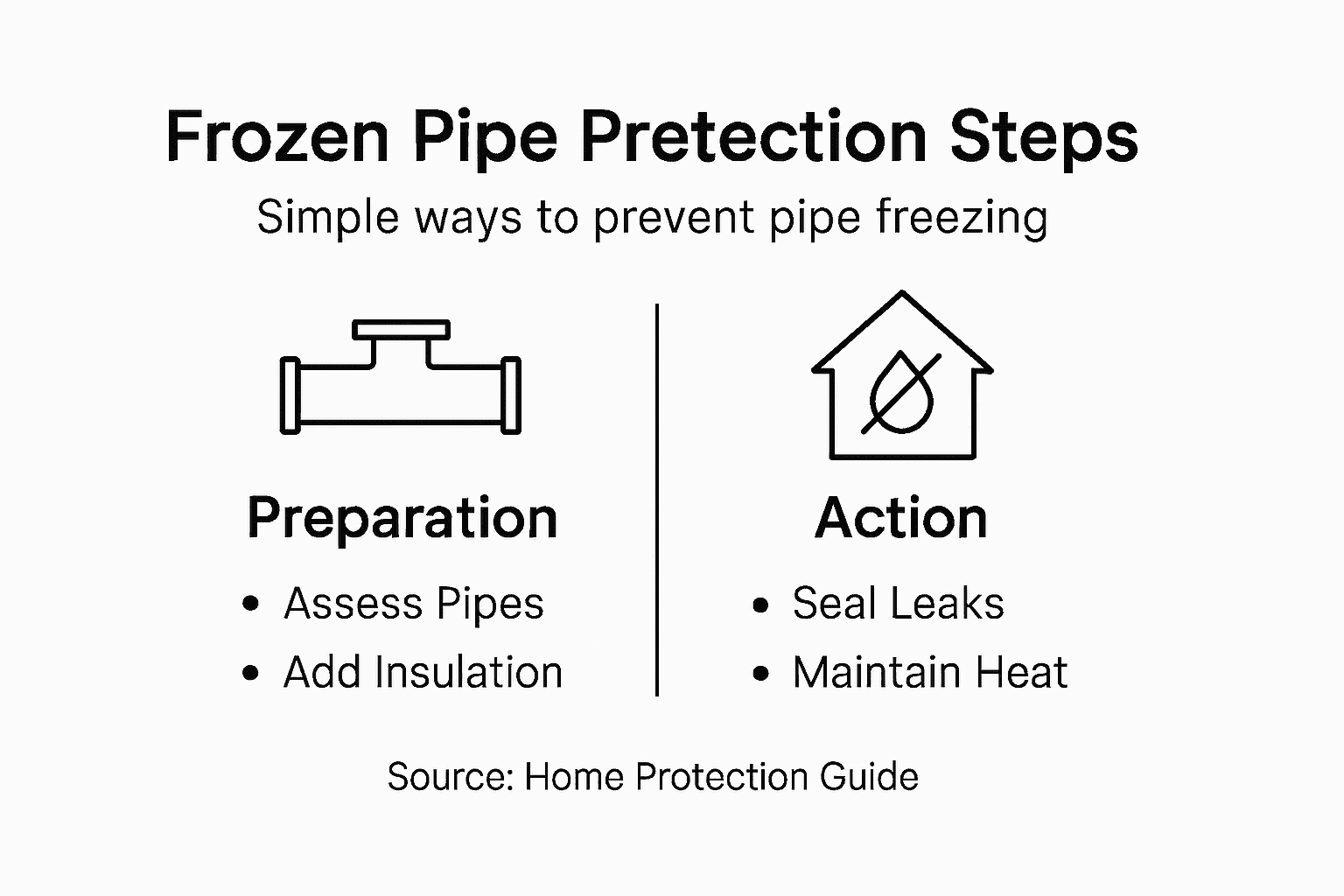
Pro tip: Consider installing a smart thermostat that can maintain a consistent minimum temperature automatically, even when you’re not home.
Step 5: Verify pipe protection during cold spells
Ensuring your pipes remain safe during extreme cold requires proactive monitoring and strategic checks. Checking vulnerable pipe areas helps prevent potential winter damage before it occurs.
Critical verification steps include:
- Inspect insulation around pipes
- Check heat tape functionality
- Verify sealed air leak points
- Monitor indoor temperature consistently
- Test water flow in different areas
Key zones requiring detailed examination are:
- Basement pipe systems
- Exterior wall plumbing
- Crawl space water lines
- Attic pipe configurations
- Garage water connections
When temperatures drop dramatically, frequent visual inspections can catch potential freezing risks early. Look for frost accumulation, reduced water pressure, or unusual pipe condensation as warning signs.
Small detection efforts can prevent thousands of dollars in potential water damage.
If you’re traveling during winter, arrange for a trusted neighbor or professional to periodically check your home’s internal temperature and pipe conditions.
Pro tip: Consider installing smart temperature sensors near critical pipe locations that can send instant mobile alerts about potential freezing risks.
This comparison illustrates detection and monitoring tools for winter pipe protection:
| Tool or Device | Purpose | Ease of Use | Notification Capability |
|---|---|---|---|
| Flashlight | Visual pipe inspection | Very easy | None |
| Smart Thermostat | Maintains consistent temp | Easy to moderate | Mobile app alerts |
| Temperature Sensor | Detects freezing risks | Easy | Instant mobile notification |
| Incense Stick | Finds subtle air drafts | Very easy | Visual smoke movement |
| Heat Tape Monitor | Verifies heat tape status | Moderate | Light indicator or app alerts |
Protect Your Home From Frozen Pipes With Expert Help Today
Frozen pipes can cause serious damage and costly repairs if not addressed properly. From assessing vulnerable pipes to sealing air leaks and maintaining steady heat your home’s plumbing needs careful attention during winter. If you want to avoid the stress and frustration of unexpected pipe bursts and water damage trust professionals who understand these challenges.

At Davinroy Plumbing we specialize in frozen pipe repair and preventive services designed for the Belleville Illinois area. Our expert team helps you identify problem areas insulate exposed piping and maintain steady warmth so your pipes stay safe all winter long. Don’t wait until cold spells cause damage act now to protect your home and save on expensive repairs. Visit Davinroy Plumbing to book your service or learn more about how we stop frozen pipes naturally and safely. Your pipes deserve trusted care—call us today!
Frequently Asked Questions
How can I assess vulnerable pipes in my home to prevent freezing?
To assess vulnerable pipes, walk through your home and visually inspect areas where pipes are located, especially in unheated spaces like basements and attics. Use a flashlight to check for exposed or uninsulated pipes, and make a note of their locations to prioritize insulation efforts.
What materials work best for insulating exposed pipes?
Effective insulation materials include foam pipe sleeves, fiberglass wraps, and neoprene insulation. Choose the right material based on pipe size and location, ensuring you cover the entire exposed length to provide maximum protection against freezing.
How do I seal air leaks around my pipes to minimize freezing risks?
To seal air leaks, apply weatherstripping around doors and windows and use foam sealants for gaps where pipes enter walls. This will limit cold air infiltration, helping to maintain a stable temperature around your plumbing system.
What temperature should I maintain in my home to prevent frozen pipes?
Keep your thermostat set above 55 degrees Fahrenheit consistently, even during the night. This steady temperature helps protect your pipes from freezing when the outside temperature drops significantly.
How can I verify that my pipe protection measures are effective during cold spells?
Regularly inspect insulation around your pipes and check the functionality of any heat tape. Monitor indoor temperatures consistently, and look for signs of frost or reduced water flow to catch any potential freezing problems early.
What steps should I take if I am traveling during winter to protect my pipes?
Arrange for a trusted neighbor or friend to check your home regularly while you’re away. Make sure they can monitor the indoor temperature and inspect vulnerable pipe areas to prevent freezing and potential damage.
Recommended
- Why Pipes Freeze – Protecting Your Home in Winter
- Why Fix Frozen Pipes – Protect Your Home, Health, Wallet
- Preventing Frozen Pipes Workflow for Belleville Homeowners
- Why Frozen Pipes Burst and How to Prevent It
- 7 Essential Emergency Plumbing Tips 2026 For Homeowners – Legacy Plumbing & Drain – Emergency Plumbers Of Sacramento