Most homeowners believe cranking their water heater past 140°F delivers better showers and cleaner dishes. The truth? You’re burning money and risking serious scald injuries without gaining comfort. Understanding how water heaters work, what temperature truly optimizes performance, and when maintenance becomes critical separates homeowners who enjoy decades of reliable hot water from those facing emergency repairs and sky-high utility bills. This guide cuts through common myths and arms Belleville residents with actionable knowledge to keep hot water flowing safely and affordably.
Table of Contents
- Introduction To Water Heaters And Their Essential Role
- How Water Heaters Work: Mechanisms And Energy Conversion
- Common Misconceptions About Water Heaters
- Maintenance Practices And Their Impact On Water Heater Longevity
- Safety Considerations And Prevention
- Energy Efficiency And Cost Implications Of Different Water Heater Types
- When To Repair Or Replace Your Water Heater: Practical Decision Making
- Summary And Best Next Steps For Belleville Homeowners
- Discover Expert Water Heater Services With Davinroy Plumbing
- Frequently Asked Questions
Key Takeaways
| Point | Details |
|---|---|
| Energy Efficiency Gains | Tankless water heaters reduce energy use by 24 to 34% compared to traditional tank models. |
| Lifespan Extension | Regular maintenance can extend your water heater’s life by up to 50%. |
| Optimal Temperature | Setting above 120°F increases scald risk without improving comfort or cleanliness. |
| Safety First | Annual inspections prevent dangerous leaks, pressure buildup, and gas hazards. |
| Smart Replacement Timing | Units over 10 years old with frequent issues cost more to repair than replace. |
Introduction to Water Heaters and Their Essential Role
Water heaters convert energy into thermal output that delivers hot water throughout your home. Without this essential appliance, daily hygiene routines, cooking tasks, and basic comfort disappear. The typical safe operating range sits between 110°F and 120°F, balancing bacteria prevention with scald protection.
Homeowners often underestimate how much they rely on continuous hot water availability. Morning showers, dishwashing, laundry, and handwashing all demand consistent supply. When your water heater fails, household routines grind to a halt within hours.
Understanding your water heater’s role within your home’s plumbing system helps you recognize warning signs early. Small issues like inconsistent temperatures or strange noises signal developing problems that quickly escalate without attention. Addressing these promptly prevents emergency situations that cost far more than routine care.
Key functions your water heater performs daily include:
- Converting electricity or gas into thermal energy for water heating
- Maintaining stored water at safe temperatures ready for immediate use
- Regulating pressure and temperature through built-in safety mechanisms
- Delivering hot water through your home’s distribution system on demand
- Preventing bacterial growth through proper temperature maintenance
How Water Heaters Work: Mechanisms and Energy Conversion
Water heaters operate using two primary energy sources: electricity and natural gas. Electric models use heating elements submerged in the water tank, while gas units employ burners beneath the tank to generate heat. Both systems rely on thermostats to monitor and maintain target temperatures automatically.
Two main technology types dominate the market. Traditional tank heaters store 30 to 80 gallons of hot water in an insulated reservoir, keeping it heated around the clock. Tankless models heat water instantly as it flows through the unit, eliminating standby energy loss entirely.
Tankless water heaters can reduce energy consumption by 24% to 34% compared to traditional tank models by heating water only on demand. This efficiency gain translates directly into lower monthly utility bills, though the upfront investment runs higher. For Belleville homeowners evaluating options, understanding these mechanics clarifies which system matches household needs and budget constraints.
Tank systems operate through a simple cycle:
- Cold water enters through a dip tube at the tank bottom
- Heating elements or burners warm the water to the thermostat setting
- Hot water rises naturally to the top where the outlet pipe draws from
- As hot water exits, cold water replaces it, triggering another heating cycle
- Insulation around the tank minimizes heat loss between uses
Tankless units work differently, activating only when you open a hot water tap. Water flows through a heat exchanger where gas burners or electric coils rapidly raise the temperature. This on-demand approach eliminates the energy waste of maintaining a hot reservoir 24/7. Exploring plumbing tips for Belleville homes provides additional context on optimizing your water heating system within your overall plumbing infrastructure.
Temperature precision matters more than most homeowners realize. A 10°F increase above 120°F doubles scald risk while providing zero comfort benefit. Modern thermostats make precise control simple, yet many units ship with factory settings of 140°F or higher.
Common Misconceptions About Water Heaters
Myth number one: hotter settings clean dishes better and kill more bacteria. Reality check: your dishwasher heats water internally, and 120°F water eliminates common household bacteria just fine. Pushing your water heater past this threshold wastes energy and endangers anyone who touches a tap.
Many homeowners believe water heaters are maintenance-free appliances that run indefinitely without care. This misconception shortens lifespan dramatically and tanks efficiency. Sediment accumulates at tank bottoms, creating insulation that forces heating elements to work harder. Annual flushing removes this buildup and restores optimal performance.
Another widespread belief: instant hot water always means a tankless system. Some tank models with recirculation pumps deliver hot water to fixtures within seconds by keeping water moving through pipes. Understanding your actual system type prevents confusion when troubleshooting issues or planning upgrades.
Common false beliefs that cost homeowners money:
- Insulation blankets help all water heaters (modern tanks have sufficient built-in insulation)
- Draining a few gallons monthly replaces proper annual flushing (partial draining doesn’t remove settled sediment)
- Water heater age doesn’t matter if it still works (efficiency drops sharply after 8 years)
- DIY repairs save more than professional service (improper fixes create safety hazards)
Pro Tip: Set your water heater to exactly 120°F using a thermometer at the tap farthest from the unit. This balances safety, efficiency, and bacteria control without waste. Mark this setting on your thermostat dial to prevent accidental adjustments.
Maintenance Practices and Their Impact on Water Heater Longevity
Regular maintenance can extend the life of your water heater by up to 50%. This dramatic improvement comes from simple annual tasks most homeowners can perform or have professionals handle affordably. Neglecting maintenance guarantees premature failure and emergency replacement at the worst possible time.
Flushing sediment ranks as the single most important maintenance task. Minerals in water settle at the tank bottom, reducing heating efficiency and accelerating corrosion. Annual flushing removes this buildup before damage occurs. Connect a garden hose to the drain valve, run water until it flows clear, and you’ve added years to your unit’s lifespan.
Temperature adjustment isn’t a set-it-and-forget-it affair. Check your setting seasonally and after any service work. Verify actual output temperature at distant fixtures to confirm your thermostat setting translates to safe delivery throughout your home.
Essential maintenance steps in order of priority:
- Flush the tank annually to remove sediment buildup
- Test the pressure relief valve by lifting the lever briefly to ensure proper operation
- Inspect the anode rod every three years and replace if corroded below half inch diameter
- Check for leaks around fittings, valves, and the tank base monthly
- Examine venting systems on gas models for blockages or deterioration
- Schedule professional inspection every two years for comprehensive safety checks
Exploring water heater maintenance plans through local professionals ensures you never miss critical service intervals. Professional technicians catch developing issues during routine visits, preventing failures that leave you without hot water during Illinois winters.
Pro Tip: Create a water heater maintenance calendar reminder on your phone for the same month each year. Attach a simple checklist covering visual inspection, temperature verification, and scheduling professional service. Consistent timing makes maintenance habitual rather than forgotten.
Safety Considerations and Prevention
Water heaters contain pressurized vessels heated to temperatures that can cause severe burns in seconds. Proper safety measures protect your household from scalding, gas leaks, pressure explosions, and electrical hazards. These aren’t theoretical risks but documented dangers that injure thousands annually.
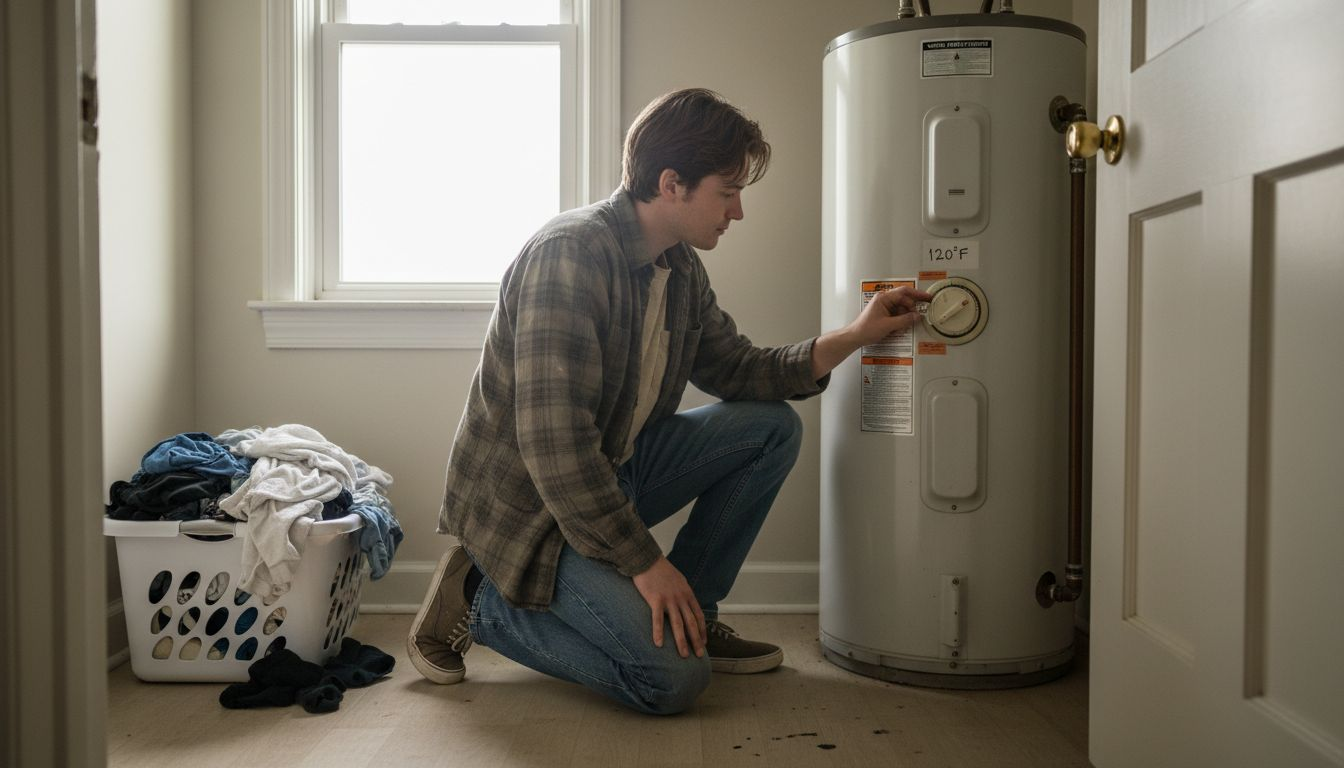
Scald prevention starts with that 120°F setting we keep mentioning. Water at 140°F causes third-degree burns in five seconds. At 120°F, the same injury takes five minutes, giving you time to react. Children and elderly household members face even greater vulnerability to temperature injuries.
Pressure relief valves serve as critical safety mechanisms that prevent tank explosions. When pressure or temperature exceeds safe limits, these valves automatically release water. Test yours twice yearly by lifting the lever briefly. If water doesn’t flow or the valve leaks afterward, replacement is mandatory.
Recognizing warning signs prevents catastrophic failures:
- Rumbling or popping noises indicate sediment buildup forcing steam bubbles through debris
- Rotten egg smell from hot water suggests bacterial growth in the tank
- Rust-colored water signals internal corrosion that will soon cause leaks
- Moisture around the tank base indicates active leaking requiring immediate attention
- Fluctuating water temperature points to failing thermostats or heating elements
Know your emergency shutoff procedures. Gas models need the gas supply turned off at the dedicated shutoff valve, while electric units require shutting the circuit breaker. Cold water supply valves should be closed if leaking occurs. Every household member should know these locations and procedures. Additional guidance on plumbing safety tips covers emergency response protocols for various plumbing failures.
Energy Efficiency and Cost Implications of Different Water Heater Types
Upfront cost versus long-term savings creates the primary decision point when choosing water heater technology. Tank models cost $800 to $1,500 installed, while tankless systems run $2,500 to $4,500 for comparable capacity. This price gap narrows significantly when you calculate energy savings over the unit’s lifespan.
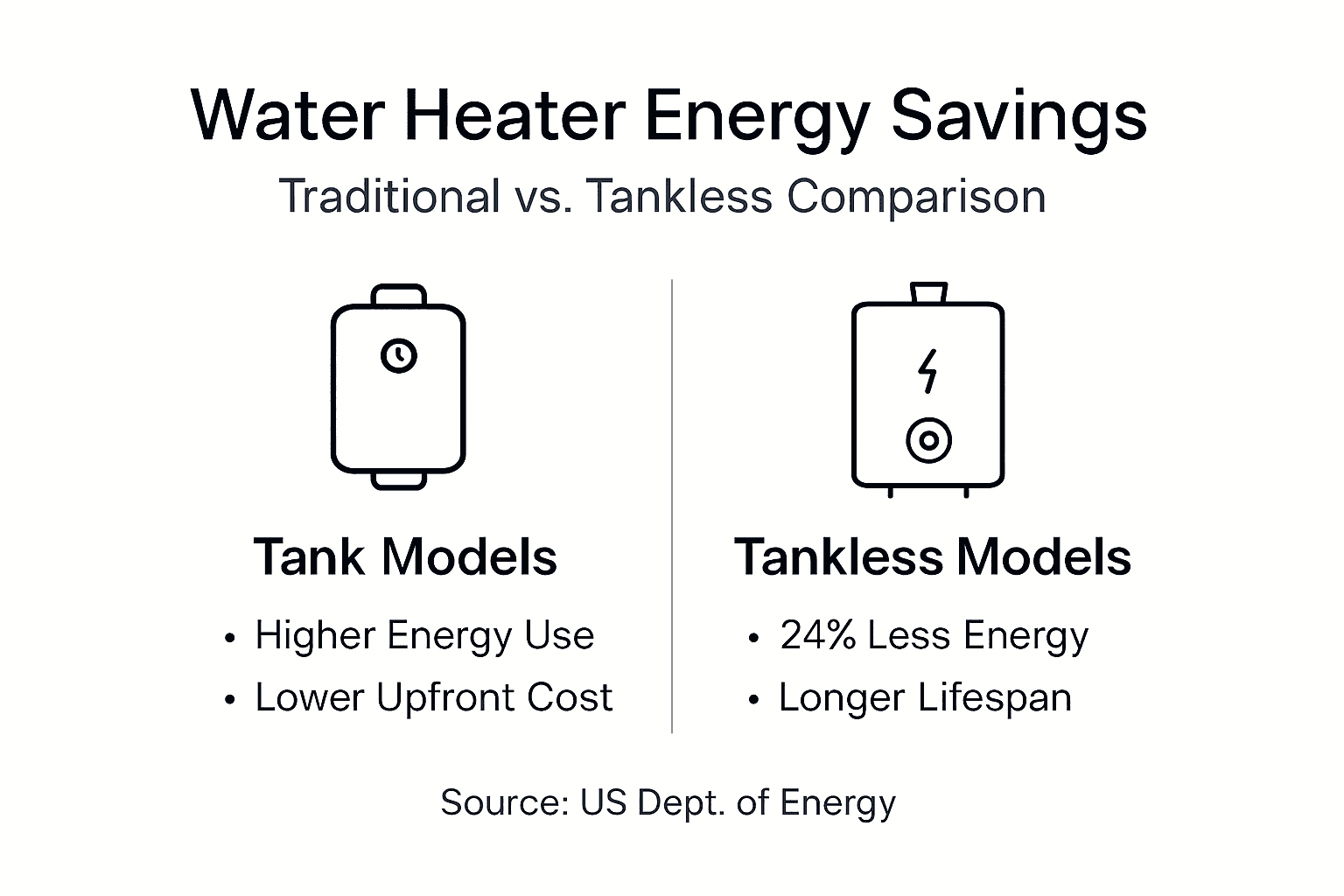
Tankless water heaters can reduce energy consumption by 24% to 34% compared to traditional tank models. For an average Belleville household spending $400 yearly on water heating, tankless technology saves $96 to $136 annually. Over a 20-year lifespan, that’s $1,920 to $2,720 in energy savings, offsetting much of the higher installation cost.
Household size and usage patterns determine which technology delivers better value. Families with simultaneous high-demand periods strain tankless systems unless properly sized. Multiple showers running while the dishwasher and washing machine operate might exceed a single tankless unit’s capacity. Tank systems handle peak demand better by drawing from stored reserves.
| Feature | Tank Water Heater | Tankless Water Heater |
|---|---|---|
| Upfront Cost | $800 to $1,500 | $2,500 to $4,500 |
| Lifespan | 8 to 12 years | 15 to 20 years |
| Energy Efficiency | 60% to 70% | 80% to 99% |
| Space Required | 16 to 20 sq ft | 4 to 6 sq ft |
| Recovery Time | 30 to 60 minutes | Instant continuous |
| Best For | Large families, peak demand | Consistent moderate use |
Belleville’s natural gas rates favor gas tankless models for maximum savings, though electric versions work well where gas lines aren’t available. Utility rebates sometimes offset installation costs, making efficiency upgrades more affordable than expected.
Pro Tip: Calculate your household’s peak hour demand by tracking simultaneous hot water uses during your busiest morning or evening period. This number guides proper sizing for either technology, ensuring you don’t overpay for excess capacity or undersize and suffer supply shortages.
When to Repair or Replace Your Water Heater: Practical Decision Making
Age serves as the primary replacement indicator. Most tank water heaters last 8 to 12 years, while tankless models reach 15 to 20 years. Check the serial number on your unit’s rating plate. The first four digits typically encode manufacturing date as YYMM or MMYY depending on the manufacturer.
Repair costs approaching 50% of replacement cost favor buying new equipment. A $600 repair on a 10-year-old $1,200 water heater makes little financial sense. Factor in that the new unit will operate more efficiently and carry a full warranty covering future issues.
Multiple repairs within 12 months signal declining reliability. Even if individual repairs seem affordable, repeated service calls add up quickly. More importantly, an aging unit prone to frequent breakdowns will eventually fail completely at the most inconvenient time, typically during winter when demand peaks.
Signs pointing toward replacement:
- Unit age exceeds manufacturer’s expected lifespan by two years
- Rust appears in hot water or on the tank exterior
- Leaking from the tank itself rather than fittings or valves
- Inconsistent water temperature despite thermostat adjustments
- Rising energy bills without increased usage patterns
- Inadequate hot water volume compared to previous performance
| Condition | Repair | Replace |
|---|---|---|
| Age under 6 years | ✓ | |
| Age 8 to 12 years | Maybe | ✓ |
| Single component failure | ✓ | |
| Multiple issues | ✓ | |
| Tank leaking | ✓ | |
| Insufficient capacity | ✓ | |
| Repair cost over $500 | ✓ |
Consult water heater repair guide resources for detailed troubleshooting before committing to replacement. Sometimes simple fixes like replacing a heating element or thermostat restore full function at minimal cost. Professional diagnosis clarifies whether repair makes sense or replacement offers better long-term value.
Summary and Best Next Steps for Belleville Homeowners
Water heaters deliver the reliable hot water supply modern homes require for comfort, hygiene, and daily function. Understanding how these appliances work, what maintenance they need, and when replacement makes financial sense protects your investment and prevents emergency situations.
Key insights every Belleville homeowner should remember:
- Set temperature at 120°F for safety and efficiency without sacrificing performance
- Annual maintenance including flushing extends lifespan by up to 50%
- Tankless technology saves 24% to 34% on energy costs despite higher upfront investment
- Replace units over 10 years old experiencing frequent issues rather than continuing repairs
Davinroy Plumbing brings decades of experience serving Belleville residents with expert water heater installation, maintenance, and repair. Their technicians understand local water conditions and building codes, ensuring your system operates safely and efficiently year-round.
Explore Belleville plumbing essentials to understand how water heaters integrate within your complete plumbing system. Connect with Belleville plumbing pros for professional guidance tailored to your home’s specific needs. Consider enrolling in plumbing maintenance plans that schedule regular service automatically, removing the burden of remembering critical maintenance tasks.
Discover Expert Water Heater Services with Davinroy Plumbing
Applying the knowledge from this guide becomes simpler when you partner with experienced local professionals. Davinroy Plumbing specializes in water heater care for Belleville homeowners, from routine maintenance that extends equipment life to emergency repairs that restore hot water fast.
Their technicians diagnose issues accurately, recommend cost-effective solutions, and perform installations that meet all safety codes. Whether you need annual flushing, component replacement, or complete system upgrades, their team delivers reliable service that keeps your household running smoothly. Access water heater repair services that address issues before they escalate into expensive emergencies. Discover expert plumbing tips that help you maintain your entire plumbing system between professional visits. Explore professional water heater services designed specifically for local homes and water conditions.
Frequently Asked Questions
What is the ideal temperature setting for a home water heater?
The recommended setting is 120°F, which balances safety, efficiency, and bacteria control. Higher temperatures increase scald risks significantly without improving cleaning performance or comfort. Most dishwashers heat water internally, so elevated water heater temperatures provide no benefit.
How often should I have my water heater maintained?
Annual maintenance including tank flushing and safety checks keeps your water heater operating efficiently. Professional inspections every two years catch developing problems early, preventing costly emergency repairs. Regular upkeep can extend equipment lifespan by up to 50%.
When is it better to replace rather than repair a water heater?
Replace units over 10 years old experiencing frequent breakdowns or major component failures. When repair costs exceed half the replacement price, investing in new equipment makes better financial sense. Modern units offer improved efficiency that reduces operating costs, and checking your water heater repair guide helps clarify the best decision for your situation.
Can a tank water heater provide instant hot water like tankless models?
Some tank systems equipped with recirculation pumps deliver hot water to fixtures within seconds by continuously moving water through pipes. Instant availability doesn’t necessarily indicate tankless technology. These pump systems add convenience to traditional tank heaters without the higher cost of tankless installation.