Sewer line trouble can quickly turn from a minor annoyance into a major threat to your Belleville home’s safety and comfort. When cracks, persistent clogs, or foul odors appear, timely repairs are crucial to prevent contamination, property damage, and costly emergencies. This guide walks you through every step of sewer line repair and explains how preventive maintenance can save you stress, money, and protect your investment for years to come.
Table of Contents
- What Sewer Line Repair Involves
- Causes and Signs of Sewer Line Problems
- Repair Methods: Traditional vs. Trenchless
- Risks, Costs, and Choosing a Professional
- Maintaining Sewer Lines to Prevent Issues
Key Takeaways
| Point | Details |
|---|---|
| Professional Inspection is Crucial | A thorough camera inspection identifies sewer line issues that can lead to costly repairs if ignored. |
| Clean Before Repairing | Cleaning the sewer line removes blockages, preventing further complications during the repair process. |
| Choose the Right Repair Method | Evaluate options like trenchless technology or traditional excavation based on your pipe condition and budget. |
| Regular Maintenance Saves Money | Routine inspections and cleanings prevent major issues and costly repairs in the long run. |
What Sewer Line Repair Involves
Sewer line repair addresses serious defects that compromise your home’s ability to safely remove wastewater. These repairs target cracks, breaks, and unwanted water infiltration that can lead to costly backups, foundation damage, and contamination risks. Understanding what the process includes helps you make informed decisions about your Belleville home’s plumbing system.
Inspection is always the first critical step. A professional uses camera equipment to examine your entire sewer line, identifying exactly where problems exist and how severe they are. This video inspection reveals cracks, tree root intrusion, collapsed sections, and buildup that standard visual checks would miss.
Cleaning Before Repair
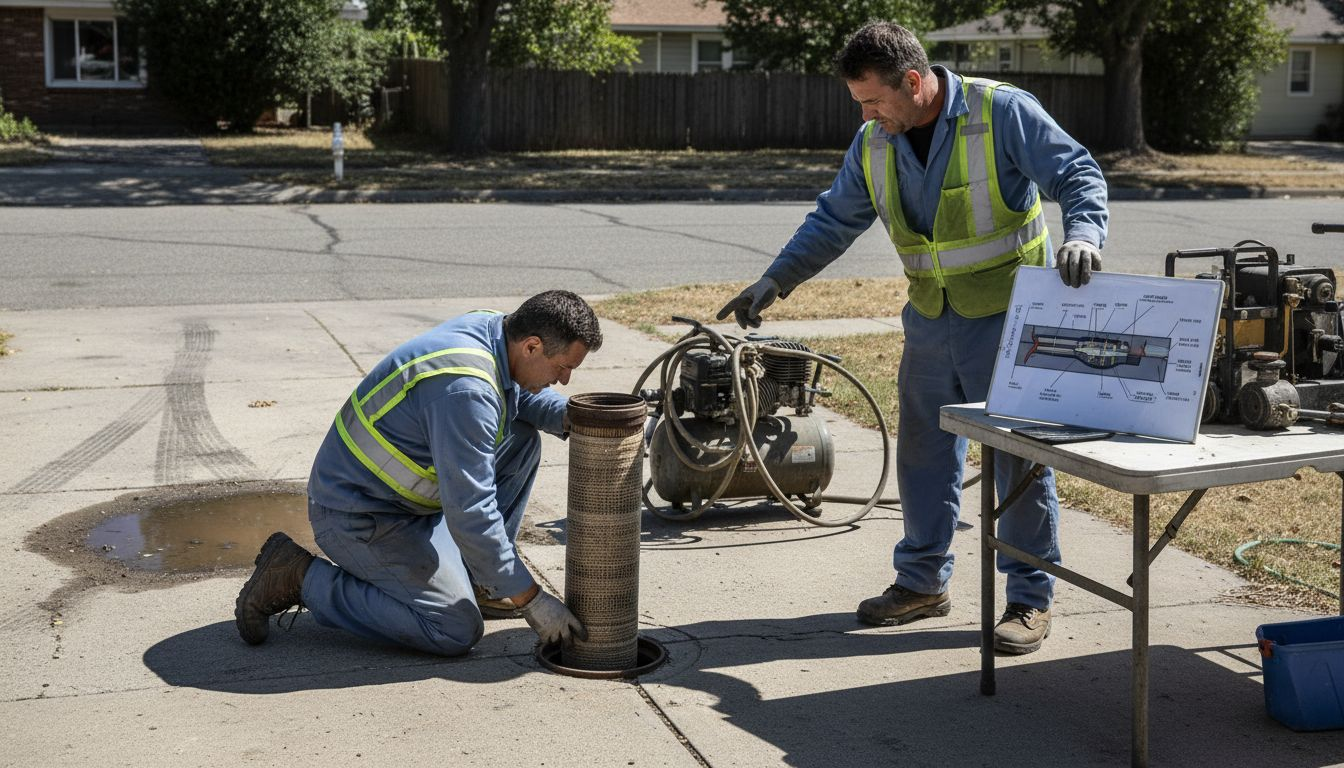
Before any repair work begins, your sewer line needs thorough cleaning. This removes debris, grease, scale, and tree roots that have invaded the pipe. High-pressure water jetting clears blockages and reveals the true condition of your pipes beneath the accumulated material.
Cleaning serves multiple purposes:
- Exposes hidden damage that cleaning might reveal
- Allows repair specialists to see exactly what they’re working with
- Prevents future blockages from interfering with the repair process
- Reduces contamination during rehabilitation work
Repair Technology Options
Once your line is clean and assessed, technicians choose the best repair method. Modern sewer repair techniques offer flexibility based on your specific situation and budget.
Common repair approaches include:
-
Trenchless pipe lining – A flexible, durable liner is inserted into your damaged pipe, creating a new pipe within the old one without digging up your yard
-
Pipe bursting – New pipe is pulled through while old pipe simultaneously breaks apart, removing the need for excavation
-
Sliplining – A smaller new pipe is inserted directly into the existing damaged pipe
-
Spray-applied lining – Protective coating is sprayed inside the pipe to seal cracks and extend its life
These pipe rehabilitation techniques minimize disruption to your property while restoring full functionality to your sewer system.
What Gets Restored
Regardless of the repair method chosen, the goal remains consistent: restore your sewer line to proper working condition. This means eliminating leaks, preventing further deterioration, and extending your pipe’s lifespan significantly.
Sewer line rehabilitation also prevents infiltration of groundwater and surface water into your system. These unwanted water sources increase treatment costs and can overwhelm your lateral lines connecting to the main sewer.
Modern sewer repair methods can restore your line’s integrity without the excavation damage that plagued homeowners a decade ago.
Private lateral lines (the pipes running from your home to the main sewer) require specialized attention. These smaller pipes in tight spaces demand techniques adapted for residential access and size constraints. Your repair specialist will recommend the best approach based on lateral depth, material, and damage extent.
Pro tip: Document your sewer line repair with before-and-after camera footage and warranty paperwork—this record helps future buyers and protects your home’s resale value.
Causes and Signs of Sewer Line Problems
Your sewer line doesn’t fail overnight—it breaks down over time from specific stressors. Recognizing what causes these failures and spotting early warning signs can save your Belleville home thousands in damage. Let’s explore what weakens your pipes and what symptoms demand immediate attention.
Common Causes of Sewer Line Failure
Sewer lines face stress from multiple directions. Research shows that weak concrete pipes lacking sufficient strength remain one of the top failure culprits. Heavy vehicles driving overhead compress aging pipes beyond their capacity, creating cracks that spread over months.
Other major causes include:
- Tree roots seeking moisture invade cracks and eventually collapse sections
- Soil settling or shifting places uneven pressure on pipes
- Corrosion from acidic groundwater eats through pipe walls
- Freezing temperatures cause concrete to crack and expand
- Poor installation or substandard materials from decades past
- Lack of regular maintenance allows small problems to become catastrophic
Signs Your Sewer Line Is Failing
Catch problems early by watching for these unmistakable warning signs. Your home will communicate distress through specific symptoms that shouldn’t be ignored.
Inside your home, watch for:
- Frequent backups in toilets, showers, or drains—especially multiple fixtures at once
- Slow drains throughout your home that don’t improve with standard unclogging
- Gurgling sounds from drains or toilets when water runs elsewhere
- Sewage odors in bathrooms, basement, or yard (unmistakable and unpleasant)
- Raw sewage backing up into your home through lowest-level fixtures
Outside warning signs deserve equal attention. These often appear before indoor problems reach critical levels.
Check your yard for:
- Lush green patches or unusually healthy grass fed by leaking sewage
- Soggy areas that stay wet even during dry weather
- Subsidence or settling where the ground sinks above the sewer line
- Cracks in your foundation or concrete driveway
- Multiple drain blockages requiring frequent professional clearing
A single backed-up toilet might be fixable, but backups across multiple fixtures signal a sewer line problem requiring professional diagnosis.
Some warning signs develop slowly. You might notice drains running slightly slower each month, or that wet spot in your yard expanding gradually. These gradual changes matter because they indicate deterioration that will worsen without intervention.
The combination of symptoms matters too. When you experience slow drains plus sewage odors plus outdoor wet patches, your sewer line almost certainly requires repair. Don’t wait for a complete backup to force action.
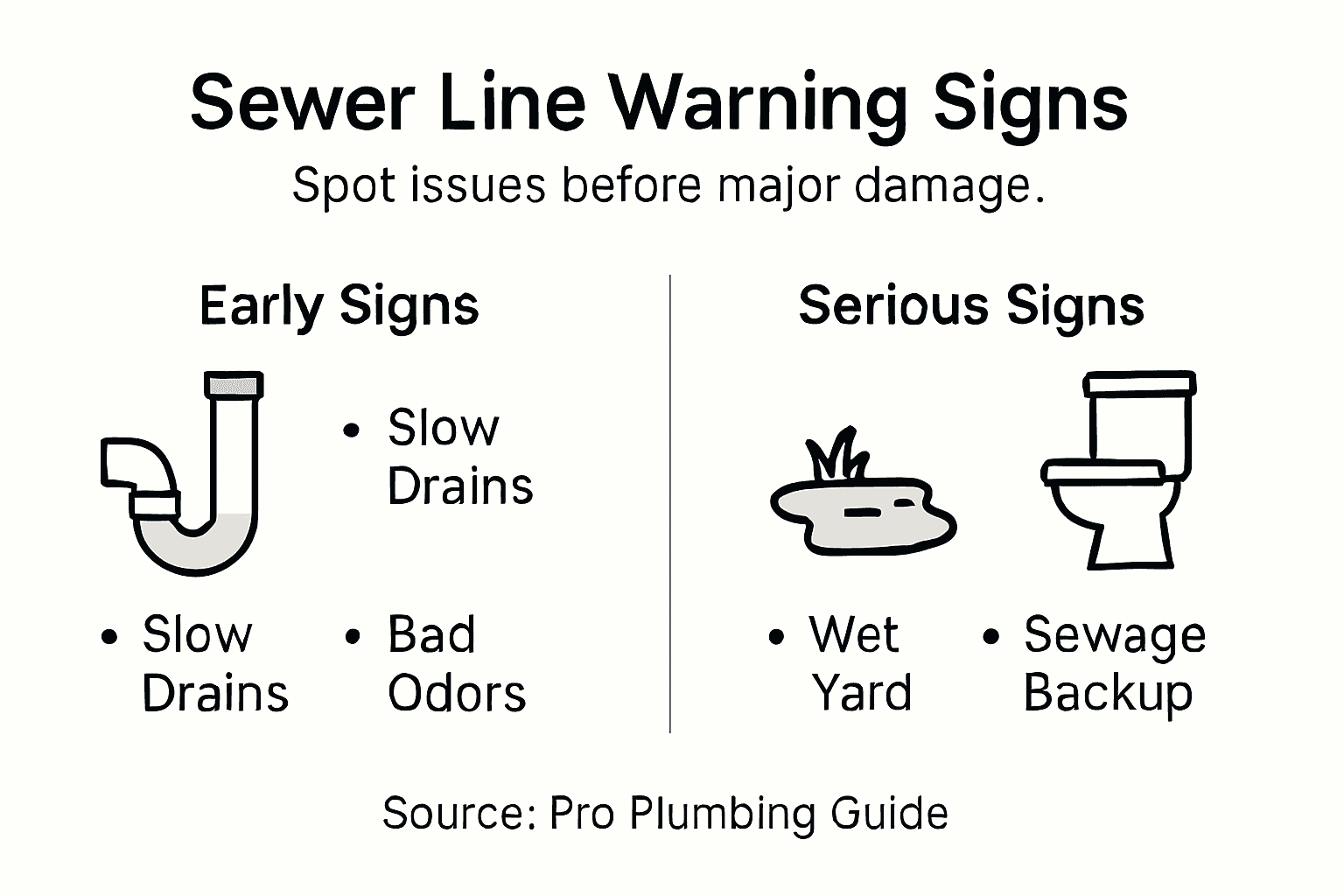
Below is a table summarizing warning signs of sewer line issues and what they may indicate:
| Symptom Location | Early Sign Example | Possible Issue |
|---|---|---|
| Inside Home | Gurgling drains | Impending blockage |
| Inside Home | Sewage odors | Crack or leak in pipes |
| Yard/Outside | Persistent wet patches | Underground pipe leak |
| Yard/Outside | Sinking ground | Pipe collapse or soil erosion |
| Whole Home Impact | Multiple slow drains | Major sewer line damage |
Pro tip: Schedule a professional sewer camera inspection if you notice any combination of these signs—early detection prevents costly emergency repairs and protects your foundation from sewage contamination.
Repair Methods: Traditional vs. Trenchless
When your sewer line needs repair, you face a fundamental choice: dig it up or fix it in place. Each approach offers distinct advantages and drawbacks. Understanding the differences helps you make an informed decision for your Belleville home.
Traditional Excavation Repair
Traditional repair means digging. Contractors excavate your yard down to the damaged pipe, remove the broken section, and install new pipe. This method has been used for decades and remains necessary in certain situations.
Traditional repair involves:
- Complete pipe removal and replacement
- Trenching across your property to access the line
- Restoration of landscaping and hardscaping afterward
- Full interruption of sewer service during work
- Significant labor costs due to heavy equipment and crew time
This approach works well when pipes are extremely damaged, deeply buried, or when multiple sections require replacement. Sometimes it’s the only viable option.
Trenchless Technology Solutions
Trenchless methods revolutionize sewer repair by minimizing digging. These modern technologies address your pipe problems with far less disruption to your property and wallet.
Trenchless repair technologies include cured-in-place pipe lining, pipe bursting, sliplining, and spray-applied liners. Each technique works differently but shares the same goal: restore your sewer line without massive excavation.
Key advantages of trenchless methods:
Here’s a side-by-side comparison of traditional excavation and trenchless sewer repair methods:
| Factor | Traditional Excavation | Trenchless Technology |
|---|---|---|
| Yard Disruption | Significant digging and mess | Minimal surface access |
| Repair Timeline | Up to several weeks | 1-3 days typical |
| Cost Range | $15,000 – $30,000+ | $8,000 – $15,000/section |
| Pipe Replacement | Entire section replaced | Existing pipe relined or burst |
| Suitability | Severely damaged or collapsed pipes | Most cracks, moderate damage |
| Service Interruption | Full shutoff during work | Often partial or none |
- Minimal surface disruption – Small access points instead of trenches across your yard
- Faster completion – Most jobs finish in days rather than weeks
- Lower labor costs – Fewer workers and less equipment required
- Maintain service – Your sewer operates during rehabilitation in many cases
- Reduced environmental impact – Less soil disruption and restoration needed
- Extended pipe life – New liners or replaced sections function like new pipes
Choosing Between Methods
Your specific situation determines which approach makes sense. Pipe condition, location, accessibility, and budget all influence the decision.
Trenchless methods cost less upfront and cause minimal yard damage, but traditional excavation sometimes remains the only realistic option for severely compromised pipes.
Traditional excavation becomes necessary when:
- Pipes are collapsed or crushed beyond repair
- Multiple sections need simultaneous replacement
- Access for trenchless equipment isn’t possible
- Pipe material is incompatible with lining technologies
Trenchless repair works best when:
- Cracks, leaks, or moderate damage require sealing
- You want to preserve your landscape and driveway
- Speed of repair matters for your household
- Budget constraints demand lower upfront costs
Your repair specialist evaluates your sewer line through camera inspection, then recommends the method that delivers the best outcome for your specific damage. Don’t assume one approach automatically beats the other—context matters.
Pro tip: Request a detailed comparison from your repair contractor showing timeline, cost, and yard impact for both traditional and trenchless options—this lets you make the best choice for your situation.
Risks, Costs, and Choosing a Professional
Sewer line repairs aren’t cheap, and mistakes can multiply expenses quickly. You face financial, legal, and property risks that demand careful attention. Choosing the right professional makes the difference between a solved problem and a nightmare.
Understanding Your Financial Responsibility
Before getting quotes, know who pays for what. Property owners are responsible for private lateral lines from their home to the public sewer connection. Your city or municipality handles the main line.
This distinction matters enormously. You’ll pay for repairs on your property’s lateral line, which can run anywhere from $3,000 to $25,000 depending on damage severity and repair method. The main line? That’s the city’s responsibility, though you still suffer when it fails.
What Sewer Repair Actually Costs
Sewer line repair expenses break down into several categories. Understanding each helps you budget accurately and spot inflated quotes.
Typical cost components:
- Camera inspection – $300 to $800 for diagnosis
- Cleaning – $300 to $600 to remove debris
- Trenchless lining repair – $8,000 to $15,000 per section
- Traditional excavation – $15,000 to $30,000+ for extensive work
- Emergency service fees – Add 50% to 100% for nights, weekends, holidays
Extensive damage requiring multiple sections or complete replacement pushes costs significantly higher. Location matters too—rural areas may cost less, but accessibility challenges can add thousands.
Risks of Delaying Repairs
Putting off sewer repair creates escalating problems. What starts as a small crack becomes a collapsed section, then spreads throughout your lateral line.
Delayed repair risks include:
- Property damage from raw sewage backing into your home
- Foundation issues from soil saturation and settling
- Environmental contamination affecting groundwater
- Health hazards from exposure to sewage and pathogens
- Dramatically higher costs when emergency replacement becomes necessary
Catching sewer problems early costs thousands less than waiting for complete failure and emergency repairs.
Choosing a Licensed Professional
Not all plumbers handle sewer repair equally. Your technician needs specific expertise in sewer systems, camera inspection, and modern repair technologies.
When evaluating contractors:
- Verify licensing and insurance – Check with Illinois Department of Financial and Professional Regulation
- Request references – Talk to past customers about their experience
- Ask about experience – How many sewer repairs have they completed?
- Get multiple bids – Compare costs, methods, and timelines
- Review warranty details – What’s guaranteed and for how long?
- Confirm local permits – They should handle all necessary city approvals
Hiring experienced professionals ensures proper diagnosis and adherence to local regulations, protecting you from liability and unexpected expenses down the road.
Reputable contractors provide written estimates, explain their repair method, and answer questions patiently. They don’t pressure you into immediate decisions or vague pricing.
Pro tip: Request detailed documentation including inspection photos, damage assessment, repair method explanation, and warranty details—this protects you legally and helps you understand exactly what you’re paying for.
Maintaining Sewer Lines to Prevent Issues
Prevention beats repair every time. A well-maintained sewer line costs far less than emergency replacement and keeps your Belleville home safe and dry. Simple maintenance steps protect your investment and prevent catastrophic failures.
Regular Inspection and Cleaning
Your sewer line can’t tell you when problems develop, so you need to check periodically. Routine inspection using robotic cameras and regular cleaning form the foundation of preventative maintenance.
Most homeowners benefit from sewer camera inspection every 3 to 5 years, especially if their home is older or they’ve experienced previous issues. Cleaning every 18 to 24 months removes buildup before it becomes problematic.
These routine services:
- Detect cracks and breaks before they spread
- Remove grease, mineral deposits, and roots
- Identify infiltration sources allowing groundwater entry
- Document your pipe’s condition for insurance and resale purposes
- Cost significantly less than emergency repairs
What You Can Control
You don’t have to wait for professionals to maintain your sewer line. Daily habits either protect or damage your pipes.
Never flush down your toilet:
- Paper towels or facial tissue
- Feminine hygiene products
- Dental floss or cotton swabs
- Medications or cleaning wipes
- Hair or lint
These items don’t break down like toilet paper and create blockages that damage your line.
Manage fats, oils, and grease carefully. Pour cooled bacon grease into a container for trash instead of down the drain. Wipe dishes before washing. These simple actions prevent the buildup that accelerates root intrusion and corrosion.
Protecting Your Cleanout
Your sewer cleanout cap marks where your private lateral connects to the main line. This access point needs protection.
Neglecting your cleanout cap invites insects, rodents, and rainwater directly into your sewer line, creating expensive infiltration problems.
Keep your cleanout area clear and the cap properly sealed. Don’t build over it or park heavy vehicles above it. The pressure damages pipes and prevents professional access when problems develop.
When to Schedule Professional Maintenance
Certain situations demand professional attention before they become emergencies. Preventative maintenance reduces sanitary sewer overflows and backup incidents, protecting your home and the environment.
Schedule professional service when:
- You notice slow drains developing across multiple fixtures
- Sewage odors appear in your yard or basement
- You see damp patches that persist through dry weather
- It’s been more than five years since your last inspection
- Your home is older than 40 years with original piping
Regular maintenance with professional plumbing maintenance tips prevents 80% of sewer problems. You’ll enjoy reliable service, avoid emergency costs, and protect your home’s value.
Pro tip: Schedule annual sewer maintenance in fall before winter freeze-thaw cycles stress your pipes, and document all inspections and cleaning records for your home’s file.
Protect Your Belleville Home with Expert Sewer Line Repair Solutions
Sewer line problems can cause serious damage to your home and peace of mind. Cracks, leaks, and backups are more than just an inconvenience—these issues threaten your foundation and health. If you have noticed slow drains, sewage odors, or wet patches in your yard it is time to act before costs and damage spiral out of control. At Davinroy Plumbing, we specialize in precise sewer line repair and frozen pipe repair using the latest trenchless technology to restore your pipes quickly with minimal disruption.

Don’t let costly emergency repairs catch you off guard. Schedule a professional camera inspection and cleaning today to detect issues early and protect your home. Learn how our trusted team delivers comprehensive plumbing services including toilet repair and hot water tank service, all tailored to the needs of Belleville homeowners. Visit Davinroy Plumbing now to secure reliable, licensed professionals who care about your property and your family’s safety.
Frequently Asked Questions
What are the common signs of sewer line problems?
Signs of sewer line issues include frequent backups in multiple fixtures, slow drains, gurgling sounds from drains, sewage odors in the home or yard, and wet patches in the yard that persist during dry weather.
What methods are used for sewer line repair?
Common sewer line repair methods include trenchless pipe lining, pipe bursting, sliplining, and spray-applied lining. Each of these techniques aims to restore your sewer line’s functionality with minimal digging and disruption to your property.
How often should I inspect and clean my sewer line?
It’s recommended to have a sewer camera inspection every 3 to 5 years and regular cleaning every 18 to 24 months to prevent buildup and catch any potential issues early on.
How much does sewer line repair cost?
The cost of sewer line repair can vary widely based on the damage and method used. Typical expenses range from $3,000 to $30,000, depending on whether trenchless methods or traditional excavation are employed.