When plumbing problems strike, they can disrupt your daily routine and add stress to your life. The right knowledge about repairs and maintenance is key to preventing expensive emergencies and water damage in your home. This guide delivers actionable solutions for tackling common plumbing issues, making your system safer and more efficient.
You will learn practical steps for dealing with leaks, clogs, fixture installations, and hot water tanks, all based on proven standards like the Uniform Plumbing Code and essential maintenance practices. The upcoming list gives you clear, reliable tips to protect your property, save water, and avoid hidden hazards. Get ready to discover techniques that can safeguard your plumbing system and keep your home comfortable year-round.
Table of Contents
- 1. General Plumbing Repairs For Everyday Issues
- 2. Professional Toilet Repair And Replacement
- 3. Hot Water Tank Installation And Maintenance
- 4. Frozen Pipe Repair And Prevention Tips
- 5. Drain Cleaning Services For Clogs
- 6. Leak Detection And Repair Solutions
- 7. Fixture Installation For Kitchen And Bathroom
Quick Summary
| Key Message | Explanation |
|---|---|
| 1. Regular Plumbing Maintenance Saves Money | Timely repairs prevent minor issues from escalating into costly emergencies and help maintain efficiency. |
| 2. Professional Toilet Services Enhance Functionality | Expert help ensures proper repairs and can upgrade to water-efficient models, saving on utility bills. |
| 3. Prevent Frozen Pipes with Proactive Measures | Insulate exposed pipes and maintain heating to avoid freezing, which can lead to severe water damage. |
| 4. Drain Cleaning Prevents Major Plumbing Issues | Professional drain cleaning techniques effectively resolve stubborn clogs, reducing potential repair costs. |
| 5. Leak Detection Technology Minimizes Damage | Advanced methods identify hidden leaks early, protecting your home and preventing significant water loss. |
1. General Plumbing Repairs for Everyday Issues
Every homeowner encounters plumbing challenges that require quick and effective solutions. General plumbing repairs are essential maintenance tasks that prevent minor issues from escalating into costly emergencies.
Understanding the basics of common home plumbing repairs helps homeowners protect their property and maintain water system efficiency. These repairs typically involve addressing leaks, unclogging drains, and fixing fixture problems before they cause significant damage.
Key general plumbing repair areas include:
- Fixing dripping faucets
- Repairing toilet mechanisms
- Sealing pipe leaks
- Replacing worn washers and seals
- Clearing slow-moving drains
- Addressing water pressure issues
Timely maintenance and proactive repairs can save homeowners hundreds of dollars in potential water damage restoration costs.
Most general plumbing repairs follow specific standards set by the Uniform Plumbing Code, which ensures safety and water efficiency. Homeowners should understand these basic repair techniques but also recognize when professional intervention is necessary.
Common diagnostic steps for general plumbing repairs include visual inspection, checking water pressure, and identifying the source of leaks or blockages. Simple tools like adjustable wrenches, plumber’s tape, and drain snakes can help resolve minor issues.
Pro tip: Keep a basic plumbing repair kit with essential tools and replacement parts to handle unexpected minor repairs quickly and efficiently.
2. Professional Toilet Repair and Replacement
Professional toilet repair and replacement services are critical for maintaining a functional and hygienic home plumbing system. Homeowners often underestimate the complexity of toilet maintenance and the potential long-term savings of professional intervention.
Modern toilet services go far beyond simple repairs. Professional plumbers can help you upgrade to water-efficient toilets that reduce water consumption and lower utility bills.
Key aspects of professional toilet repair include:
- Diagnosing complex mechanical issues
- Replacing damaged components
- Installing water-efficient fixtures
- Addressing hidden leaks
- Ensuring proper sanitation standards
- Preventing potential water damage
Professional toilet repair not only fixes immediate problems but also prevents costly future water damage and health hazards.
Most professional services follow strict OSHA sanitation guidelines, ensuring that toilet repairs meet comprehensive health and safety standards. These guidelines cover everything from fixture functionality to waste management and water conservation.
Toilet replacement considerations involve assessing the age of existing fixtures, water efficiency ratings, and overall performance. Modern toilets offer significant improvements in water usage, with low-flow and composting models providing environmentally friendly alternatives to traditional designs.
Pro tip: Schedule an annual toilet inspection to catch minor issues before they escalate into expensive repairs or complete fixture replacements.
3. Hot Water Tank Installation and Maintenance
Hot water tanks are the unsung heroes of home comfort providing consistent hot water for daily needs. Understanding proper installation and maintenance can significantly extend your system’s lifespan and efficiency.
Homeowners can benefit from selecting the right water heater based on household size and hot water consumption. The right tank ensures optimal performance and energy savings.
Key considerations for hot water tank services include:
- Proper tank sizing
- Fuel type selection
- Installation location
- Insulation requirements
- Safety feature integration
- Regular maintenance scheduling
A well-maintained hot water tank can improve energy efficiency by up to 50 percent and prevent unexpected breakdowns.
Professional storage water heater installation involves several critical steps such as secure mounting, appropriate connections, and comprehensive safety checks. This ensures your system operates at peak performance.
Maintenance best practices include annual professional inspections, sediment flushing, and checking anode rods for corrosion. These steps help prevent potential leaks and extend the tank’s operational life.
Pro tip: Schedule a professional hot water tank inspection every 12 months to catch potential issues before they become expensive repairs.
4. Frozen Pipe Repair and Prevention Tips
Frozen pipes can cause devastating damage to your home during cold winter months. Understanding how to prevent and address pipe freezing is crucial for protecting your plumbing system and avoiding costly repairs.
Homeowners can learn effective strategies for preventing winter pipe damage before temperatures drop dramatically. The key is proactive preparation and understanding how water behaves in freezing conditions.
Critical prevention strategies include:
- Insulating exposed pipes
- Maintaining consistent indoor heating
- Sealing air leaks near pipe locations
- Disconnecting outdoor hoses
- Opening cabinet doors to circulate warm air
- Allowing faucets to drip during extreme cold
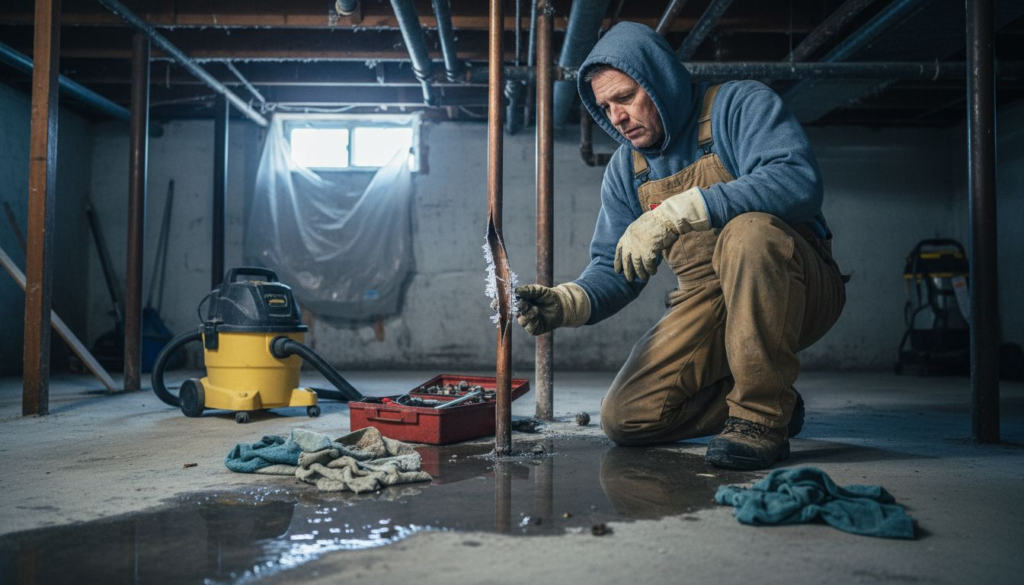
A single burst pipe can release hundreds of gallons of water and cause thousands of dollars in home damage.
When pipes do freeze, safe thawing techniques are essential. Start by shutting off the main water valve and using gentle heat sources like hair dryers or heating pads to slowly warm the affected pipe sections.
Vulnerable pipe locations typically include unheated areas like basements, crawl spaces, attics, and exterior walls. These spots require extra insulation and monitoring during cold snaps.
Pro tip: Install pipe sleeves or heat tape on exposed pipes before winter arrives to provide an additional layer of freeze protection.
5. Drain Cleaning Services for Clogs
Clogged drains can quickly transform from a minor inconvenience to a major plumbing nightmare. Professional drain cleaning services offer comprehensive solutions to prevent and resolve stubborn blockages before they escalate.
Homeowners can benefit from professional drain cleaning techniques that go beyond typical household remedies. These specialized services use advanced equipment to thoroughly clear and maintain your home’s drainage system.
Types of drain cleaning services include:
- High-pressure water jetting
- Mechanical auger and snake techniques
- Video pipe inspection
- Enzyme-based drain treatments
- Chemical-free cleaning methods
- Preventative maintenance services
A single professional drain cleaning can prevent hundreds of dollars in potential water damage and plumbing repairs.
Different blockages require different approaches. Eco-friendly drain cleaning alternatives can address minor clogs while minimizing environmental impact and protecting your pipes from harsh chemical damage.
Potential blockage sources range from hair and soap scum to grease and food particles. Professional plumbers can identify and address these issues efficiently and safely.
Pro tip: Install drain strainers in kitchen and bathroom sinks to catch debris before it creates stubborn clogs.
6. Leak Detection and Repair Solutions
Leaks can silently destroy your home’s structural integrity and waste hundreds of gallons of water each year. Professional leak detection and repair services provide comprehensive solutions to identify and resolve hidden plumbing issues before they become catastrophic.
Modern technology enables advanced leak detection techniques that go beyond traditional visual inspections. These sophisticated methods help homeowners catch potential problems early and prevent extensive water damage.
Key leak detection and repair services include:
- Acoustic monitoring systems
- Thermal imaging scans
- Pressure testing
- Electronic sensor networks
- Non-invasive diagnostic tools
- Underground pipe leak identification
Undetected leaks can cause up to $10,000 in property damage if left unchecked.
Regulatory standards now require comprehensive leak survey protocols that help protect homeowners and the environment. Professional plumbers use cutting-edge technologies to pinpoint even the most elusive water and gas leaks.
Warning signs of potential leaks include unexplained water bill increases, musty odors, wall discoloration, and soft or wet spots near pipes.
Pro tip: Install water leak detection sensors in high-risk areas like under sinks, near water heaters, and in basements to catch potential issues early.
7. Fixture Installation for Kitchen and Bathroom
Fixture installation is more than just placing a sink or faucet; it’s a critical process that impacts your home’s functionality, water efficiency, and overall aesthetic appeal. Professional installation ensures your kitchen and bathroom fixtures meet both safety standards and design expectations.
Homeowners can benefit from understanding the comprehensive plumbing fixture guidelines that govern proper installation techniques. These standards protect your investment and prevent potential future issues.
Key considerations for fixture installation include:
- Precise measurements and alignment
- Proper water supply connections
- Compliance with local plumbing codes
- Water efficiency ratings
- Material compatibility
- Aesthetic design integration
- Anti-backflow protection
Correct fixture installation can reduce water waste by up to 30 percent and prevent potential plumbing failures.
Professional plumbers use specialized installation protocols that go beyond simple placement. These methods ensure long-term performance and minimize potential leaks or structural damage.
Fixture selection factors range from water pressure requirements to design compatibility with existing plumbing infrastructure.
Pro tip: Always confirm manufacturer specifications and local building codes before installing new kitchen or bathroom fixtures to ensure proper fit and compliance.
Below is a comprehensive table summarizing the key topics, strategies, and recommendations discussed throughout the article on varied plumbing services and their importance.
Protect Your Home with Expert Plumbing Services from Davinroy Plumbing
Homeowners in Belleville face challenges like leaking pipes, frozen plumbing, clogged drains, and outdated fixtures that can lead to costly water damage and repair bills. This article highlights important plumbing solutions such as hot water tank maintenance, professional toilet repairs, and leak detection all critical to keeping your plumbing system safe and efficient.
Don’t wait until a small leak or frozen pipe turns into a major problem. Trust Davinroy Plumbing to provide reliable and timely service tailored to your needs including plumbing repairs, hot water tank service, toilet repair, and frozen pipe repair. Visit Davinroy Plumbing now to schedule your appointment and safeguard your home with expert care.
Frequently Asked Questions
What types of general plumbing repairs should homeowners know about?
General plumbing repairs include fixing dripping faucets, repairing toilet mechanisms, sealing pipe leaks, and clearing slow-moving drains. Understanding these common repairs can help you maintain your plumbing system and prevent more serious issues from developing.
How can I choose the right professional for toilet repair and replacement?
Look for professionals who specialize in diagnosing complex issues and installing water-efficient toilets. Request quotes and check customer reviews to ensure you select a reliable plumber who can meet your specific needs.
What maintenance is required for hot water tanks?
Regular maintenance for hot water tanks includes annual inspections, sediment flushing, and checking the anode rods for corrosion. This can extend the tank’s lifespan and improve energy efficiency, potentially saving you money on utility bills.
How can I prevent frozen pipes in winter?
To prevent frozen pipes, insulate exposed pipes, maintain consistent indoor heating, and seal any drafts around pipe locations. Taking these proactive steps can protect your plumbing system and help you avoid costly repairs.
What should I do if I have a clogged drain?
Start by using a drain striker to catch debris, and consider scheduling professional drain cleaning services for more stubborn blockages. This can help prevent serious plumbing issues and maintain your drainage system’s efficiency.
How can I detect leaks in my plumbing system?
Install water leak detection sensors in high-risk areas like under sinks or near water heaters to catch leaks early. Regularly monitor your water bill for sudden increases, which can be a sign of hidden leaks.