A burst pipe or faulty toilet can disrupt any Belleville homeowner’s routine. Fast, reliable help from a professional plumber matters when water damage or frozen pipes threaten your comfort and safety. These specialists bring expert training and rigorous certification to every job, safeguarding your home with solutions that follow strict plumbing codes. Discover how choosing the right expert protects your investment and restores peace of mind when plumbing emergencies strike.
Table of Contents
- Defining Professional Plumbing Services
- Types of Plumbers and Service Specialties
- Key Skills and Qualifications Needed
- Plumbing Codes and Legal Requirements
- Risks of Unskilled or DIY Plumbing
- Real Costs and Common Misconceptions
Key Takeaways
| Point | Details |
|---|---|
| Professional plumbers undergo extensive training. | They must know local codes, safety regulations, and advanced techniques to ensure proper installation and maintenance. |
| Specialization is key in plumbing. | Different plumbers focus on residential, commercial, service, or industrial plumbing, each requiring unique skills. |
| DIY plumbing carries significant risks. | Unskilled attempts can lead to severe damage and costs that greatly exceed hiring a professional. |
| Compliance with plumbing codes is essential. | Professional plumbers must adhere to strict regulations to maintain safety and ensure quality work. |
Defining Professional Plumbing Services
Professional plumbing services encompass a comprehensive range of specialized skills and expertise focused on maintaining, repairing, and installing complex water and drainage systems in residential and commercial properties. A professional plumber is not just a repair technician, but a highly trained tradesperson who understands intricate plumbing system complexities.
These experts undergo rigorous training and certification processes that go far beyond basic repair work. Professional plumbers are required to understand detailed technical specifications, local building codes, safety regulations, and advanced installation techniques. They must be able to read complex architectural layouts, diagnose sophisticated system problems, and implement precise solutions that ensure water quality, system efficiency, and long-term infrastructure integrity.
The scope of professional plumbing services includes critical areas such as potable water installation, hot water system management, sewage and drainage network design, fixture replacement, leak detection, and emergency repair services. Compliance with standardized plumbing codes is fundamental to their professional practice, ensuring that every installation meets strict public health and safety requirements.
Pro tip: Always verify a plumber’s professional licensing and ask to see their certifications before hiring, as this demonstrates their commitment to industry standards and quality workmanship.
Types of Plumbers and Service Specialties
Plumbing professionals are not a one-size-fits-all workforce. Instead, they specialize in distinct areas that require unique skills, training, and technical expertise. Plumbing careers encompass multiple specialized domains that address different infrastructure needs across residential, commercial, and industrial settings.
The primary plumbing specialties include residential plumbers, commercial plumbers, service plumbers, and industrial plumbers. Residential plumbers focus on home-based systems, handling everything from kitchen sink installations to bathroom remodeling projects. Commercial plumbers work in larger settings like office buildings, schools, and shopping centers, managing more complex piping networks and adhering to stricter building codes. Service plumbers specialize in repair and maintenance, responding to emergency calls and diagnosing systemic issues in existing plumbing infrastructure.
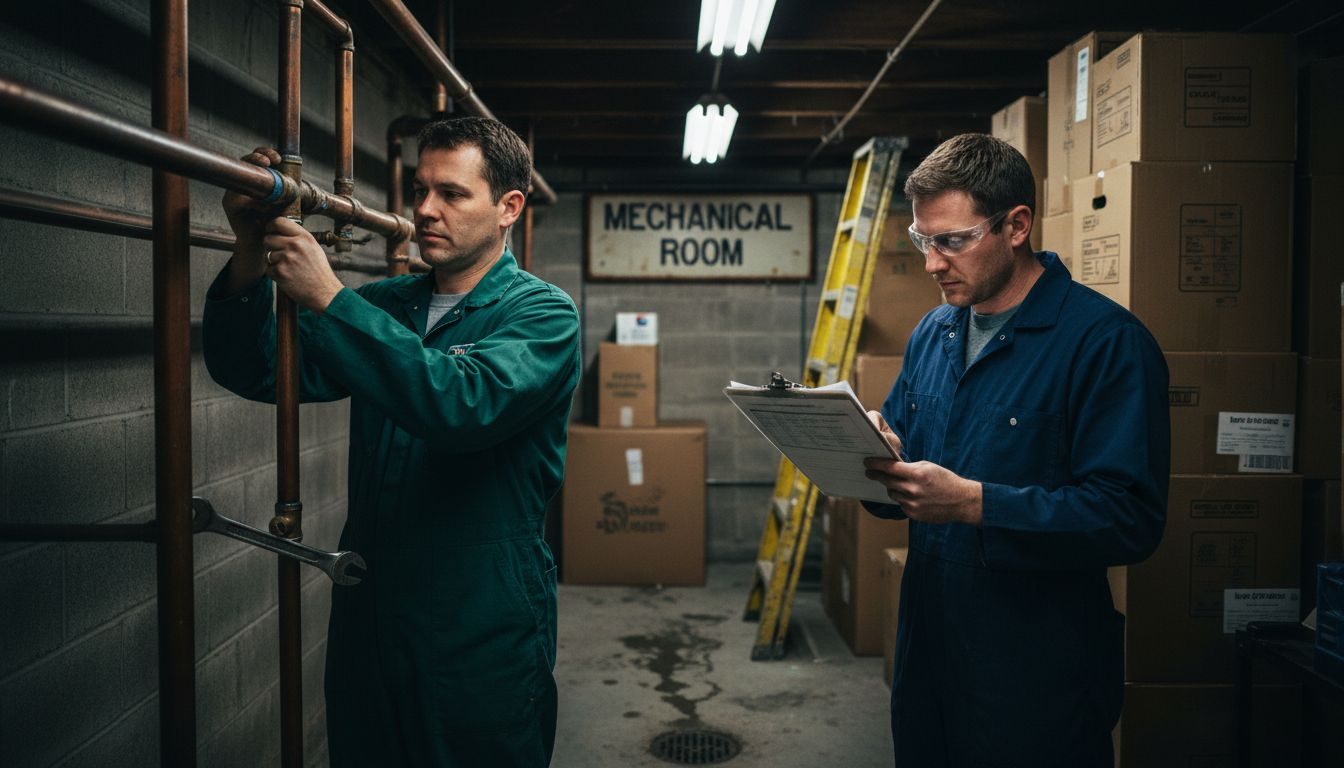
Industrial plumbers represent a highly specialized subset, working in manufacturing facilities, power plants, and large-scale production environments. These professionals require advanced technical knowledge of specialized piping systems, high-pressure installations, and complex professional certifications that go beyond traditional plumbing training. Their work often involves intricate welding, precise system design, and understanding unique industrial infrastructure requirements.
Pro tip: When hiring a plumber, always confirm their specific specialty and ask about their experience in the exact type of project you need completed.
Here’s a comparison of plumbing specialties, highlighting their primary settings, skills, and common challenges:
| Specialty | Typical Work Setting | Key Skill Requirement | Common Challenges |
|---|---|---|---|
| Residential Plumber | Homes, apartments | Fixture installation expertise | Older pipe systems, space limits |
| Commercial Plumber | Offices, schools, hospitals | Large network design skills | Complex codes, high traffic |
| Service Plumber | Various (on-call) | Rapid diagnostics | Emergency repairs, varied issues |
| Industrial Plumber | Factories, power plants | High-pressure system handling | Custom infrastructure, safety |
Key Skills and Qualifications Needed
Becoming a professional plumber requires far more than basic mechanical skills. Comprehensive training and extensive skill development are essential components of a successful plumbing career. Professional plumbers must master a complex blend of technical knowledge, practical abilities, and critical thinking skills that go well beyond simple wrench work.
The educational journey typically involves a rigorous four to five-year apprenticeship program that combines classroom instruction with hands-on technical training. Key technical competencies include advanced blueprint reading, comprehensive understanding of building codes, proficiency with specialized tools, and the ability to diagnose complex system problems. Plumbers must develop exceptional spatial reasoning skills, mathematical precision for measurements and calculations, and strong problem-solving capabilities to address unique infrastructure challenges.
Beyond technical skills, professional plumbers must demonstrate extensive professional certifications that validate their expertise and commitment to industry standards. These qualifications often require ongoing professional development, safety training, and specialized knowledge in areas like water system design, pipe installation techniques, and regulatory compliance. Physical stamina, attention to detail, excellent communication skills, and the ability to work in challenging environmental conditions are equally important qualifications that separate exceptional plumbers from average technicians.
Pro tip: Request to see a plumber’s current professional certifications and ask about their recent training to ensure you’re hiring a truly qualified professional.
Plumbing Codes and Legal Requirements
Plumbing codes represent a critical framework that ensures public safety, health, and the proper functioning of water and waste management systems. Uniform Plumbing Code regulations establish mandatory standards that professional plumbers must follow, protecting homeowners from potential infrastructure failures and health risks.
These comprehensive legal requirements cover multiple critical aspects of plumbing installation and maintenance. Key regulations include precise specifications for pipe sizing, drainage systems, fixture installation, venting protocols, and material standards. Local jurisdictions often adopt and sometimes modify these codes to address specific regional environmental and infrastructure challenges. Professional plumbers must demonstrate thorough knowledge of these regulations, ensuring that every installation meets or exceeds the minimum safety and performance standards established by national and local governing bodies.
The legal landscape of plumbing is dynamic, with ongoing code updates and technical regulations reflecting technological advancements and emerging public health insights. Each update requires plumbers to engage in continuous professional development, maintaining certifications and staying current with the latest safety protocols. Compliance involves not just technical expertise, but also navigating complex permit processes, passing rigorous inspections, and maintaining detailed documentation of all professional work.
Pro tip: Always request documentation of code compliance and permit details from your plumber to ensure your home’s plumbing meets current legal and safety standards.
Risks of Unskilled or DIY Plumbing
Do-it-yourself plumbing might seem like a cost-saving strategy, but it can quickly transform into an expensive and dangerous endeavor. Unskilled plumbing attempts frequently result in significant infrastructure damage, potential health hazards, and substantial financial consequences that far outweigh any initial savings.
The most critical risks of amateur plumbing work involve complex technical challenges that extend beyond simple tool usage. Improper pipe connections can lead to devastating water leaks, structural damage, mold growth, and potential contamination of drinking water systems. Homeowners without professional training often lack the nuanced understanding of local building codes, pipe material compatibility, pressure regulations, and precise installation techniques required to ensure a safe and functional plumbing system.
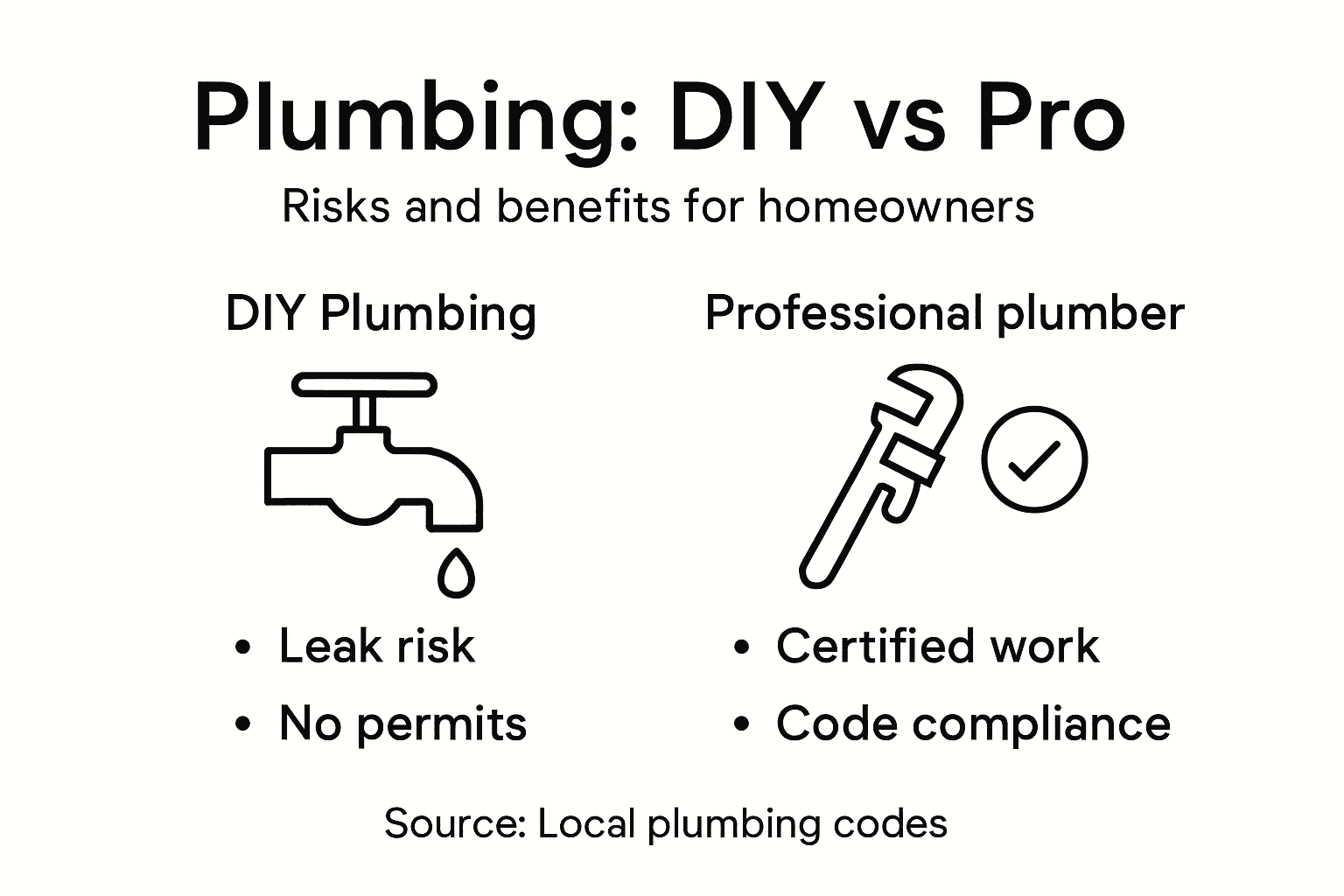
Beyond immediate structural risks, unlicensed plumbing practices can invalidate home insurance policies, create legal liability issues, and potentially compromise the entire property’s value. Professional plumbers undergo extensive training to understand complex system interactions, recognize potential failure points, and implement solutions that meet rigorous safety standards. Their expertise prevents catastrophic failures that could result in tens of thousands of dollars in repair costs, water damage restoration, and potential health-related expenses.
Pro tip: Before attempting any plumbing repair, honestly assess your technical skills and always consult a professional if you have any uncertainty about the complexity of the project.
To clarify DIY versus professional plumbing impact, consider the risks and benefits:
| Approach | Typical Risks | Insurance Impact | Long-Term Cost Outlook |
|---|---|---|---|
| DIY Plumbing | Water leaks, code violations | May void policy | Potentially much higher |
| Professional Plumber | Low, expert compliance | Usually covered | Reduced future repairs, savings |
Real Costs and Common Misconceptions
Homeowners often mistakenly believe that DIY plumbing is a straightforward way to save money, but this perception frequently masks significant financial risks. Professional plumbing cost analysis reveals that amateur repairs can lead to exponentially higher expenses compared to hiring skilled professionals from the outset.
The most pervasive misconception is that plumbing repairs are simple mechanical tasks anyone can complete. In reality, modern plumbing systems are complex networks requiring specialized knowledge of pipe materials, pressure dynamics, local building codes, and intricate system interactions. A seemingly minor error can trigger catastrophic failures that result in water damage, structural compromises, and costly remediation that can easily exceed thousands of dollars in unexpected repairs.
Beyond immediate repair costs, licensed professional services provide long-term value through comprehensive solutions that prevent future issues. Professional plumbers offer systematic diagnostics, precision repairs, warranty protection, and compliance with safety standards that DIY attempts cannot match. Their expertise translates into reduced water waste, improved system efficiency, and potential prevention of significant infrastructure damage that could dramatically impact a home’s overall value and structural integrity.
Pro tip: Request detailed written estimates from professional plumbers that break down potential long-term savings and compare them against the apparent short-term costs of DIY repairs.
Protect Your Home with Trusted Professional Plumbing Services
The article highlights how important it is to rely on skilled professionals who understand complex plumbing codes and system requirements to protect your home from costly damage. Key challenges like emergency repairs, code compliance, and accurate leak detection demand expert care. Ignoring these can lead to expensive repairs and insurance issues. At Davinroy Plumbing, we specialize in addressing these exact problems with services including hot water tank service, toilet repair, and frozen pipe repair to keep your home safe and water systems efficient.
Don’t risk unlicensed work or DIY mistakes that could jeopardize your property. Contact Davinroy Plumbing today to connect with a licensed professional who meets all regulatory standards. Whether you need emergency assistance or routine plumbing maintenance in the Belleville, Illinois area, our team delivers fast, reliable solutions you can trust. Learn more about how we can safeguard your home by visiting our plumbing services page now.
Frequently Asked Questions
What are the key responsibilities of professional plumbers?
Professional plumbers are responsible for maintaining, repairing, and installing water and drainage systems, ensuring proper compliance with plumbing codes and regulations.
How do I identify if I need to hire a professional plumber?
If you face persistent leaks, clogs, low water pressure, or other plumbing issues that you cannot resolve yourself, it’s best to hire a professional to avoid further damage.
What qualifications should I look for when hiring a plumber?
Look for a plumber with the necessary licenses, certifications, and significant experience in the specific type of project you need, as well as a solid understanding of local plumbing codes.
Why is DIY plumbing often a bad idea?
DIY plumbing can lead to costly errors, code violations, and potential damage, making it a risky approach compared to hiring a qualified professional who ensures compliance and safe installations.