When a faucet drips nonstop or a toilet runs mysteriously, homeowners in Belleville know plumbing troubles can quickly turn into headaches. These issues matter because every component in your system—pipes, valves, fixtures, and tanks—works together to deliver safe water and remove waste. Knowing your plumbing’s parts gives you confidence for DIY repairs and helps you spot problems early. Plumbing systems are more than just pipes—they’re essential for health and safety in Illinois homes.
Table of Contents
- Plumbing System Components Defined And Debunked
- Types Of Pipes, Fixtures, And Fittings Explained
- How Valves, Traps, And Vents Keep Water Flowing
- Common Diy Mistakes With Plumbing Components
- When To Call A Licensed Belleville Plumber
Key Takeaways
| Point | Details |
|---|---|
| Understand Your Plumbing System | Familiarize yourself with the components of your plumbing to maintain it better and catch issues early. |
| Know When to Call a Professional | Complex plumbing issues, such as sewer line backups and significant repairs, should always be handled by licensed professionals. |
| Avoid Common DIY Mistakes | Connecting incompatible materials and neglecting vents can lead to costly plumbing failures; always consult building codes before starting projects. |
| Impact of Local Conditions | Be aware of local factors such as hard water and freezing temperatures, which can affect the performance and maintenance of your plumbing system. |
Plumbing System Components Defined and Debunked
Your home’s plumbing system is far more complex than most Belleville homeowners realize. It’s not just pipes running behind your walls—it’s an interconnected network of components working together to deliver clean water and remove waste safely. Understanding what these parts are and how they function helps you maintain your system better and recognize problems early.
What Actually Makes Up Your Plumbing System
Plumbing systems consist of pipes, valves, fixtures, and tanks that work in coordination to serve two main purposes: bringing potable water into your home and removing wastewater out of it. Think of it as two separate highways—one carrying fresh water in, the other carrying used water out. These systems are essential for public health and sanitation, which is why building codes are so strict about how they’re installed.
Here are the major components you’ll encounter:
- Water supply pipes deliver fresh water from the municipal line to your fixtures
- Drain-waste-vent (DWV) pipes carry wastewater and sewer gases away from your home
- Valves control water flow and shut off water when repairs are needed
- Fixtures include sinks, toilets, showers, and tubs where water enters and exits
- Water heater warms water for daily use
- Traps and vents prevent sewer gas from backing into your home
Common Myths About Plumbing Components
Most homeowners believe their plumbing is one unified system. It’s not—it’s actually two completely separate systems operating independently. The clean water coming to your kitchen sink has nothing to do with the wastewater leaving your toilet, even though both use pipes in your walls.
Another misconception: all pipes are the same. They’re absolutely not. Supply pipes use different materials and configurations than drain pipes because they handle different pressures and water conditions.
People also assume older plumbing automatically needs replacement. Sometimes it does, but properly maintained systems from the 1970s and 1980s can still function well today. The NIST technical standards for premise plumbing systems provide detailed models showing how typical residential plumbing performs across decades, proving that age alone doesn’t determine failure.
Why This Matters in Belleville
Illinois winters affect plumbing differently than other regions. Freezing temperatures impact pipes in ways warm climates never experience. Knowing your system’s weak points helps you prevent frozen pipes before winter arrives.
Hard water is another regional consideration affecting your components. Mineral buildup inside pipes and fixtures accumulates differently depending on your water source, which impacts maintenance schedules.
Taking Action
Familiarizing yourself with your plumbing layout takes one afternoon. Walk through your basement or crawl space and trace where major pipes run. Locate your main water shut-off valve—you’ll need it in emergencies.
Understanding your plumbing components helps you communicate problems clearly to professionals and catch issues before they become expensive repairs.
Pro tip: Take photos of your plumbing system from different angles and store them in your phone. When you need to describe a problem to a plumber, you’ll have visual reference instead of struggling to explain what you saw.
Types of Pipes, Fixtures, and Fittings Explained
Not all pipes are created equal, and that’s why your plumbing system uses different materials in different locations. The pipes bringing water to your shower don’t work the same way as the pipes carrying wastewater away. Understanding these differences helps you recognize problems and talk intelligently with plumbers about repairs.
Supply Pipes vs. Drain Pipes
Your home has two separate pipe networks. Supply pipes deliver pressurized water to your faucets, toilets, and appliances. Drain pipes rely on gravity to move wastewater away from your fixtures toward the sewer line.
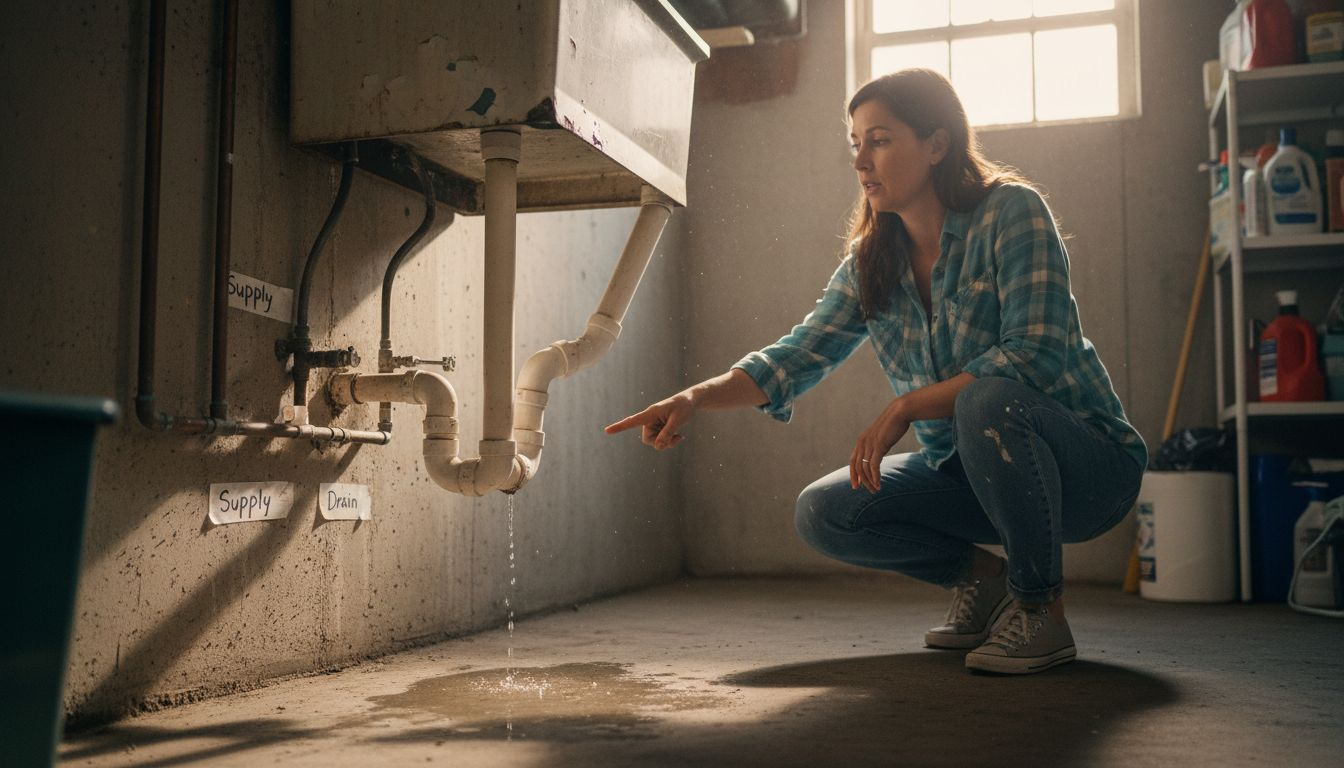
This fundamental difference means supply pipes must handle pressure while drain pipes must prevent leaks and allow air to escape. You can’t use the same material for both jobs—the engineering requirements are completely different.
Common Pipe Materials in Belleville Homes
Copper pipes dominated installations from the 1960s through the 1990s in Illinois. They’re durable, corrosion-resistant, and last 50+ years when maintained properly. If your home was built during this era, your supply lines are likely copper.
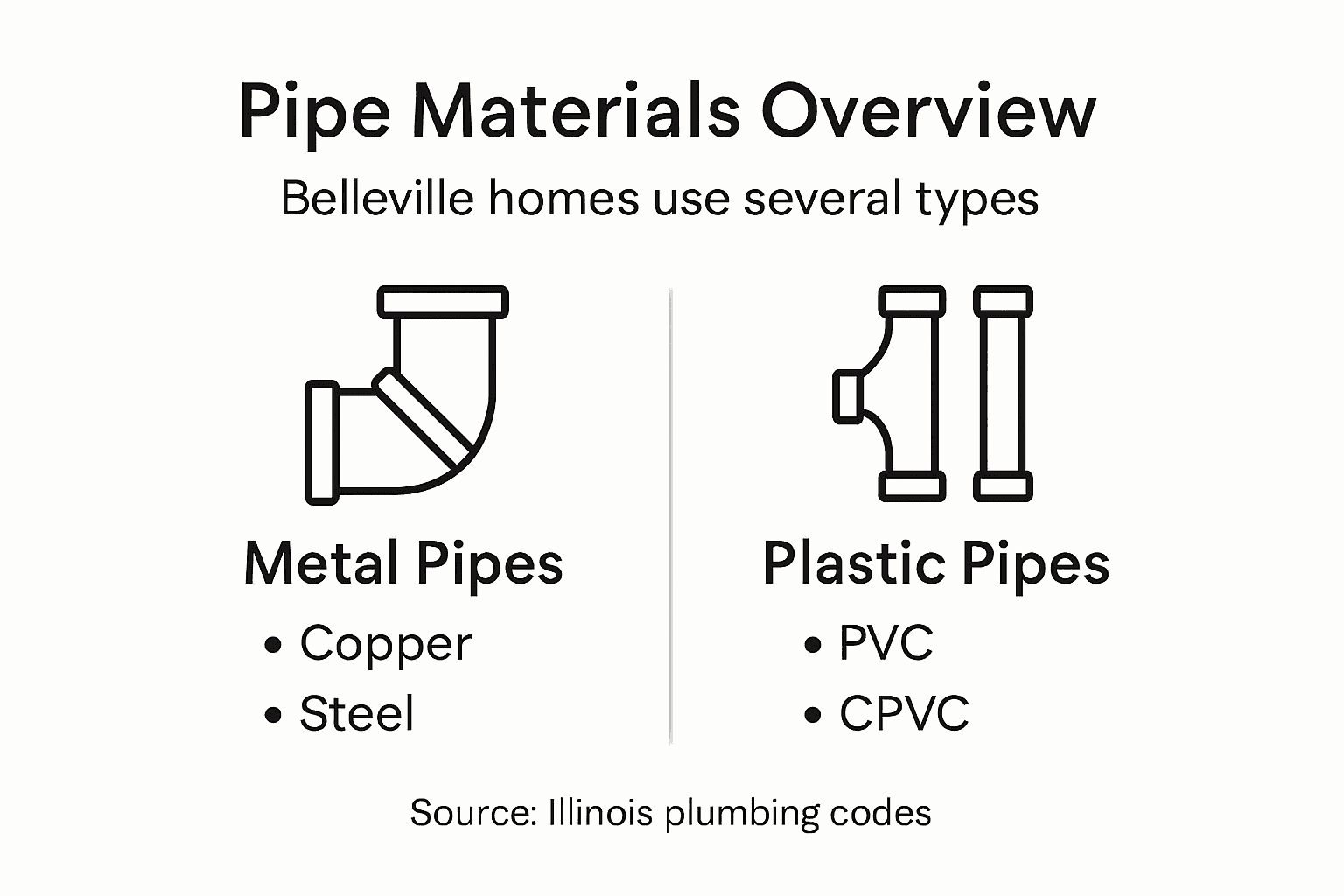
PVC and CPVC plastics became popular for drain-waste-vent systems and, later, for water supply. PVC handles cold water and drainage beautifully. CPVC handles hot water without degrading. These materials are affordable, easy to install, and resistant to many of the issues that plague older pipes.
Galvanized steel pipes appear in older homes, especially before 1980. These pipes corrode from the inside over decades, restricting water flow and reducing water quality. Many Belleville homeowners with galvanized systems eventually replace them with copper or PVC.
Piping and fitting materials vary based on application, local codes, and performance requirements. Your specific choice depends on whether the pipe carries pressurized supply water or gravity-fed drainage.
Here’s a quick reference guide comparing common pipe materials found in Belleville homes:
| Pipe Material | Typical Usage | Lifespan | Key Pros | Main Drawbacks |
|---|---|---|---|---|
| Copper | Water supply lines | 50+ years | Durable, resists corrosion | Higher initial cost |
| PVC | Drain-waste-vent systems | 40–50 years | Affordable, easy to install | Not for hot water |
| CPVC | Hot/cold water supply pipes | 50 years | Heat resistant, low cost | Brittle in cold climates |
| Galvanized Steel | Older supply lines | 40–60 years | Strong, used pre-1980 | Prone to internal corrosion |
What Fixtures and Fittings Actually Do
Fixtures are where water enters and exits your system—sinks, toilets, showers, and tubs. Fittings connect pipes together and redirect water flow. Think of fittings as the joints that make plumbing possible.
Common fitting types include:
- Elbows change pipe direction at 45-degree or 90-degree angles
- Tees split one pipe into two directions
- Couplings join two pieces of pipe end-to-end
- Adapters connect different pipe materials together
- Valves control or shut off water flow
Each fitting comes in different materials matching the pipes they connect. Copper fittings join copper pipes. PVC fittings connect PVC pipes. Mixing materials requires special adapters to prevent corrosion.
Material Selection Matters
The piping specification guide covers strengths, weaknesses, and suitability for different applications. Some materials corrode faster in certain water conditions. Hard water, acidic water, and high-temperature conditions affect how long materials last.
Belleville’s water quality and Illinois winters both influence which materials perform best in your home. What works perfectly in Florida might fail in Illinois.
Quality pipes and fittings cost more upfront but save you thousands in emergency repairs and water damage down the line.
Pro tip: When planning any plumbing work, ask your plumber which materials they recommend for your specific water conditions and climate—don’t assume one solution fits all homes.
How Valves, Traps, and Vents Keep Water Flowing
Three often-overlooked components work silently to keep your plumbing functioning properly: valves, traps, and vents. Most homeowners never think about them until something goes wrong. Understanding what they do helps you prevent problems and appreciate the engineering behind your home’s water systems.
Valves Control Everything
Valves are your plumbing system’s gatekeepers. They start, stop, throttle, and redirect water flow throughout your home. When you turn a faucet handle, you’re operating a valve. When a plumber shuts off water to repair a toilet, they’re using a valve.
Valves control fluid flow, pressure, and direction/03%3A_Sensors_and_Actuators/3.09%3A_Valves_-_Types_Kinds_and_Selection) within plumbing systems to maintain efficient operation. Different valve types handle different jobs:
- Ball valves turn water on or off with a quarter-turn handle
- Check valves allow water to flow one direction only, preventing backflow
- Pressure relief valves protect your water heater from excessive pressure
- Gate valves slowly open or close for gradual flow control
- Mixing valves blend hot and cold water to maintain safe temperatures
Your home probably has 10 to 20 valves working right now, controlling water to different fixtures and protecting your system from damage.
Traps Seal Out Sewer Gas
Traps are U-shaped or S-shaped sections of pipe beneath your sinks, toilets, and showers. They hold standing water that creates a seal, preventing sewer gas from backing into your home. That water sitting in the trap is your nose’s best friend.
When you flush a toilet or drain a sink, wastewater flows through the trap, refilling it with fresh water after use. This continuous cycle keeps the seal intact. If a drain sits unused for weeks, the water evaporates and gases can escape into your home.
Traps also catch debris before it reaches your main sewer line. Hair, grease, and food particles accumulate in the trap rather than clogging your pipes further downstream.
Vents Allow Air to Escape
Vents might be the most misunderstood part of your plumbing system. They’re not for removing odors—that’s what traps do. Vents allow air into drain pipes so wastewater flows smoothly by gravity rather than creating a vacuum that slows drainage.
Without vents, your drains would slow to a crawl or stop entirely. Water would struggle to move through pipes because air pressure builds behind it. Vents typically run vertically through your walls and exit through your roof.
How These Three Work Together
Valves stop and start water movement while controlling pressure throughout your system. Traps prevent dangerous gases from entering your home while catching debris. Vents ensure water flows freely by maintaining proper air pressure.
Remove any one of these components, and your plumbing system fails. This is why plumbing codes are so strict about where and how these parts install.
To help clarify the function of critical plumbing components, see this summary:
| Component | Main Purpose | Consequence if Failing | Maintenance Tip |
|---|---|---|---|
| Valve | Controls water flow | Leaks or water shutoff failures | Operate occasionally to prevent sticking |
| Trap | Blocks sewer gas entry | Foul odors, health risks | Check for water in unused drains |
| Vent | Allows drain air movement | Slow drainage, gurgling | Ensure roof vent is clear |
A missing vent or broken trap doesn’t just create drainage problems—it can expose your family to sewer gases and health hazards.
Pro tip: If you notice slow drains, foul odors, or gurgling sounds, one of these three components is likely failing—don’t ignore these warning signs.
Common DIY Mistakes With Plumbing Components
DIY plumbing repairs appeal to homeowners looking to save money, but mistakes with plumbing components can cost thousands in water damage and emergency repairs. Most common errors stem from not understanding how components work together or skipping steps that seem unnecessary. Learning what goes wrong helps you avoid becoming another cautionary tale.
Mixing Incompatible Materials
One of the biggest mistakes is connecting different pipe materials without proper adapters. Copper and PVC seem like they should work together, but corrosion happens at the connection point where dissimilar metals meet.
Galvanized steel touching copper creates an electrochemical reaction that eats through metal over months or years. Homeowners often don’t see the problem until water starts leaking inside walls. Using incompatible materials causes accelerated corrosion that destroys your plumbing system from the inside out.
Always verify that fittings match your pipe material. If you must join different materials, use dielectric unions designed specifically for that purpose.
Forgetting About Vents
Many DIYers install new drains without adding proper vent pipes. Drains slow to a crawl, water backs up into showers, and homeowners blame the fixtures instead of understanding the real problem.
Vents aren’t optional or cosmetic—they’re required by code for a reason. Improper fixture installation and misunderstanding plumbing codes result in systems that fail or violate safety standards.
If you’re adding a bathroom or modifying drains, consult building codes or hire a professional to ensure venting is correct.
Poor Sealing and Joint Work
Plumbers spend years mastering the art of tight, watertight connections. DIYers often under-tighten or over-tighten fittings, creating leaks that develop weeks after the work is done.
Using the wrong sealant tape or not using enough causes slow drips that damage framing and drywall invisibly. Thread sealant tape must wrap clockwise, overlap properly, and be applied with correct tension—skills that take practice.
Common mistakes include these troublesome errors:
- Forgetting to use sealant tape on threaded connections
- Applying plumber’s putty instead of sealant tape on male threads
- Over-tightening fittings until they crack
- Under-tightening, leaving gaps for leaks
- Using old, dried-out sealant tape from a utility drawer
Ignoring Trap Seals
Removing or bypassing traps to “improve drainage” is a costly mistake. Homeowners smell sewer gas and assume the trap is the problem when actually it’s a missing vent or clogged drain.
Traps exist for your health and safety. Removing them exposes your home to dangerous sewer gases and allows pests inside. If a drain smells bad, the solution is never to remove the trap.
Not Knowing Local Codes
Plumbing codes vary between municipalities. What’s legal in one Illinois county might violate codes in another. DIYers often don’t realize they’ve installed something that won’t pass inspection or fails to meet safety standards.
The cheapest DIY repair becomes the most expensive when it causes water damage or fails inspection and requires complete removal and reinstallation.
Pro tip: Before attempting any plumbing work beyond simple fixture replacement, call your local building department and ask about permit requirements—saving a permit fee often costs far less than fixing code violations later.
When to Call a Licensed Belleville Plumber
Knowing when to handle plumbing yourself and when to call a professional separates smart homeowners from those facing expensive disasters. Many Belleville homeowners attempt repairs beyond their skill level, turning minor problems into major water damage. Understanding your limits protects your home and family.
Issues Beyond DIY Territory
Some plumbing problems require specialized knowledge and tools that DIYers simply don’t have. Sewer line backups, water heater failures, and whole-house pressure issues demand professional expertise.
Complex leaks, sewer line problems, and water heater malfunctions require specialized tools and expertise to avoid costly damage or code violations. Attempting these repairs without proper training wastes time and money while making the problem worse.
Pipe bursts inside walls, frozen lines in crawl spaces, and septic system failures all fall into this category. These aren’t problems you fix with a YouTube video and a trip to the hardware store.
When Building Codes Matter
Plumbing work must meet local building codes, and violations create serious problems. Unpermitted work fails home inspections, complicates insurance claims, and even prevents home sales.
Licensed plumbers understand codes and ensure safety standards during installation and repair work. Building inspectors in Belleville won’t approve DIY plumbing modifications. A professional handles permits and inspections, protecting you legally.
Situations Demanding Professional Help
Certain red flags mean it’s time to call someone licensed:
- Water backing up into multiple fixtures simultaneously
- Sewage smell inside or around your home
- Wet spots appearing in your foundation or yard
- Water pressure that’s suddenly very low or nonexistent
- Visible corrosion on supply pipes
- Leaks you can’t locate or stop
- Any work requiring digging into your yard
- Water heater problems beyond pilot light issues
- Frozen pipes during Illinois winters
These situations involve risks—flooding, gas leaks, sewage exposure, or structural damage. Professional plumbers carry insurance protecting you if something goes wrong during repairs.
Your Time Has Value
DIY plumbing takes significantly longer than professional work. A plumber completes in hours what takes you days of research and trial-and-error.
Consider the cost of your time against the service fee. If you’re earning $50 per hour and a repair takes 8 hours of research and work, you’ve just “saved” $400—minus the cost of tools and supplies you probably won’t use again.
Recognizing Your Skill Limits
Basic maintenance like cleaning aerators or replacing a toilet flapper? That’s fine for handy homeowners. Anything beyond fixture replacement or minor drain cleaning belongs with licensed professionals.
Calling a plumber early prevents small leaks from becoming water damage requiring contractors, mold remediation, and insurance claims.
Pro tip: Keep Davinroy Plumbing’s contact information in your phone—when plumbing emergencies strike during Illinois winters, waiting hours to find a plumber costs you far more than calling the right professional immediately.
Protect Your Belleville Home With Expert Plumbing Care
Understanding your home’s complex plumbing components like valves, traps, vents, and the differences between supply and drain pipes is the first step toward preventing costly water damage and health hazards. If you notice slow drains, leaks, or frozen pipes, waiting could lead to serious problems during Illinois winters or intense wear from hard water.

Davinroy Plumbing offers trusted services including frozen pipe repair, toilet repair, and hot water tank service tailored specifically for the Belleville climate and water conditions. Don’t wait for a minor leak to become a major disaster. Visit Davinroy Plumbing now to schedule your inspection or emergency repair. Get peace of mind knowing your plumbing system is safe and reliable with professionals who understand every component of your system.
Frequently Asked Questions
What are the main components of a plumbing system?
A plumbing system consists of water supply pipes, drain-waste-vent pipes, valves, fixtures, water heaters, traps, and vents that work together to deliver clean water and remove wastewater.
How do I prevent frozen pipes in my plumbing system?
Knowing your plumbing layout helps identify weak points that might freeze. Ensure pipes in unconditioned spaces are insulated, and disconnect and drain outdoor hoses before winter to prevent freezing.
What are the differences between supply pipes and drain pipes?
Supply pipes carry pressurized water to fixtures, while drain pipes rely on gravity to remove wastewater. They require different materials and designs to function properly under their respective conditions.
Why is it important to understand plumbing components for maintenance?
Familiarity with your plumbing components enables you to identify problems early, communicate effectively with professionals during repairs, and maintain optimal function, potentially saving you from expensive repairs.