Plumbing emergencies can disrupt your daily routine and lead to expensive repairs if you miss the warning signs. Small leaks, sudden drops in water pressure, or odd noises in your pipes are often your home’s way of alerting you to hidden problems. Acting early can save you from health risks or costly water damage.
This list gives you actionable ways to spot plumbing emergencies before they escalate. You’ll learn how to recognize clues like unusual damp spots, low water pressure, and strange pipe sounds. These clear steps come from proven methods, helping you protect your home and wallet with confidence.
Get ready to uncover practical tips that make identifying plumbing issues simple. Each insight shows you what to watch for so you can respond quickly and avoid bigger headaches down the line.
Table of Contents
- 1. Notice Sudden Drops In Water Pressure
- 2. Watch For Water Leaks And Damp Spots
- 3. Identify Unusual Noises In Pipes
- 4. Check For Overflowing Or Clogged Drains
- 5. Look For No Hot Water Or Rapid Temperature Changes
- 6. Spot Frozen Pipes Or Burst Pipe Signs
Quick Summary
| Takeaway | Explanation |
|---|---|
| 1. Monitor Water Pressure Regularly | Regular checks help identify sudden drops that indicate serious plumbing issues requiring immediate attention. |
| 2. Act Quickly on Water Leaks | Identifying and addressing leaks early prevents extensive damage and costly repairs. |
| 3. Recognize Unusual Pipe Noises | Strange sounds can indicate developing plumbing problems that need professional diagnosis. |
| 4. Address Clogged Drains Immediately | Ignoring slow drains can lead to sewage backups, causing significant health hazards and damage. |
| 5. Prevent Frozen Pipes During Winter | Keep vulnerable pipes warm to avoid freezing and bursting, which can lead to costly repairs. |
1. Notice Sudden Drops in Water Pressure
Your home’s water pressure tells a story about your plumbing system’s health. When pressure suddenly drops, it’s your first warning sign that something has gone wrong.
Normal water pressure typically ranges between 60 and 70 PSI in most homes. Anything below 20 PSI creates a serious problem that allows contaminants to enter your pipes and compromises your water safety.
Why Sudden Drops Matter
A sudden pressure drop usually signals one of these issues:
- Pipes have developed cracks or breaks inside your walls or under your foundation
- Water main breaks are occurring in the street, disrupting your home’s supply
- A significant leak is draining water faster than your system can deliver it
- Internal valve failures are restricting water flow to your home
Water main breaks often cause sudden pressure drops and disruptions throughout your neighborhood. When this happens, you’ll notice weak water flow from faucets, showers that barely trickle, and toilets that fill slowly.
How to Spot This Emergency
You don’t need special equipment to notice pressure changes. Simply pay attention to your daily routine and watch for these signs:
- Your shower suddenly feels weaker than yesterday
- Kitchen faucets deliver less water than normal
- Multiple fixtures are affected at the same time
- Pressure seems fine one moment, then drops the next
A sudden, unexplained pressure drop across multiple fixtures in your home almost always indicates a leak or break in your main water line.
Why This Demands Quick Action
Low water pressure affects more than comfort. When pressure falls below safe levels, contaminants can be sucked into your pipes through small cracks. This creates a health hazard for your family.
Plus, whatever is causing the pressure drop—whether a leak or break—only gets worse with time. Water damage spreads, structural problems develop, and your utility bills climb higher each day the leak continues.
What You Should Do Right Away
If you notice a sudden pressure drop, take these steps immediately:
- Check your water meter to confirm water is flowing (or if a major leak is occurring)
- Contact a professional plumber to locate the source
- Document when the pressure drop started and which fixtures are affected
- Avoid using large amounts of water until the problem is found
Davinroy Plumbing can help you identify whether this is a quick fix or emergency situation requiring immediate attention. We respond quickly to pressure drops because we know the damage clock is ticking.
Pro tip: Monitor your water pressure weekly by running a simple test—let water fill a cup for 10 seconds and estimate the flow, or install an inexpensive pressure gauge at an outdoor faucet to track changes over time before they become emergencies.
2. Watch for Water Leaks and Damp Spots
Water leaks rarely announce themselves with fanfare. They hide behind walls, under floors, and in crawl spaces until the damage becomes impossible to ignore. Learning to spot them early saves your home from serious structural damage.
Damp spots are your home’s way of sending an SOS signal. Whether you notice soft patches on your ceiling, dark stains on drywall, or moisture pooling in your basement, these signs point to water moving where it shouldn’t be.
Why Leaks Become Emergencies
A small drip today becomes a big problem tomorrow. Water doesn’t stay put—it spreads, soaks into materials, and creates conditions for mold growth. The longer a leak continues unaddressed, the more expensive the repair becomes.
Household leaks waste thousands of gallons annually and drive up your water bills significantly. But the real danger is structural damage. Water weakens wood framing, corrodes metal, and destroys insulation in ways you can’t always see until it’s too late.
Common Places to Find Leaks
Leaks develop in predictable locations because that’s where plumbing systems face the most stress. Check these areas first when hunting for problems:
- Under sinks in kitchen and bathrooms
- Around toilet bases where water seals wear out
- Behind washing machines and water heaters
- In basement corners and along foundation walls
- Along exterior walls after heavy rain
- Inside crawl spaces and attics near plumbing runs
How to Spot Damp Spots Before They Spread
You don’t need expensive moisture meters to detect problems. Your senses work perfectly fine. Look for visible water stains, feel for soft or spongy areas on walls and ceilings, and notice musty odors that signal mold development.
Basement moisture often reveals underlying plumbing leaks or drainage failures. If your basement smells damp or feels wet after rain, investigate plumbing first before assuming it’s a drainage issue.
Damp spots that appear suddenly or grow over time almost always indicate an active leak somewhere in your system, even if you can’t see water actively dripping.
What Happens If You Wait
Ignoring damp spots leads to mold, mildew, and health problems for your family. Structural materials rot from the inside out. Your home’s value drops, and eventually, you face foundation issues or ceiling collapses that cost tens of thousands to repair.
Your Action Plan
When you discover a leak or damp spot, move quickly:
- Shut off water to that area if possible
- Dry the affected area to stop mold from taking hold
- Take photos documenting the damage and location
- Contact a plumber to locate the leak source
Davinroy Plumbing specializes in finding leaks that hide from homeowners and stopping them fast. We know that damp spots rarely appear by accident—something in your plumbing is failing and needs professional attention.
Pro tip: Walk your basement or crawl space monthly looking for new damp patches, especially along exterior walls and near water heater or furnace areas, since catching leaks early prevents thousands in water damage and mold remediation costs.
3. Identify Unusual Noises in Pipes
Your pipes talk to you if you know how to listen. Strange banging, knocking, or whistling sounds aren’t random noise—they’re diagnostic clues that something in your plumbing system needs attention.
Healthy plumbing runs quietly. When your pipes start making noise, water is moving abnormally through them, or something is restricting flow. These sounds are your early warning system before visible damage appears.
The Most Common Problem Sounds
Different noises point to different problems. Learning to recognize them helps you describe the issue accurately when you call a plumber.
- Loud banging or hammering when you shut off water indicates water hammer, a shock wave created by sudden valve closure
- High-pitched whistling suggests water is forcing through a partially blocked pipe or faulty valve
- Rattling or vibrating sounds mean pipes aren’t secured properly to your home’s structure
- Gurgling noises coming from drains signal air trapped in lines or a blocked drain
- Hissing sounds often indicate small leaks or high water pressure putting stress on pipes
Why Water Hammer Matters
Water hammer effects from sudden pressure changes can signal serious plumbing emergencies. That violent clang you hear isn’t just annoying—it’s actually a pressure wave moving through your pipes at high speed, potentially damaging fittings and joints.
Over time, water hammer weakens pipes and connections. What starts as an occasional bang can lead to leaks, burst pipes, and flooding. It’s also a sign your water pressure might be too high for your system.
When to Take Action Immediately
Some noises demand urgent attention. If you hear continuous banging when any fixture runs, or if unusual sounds are accompanied by leaking water or pressure changes, contact a plumber right away.
Abnormal pipe noises rarely fix themselves and typically indicate developing problems that worsen without professional intervention.
How to Investigate
Before calling for service, gather information that helps your plumber diagnose the issue. Notice when the sounds occur, which fixtures trigger them, and whether the noise changes with water usage patterns.
- Run hot water at a single fixture and listen for noises
- Shut off water completely and listen for continuing sounds
- Check if noises occur only when certain appliances run
- Record the sound on your phone if it’s intermittent
This information saves time and helps a professional pinpoint the problem faster. In Belleville, where older homes have aged piping, unusual noises often reveal corrosion or deterioration happening inside your walls where you can’t see it.
Davinroy Plumbing can identify what those strange sounds mean and whether your system needs repairs or replacement. Don’t ignore what your pipes are telling you.
Pro tip: Turn off major appliances and listen to your pipes for 30 seconds in silence—unusual sounds become much clearer without competing noise, making it easier to determine whether the problem is serious.
4. Check for Overflowing or Clogged Drains
A clogged drain starts as an annoyance and becomes an emergency fast. When water backs up instead of draining away, you’re looking at potential flooding, sewage damage, and costly repairs that could have been prevented.
Drains tell you everything about your plumbing’s health. Slow drainage, gurgling sounds, and backups are all warning signs that something is blocking your system and creating pressure that your pipes weren’t designed to handle.
Why Clogs Turn Into Emergencies
A single slow drain might seem minor, but clogs rarely stay small. Hair, soap buildup, grease, and debris accumulate over time. As the blockage grows, pressure builds behind it, forcing water to find alternative routes through your plumbing system.
When sewage backups occur from clogged or overwhelmed drains, they can damage your home’s foundation, flood basements, and create serious health hazards. In Belleville, where many homes sit on older clay soil, drainage problems compound quickly.
The Warning Signs to Watch For
Catching a clogging problem early means you can fix it before sewage backs up into your home. Here’s what to monitor:
- Multiple drains draining slowly at the same time points to a main line clog
- Toilets that won’t flush completely or are running constantly
- Sink or tub water that drains then backs up into other fixtures
- Gurgling sounds coming from drains or toilets when other water runs
- Foul odors coming from drains, indicating trapped sewage
- Water pooling in your yard or unusual wet patches near your foundation
Why Some Clogs Are Emergencies
Not all slow drains require emergency service, but some do. If water is backing up into your home, you have a blockage in your main line that demands immediate professional attention. This isn’t something to ignore hoping it clears itself.
Poor drainage and blocked pipes can cause water damage and property hazards that spread rapidly through your foundation and walls. The longer you wait, the more damage accumulates.
Multiple slow drains or any backflow of water into your home indicates a serious clog that requires professional clearing to prevent sewage backup and flooding.
What to Do When Drains Back Up
If you notice water backing up, take action immediately. Stop using water until the problem is diagnosed. Here’s your action plan:
- Stop using all water in your home to prevent backup into living areas
- Document what’s backing up and which fixtures are affected
- Note when the problem started and if it follows heavy rain
- Contact a plumber with drain cleaning equipment to locate the blockage
Davinroy Plumbing has the equipment to clear main line clogs that simple plungers and store-bought products can’t touch. We find where blockages are hiding and remove them completely, not just temporarily.
Pro tip: Install drain screens on all tub and shower drains to catch hair before it enters your pipes, and avoid pouring grease down kitchen drains since it hardens as it cools and creates stubborn blockages.
5. Look for No Hot Water or Rapid Temperature Changes
Your shower’s temperature tells you something important about your plumbing system’s health. When hot water disappears completely or fluctuates wildly between scalding and freezing, your water heater or plumbing is sending an emergency signal.
Hot water problems rarely develop overnight without cause. They point to equipment failure, broken mixing valves, leaks in supply lines, or dangerous conditions that need professional attention immediately.
Why Sudden Hot Water Loss Matters
Your water heater works hard every day, and it can fail without warning. When it stops producing hot water, you lose a critical home system. But more importantly, the reason it failed might indicate plumbing damage elsewhere in your system.
Water emergencies that disrupt heating systems can cause no hot water or temperature fluctuations signaling equipment failure or supply interruptions. In Belleville’s older homes, water heater failure often coincides with corrosion problems affecting your entire plumbing system.
The Problem Signs
Pay attention to these warning indicators that demand immediate investigation:
- No hot water at all coming from any fixture in your home
- Water temperature swinging from extremely hot to ice cold unexpectedly
- Hot water that comes out rusty or discolored
- Water heater making unusual noises like banging or rumbling
- Puddles or water pooling around your water heater
- Pilot light on your water heater refusing to stay lit
Temperature Swings Are Different From Simple Pressure Issues
If your water temperature fluctuates wildly, your mixing valve may be failing. This valve balances hot and cold water before it reaches your fixtures. When it stops working correctly, you get scalding water one second and cold water the next.
This isn’t just uncomfortable. Failing mixing valves can cause dangerous burns and often indicate that your water heater itself is developing internal problems. The mixing valve failure might be your first clue that the heater needs replacement soon.
Sudden loss of hot water or rapid temperature swings almost always indicate a water heater or mixing valve problem requiring professional diagnosis to prevent system damage.
When to Call Immediately
Some hot water problems are true emergencies. If you smell gas near your water heater, see flames or sparks, or notice water pooling beneath it, stop using hot water and call a professional right away.
- Turn off the water heater at its shutoff valve
- Stop using hot water to prevent further system stress
- Document when the problem started and how temperature fluctuates
- Note if the problem follows power outages or heavy water usage
- Contact a professional to inspect the heater and mixing valves
Davinroy Plumbing provides complete water heater diagnosis and repair. Whether your heater needs simple repair or replacement, we’ll identify the problem and fix it before your emergency becomes more costly.
Pro tip: Test your water heater’s temperature by running hot water for 30 seconds then measuring it with a thermometer—water should reach 120 to 140 degrees Fahrenheit, and anything significantly lower indicates a failing heater.
6. Spot Frozen Pipes or Burst Pipe Signs
Frozen pipes are a winter emergency that can destroy your home’s plumbing system in hours. When temperatures plummet, water inside exposed pipes turns to ice, expands, and eventually bursts the pipe itself. Knowing the warning signs lets you act before catastrophic damage occurs.
Belleville winters bring the exact conditions that freeze pipes. When outdoor temperatures drop below 20 degrees Fahrenheit, pipes in unheated areas become vulnerable. The damage happens fast, and the repair bill can reach thousands of dollars.
Why Frozen Pipes Turn Into Emergencies
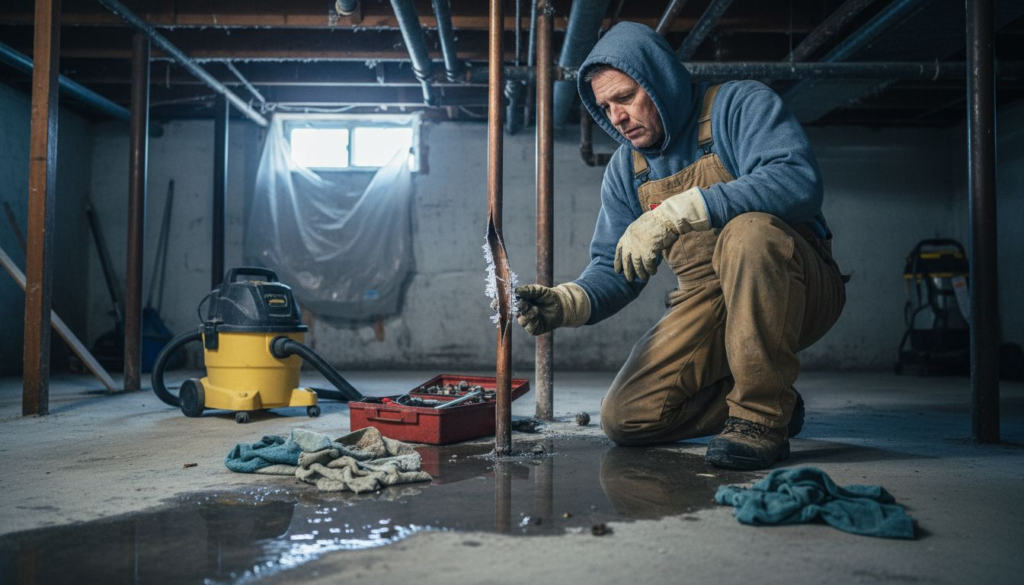
Water expands as it freezes, creating enormous pressure inside pipes. That pressure builds until something gives way, and when a pipe bursts, water floods into your walls, attic, or crawl space. By the time you notice water damage, the pipe has likely been leaking for hours.
Frozen pipes typically occur when temperatures drop below 20 degrees Fahrenheit in unheated areas like attics, crawl spaces, and garages. These locations lack the warmth your home’s living spaces receive, making them prime freeze zones.
The Early Warning Signs
Catch frozen pipes before they burst by watching for these signals:
- No water coming out of a faucet or fixture
- Reduced water pressure from specific fixtures or throughout your home
- Visible frost or ice coating on exposed pipes
- Bulging or swollen sections of pipe
- Musty odors indicating water damage behind walls
- Cracks or water stains appearing on ceilings or walls
Where Pipes Freeze First
Frozen pipes don’t appear randomly. They develop in predictable cold spots where your protection is weakest. Check these vulnerable areas first during winter weather:
- Exterior wall pipes, especially those on north-facing walls
- Pipes running through unheated basements or crawl spaces
- Attic pipes with inadequate or missing insulation
- Garage pipes far from heated living spaces
- Pipes near exterior doors and windows
How to Respond to Frozen Pipes
Preparedness tips include insulating pipes, letting faucets drip, and opening cabinet doors to allow warm air circulation around vulnerable lines. If you suspect a frozen pipe, act immediately before it bursts.
Reduced water pressure or no water flow during freezing weather almost always means a pipe is frozen or has burst, requiring immediate professional attention.
Your Emergency Action Plan
If you discover a frozen pipe, follow these steps carefully:
- Stop using water to prevent additional pressure buildup
- Open cabinet doors under sinks to allow warm air access
- Locate the frozen section by checking where water flow stops
- Apply gentle heat with warm water or a heat lamp, never a blowtorch
- Leave faucets slightly open so water can flow as ice melts
- Call a professional if you can’t locate the frozen section
Davinroy Plumbing responds to frozen pipe emergencies year-round. We thaw pipes safely and inspect for burst damage that might not be immediately visible. If bursting has occurred, we repair or replace the damaged sections before water destroys your home’s structure.
Pro tip: During extreme cold, let a thin stream of water drip from your faucets overnight since moving water resists freezing, and open cabinet doors under sinks so warm house air can reach pipes in exterior walls.
Below is a comprehensive table summarizing the key signs, causes, and solutions for common plumbing problems as discussed in the article.
| Plumbing Issue | Key Indicators | Proposed Actions |
|---|---|---|
| Sudden Drops in Water Pressure | Weak water flow, low pressure across multiple fixtures | Check water meter, contact professional plumber, document affected fixtures |
| Water Leaks and Damp Spots | Dampness, stains, musty odors, soft spots | Shut off water, remove moisture, document damage, call for a plumber |
| Unusual Noises in Pipes | Banging, whistling, rattling, or gurgling noises | Observe and note the sounds; contact a plumber to diagnose and resolve |
| Overflowing or Clogged Drains | Slow drainage, backflow, gurgling sounds | Stop water usage, note affected fixtures, contact a plumber for blockage removal |
| Lack of Hot Water or Temperature Fluctuations | No hot water, inconsistent temperatures, discolored water | Inspect water heater, document symptoms, contact a professional for repair |
| Frozen or Burst Pipes | No water due to freezing, bulging pipes, water damage signs | Apply heat carefully, keep faucets open, contact emergency plumbing services |
Protect Your Home from Plumbing Emergencies with Davinroy Plumbing
Spotting sudden drops in water pressure, leaks, unusual pipe noises, clogged drains, or burst pipes can be challenging but crucial for your Belleville home. These issues threaten your safety, comfort, and budget by causing mold, water damage, or costly repairs. Don’t wait until an emergency spreads beyond control. Our skilled team at Davinroy Plumbing is ready to handle plumbing emergencies, hot water tank service, and frozen pipe repair with fast, reliable solutions tailored to your needs.

Take action now to prevent minor problems from becoming disasters. Explore our comprehensive plumbing services at Davinroy Plumbing. Whether you need urgent repairs or routine maintenance, trust us to restore your water pressure, clear drains, or repair burst pipes. Visit https://davinroyplumbing.com or call us today for peace of mind and expert care.
Frequently Asked Questions
How can I identify sudden drops in water pressure at home?
A sudden drop in water pressure can usually be detected by observing weaker water flow from faucets and showers. If you notice inconsistent pressure or symptoms across multiple fixtures, check your water meter to confirm if water is still flowing and contact a plumber for immediate assistance.
What are the signs of a water leak or damp spots in my home?
Look for dark stains on ceilings, soft patches on walls, or moisture pooling in areas like basements. These damp spots indicate water movement where it shouldn’t be, so act quickly by drying the area and contacting a plumber to investigate the source of the leak.
What unusual noises should I listen for in my pipes that indicate problems?
Listen for banging, whistling, or gurgling sounds in your pipes, which can signal issues like water hammer or blocked drains. If you hear continuous banging or noises accompanied by leaks, document when the sounds occur and contact a plumber for a thorough evaluation.
How do I recognize overflowing or clogged drains before they cause flooding?
Watch for slow drainage in multiple fixtures or gurgling sounds when using water. If you notice water backing up into your home, immediately stop using water and call a plumber to clear the blockage before any further damage occurs.
What should I do if there is no hot water or rapid changes in water temperature?
If you experience a complete loss of hot water or sudden temperature swings, it may indicate a problem with your water heater or mixing valve. Turn off the water heater and document the temperature changes, then contact a plumber to inspect the system and prevent further issues.
How can I spot frozen pipes before they burst?
Look for reduced water flow or no water coming from specific fixtures, especially during freezing weather. If you suspect a frozen pipe, open cabinet doors to allow warm air to circulate, and call a plumber for immediate assistance to prevent a potential burst.