A plumbing emergency can turn a normal day into chaos, with water threatening your belongings and the safety of your home. Trying to control water damage and electrical hazards in the moment often feels overwhelming, especially if you are unsure where to start. The right steps can make all the difference between quick recovery and costly repairs.
This list delivers clear, actionable guidance you can use immediately—whether you’re facing a burst pipe, a leaky faucet, or standing water in your basement. You’ll discover steps to protect your home and your family, like safely shutting off the main water supply and avoiding electrical dangers. Get ready to learn practical solutions you can trust when every second counts.
Table of Contents
- 1. Turn Off The Main Water Supply Immediately
- 2. Shut Off The Water Heater Safely
- 3. Address Small Leaks With Quick Fixes
- 4. Clear Standing Water To Prevent Damage
- 5. Open Faucets To Drain Excess Water
- 6. Assess And Secure Electrical Hazards
- 7. Call A Professional Plumber Right Away
Quick Summary
| Takeaway | Explanation |
|---|---|
| 1. Turn off the main water supply immediately | Shutting off the main valve prevents extensive damage during a plumbing crisis and saves on repairs. |
| 2. Shut off the water heater to minimize risks | Disconnecting power and water to the heater avoids overheating and electrical hazards during emergencies. |
| 3. Address small leaks promptly | Small leaks can lead to significant damage if ignored; quick repairs save money and protect home structure. |
| 4. Remove standing water quickly | Standing water can cause mold, bacteria, and structural damage; removal is essential to prevent ongoing issues. |
| 5. Call a professional plumber when necessary | Recognizing when to seek expertise prevents escalating issues and potential high repair costs. |
1. Turn Off the Main Water Supply Immediately
When a plumbing emergency strikes, your first line of defense is stopping water flow immediately. Shutting off the main water supply can prevent catastrophic damage and save you thousands in potential repairs.
Locating your home’s main water valve is critical. Most homes have this valve in one of several key locations:
- Basement
- Garage
- Crawl space
- Near the water meter
- Outside near the home’s foundation
Before an emergency happens, take time to identify your water valve location. In a crisis, knowing exactly where this valve is located can make the difference between minor damage and a total home disaster.
Swift action prevents water damage from spiraling out of control. Minutes matter when water is flooding your home.
To turn off the main water supply:
- Locate the valve
- Turn the valve clockwise completely
- Verify water stops flowing by checking faucets
If you cannot locate or turn the valve, call a professional plumber immediately.
Pro tip: Keep a wrench near your main water valve so you can quickly shut off water during an emergency.
2. Shut Off the Water Heater Safely
When plumbing emergencies strike, your water heater requires immediate attention to prevent potential damage or electrical hazards. Turning off the water heater is a critical step in minimizing risk during a plumbing crisis.
For electric water heaters, the process involves two key actions:
- Shut off power at the circuit breaker
- Turn off the water supply to the unit
For gas water heaters, you’ll need to:
- Turn the gas valve to the “off” position
- Shut off the water supply valve
The reason for this precaution is simple. An energized water heater without proper water circulation can overheat, potentially causing significant safety risks.
Disconnecting power and water supply prevents potential electrical or thermal damage during plumbing emergencies.
Step-by-step safety process:
- Locate your water heater’s power source
- Switch off the dedicated circuit breaker
- Find the water supply valve near the heater
- Turn the valve clockwise to shut off water flow
Electrical safety is paramount when dealing with water heaters. If you are unsure about the process, contact a professional plumber.
Pro tip: Familiarize yourself with your water heater’s location and shut-off procedures before an emergency occurs to ensure quick and safe response.
3. Address Small Leaks With Quick Fixes
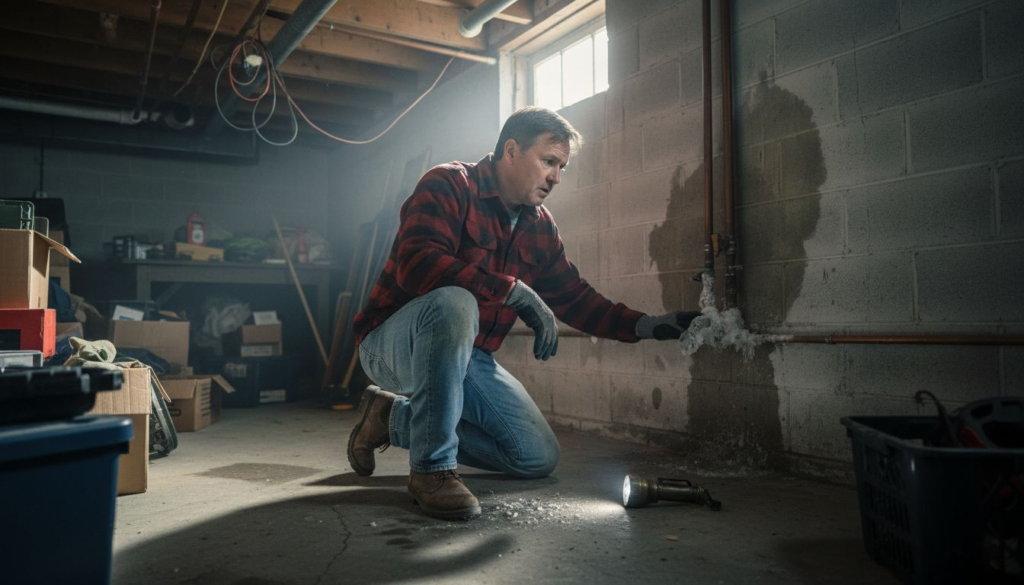
Small leaks might seem insignificant but can quickly escalate into costly home repairs if left unattended. Water damage happens fast and can compromise your home’s structural integrity.
Common areas to check for leaks include:
- Faucet connections
- Toilet base
- Showerhead joints
- Under-sink pipes
- Water supply lines
Learning to detect and address small leaks can save you significant money and prevent extensive water damage. Most minor leaks can be resolved with simple tools like pipe tape or replacement washers.
Even a tiny leak can waste hundreds of gallons of water and cause substantial damage if ignored.
Quick leak repair steps:
- Identify the leak source
- Turn off water supply to that area
- Clean the leaking surface
- Apply appropriate repair method
- Test the repair thoroughly
Immediate action prevents long-term damage. Rubber washers cost pennies. Water damage can cost thousands.
Pro tip: Keep a small plumbing repair kit with pipe tape, replacement washers, and basic tools in an easily accessible location for quick leak management.
4. Clear Standing Water to Prevent Damage
Standing water is more than just an unsightly problem. Water accumulation can destroy your home faster than you might imagine, creating significant health and structural risks.
Potential dangers of standing water include:
- Mold growth
- Foundation damage
- Bacterial contamination
- Mosquito breeding
- Wood rot
- Electrical hazard risks
Diagnosing standing water problems requires understanding drainage and identifying water sources. Quick removal is critical to preventing long-term damage.
Standing water is a ticking time bomb for home maintenance – address it immediately.
Step-by-step water removal process:
- Identify water source
- Stop additional water flow
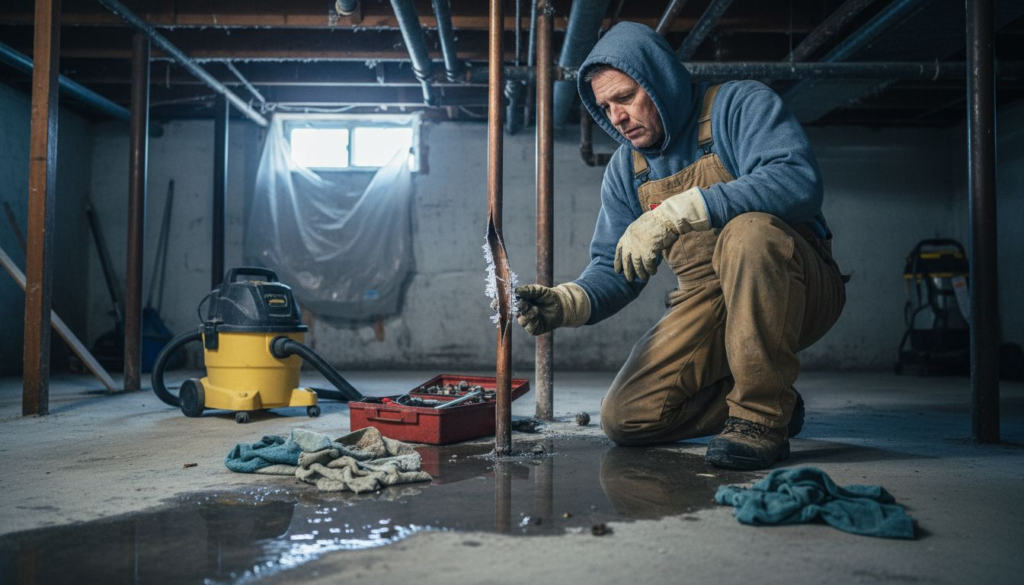
- Remove standing water using pumps or wet vacuums
- Dry affected areas completely
- Inspect for potential damage
Water damage escalates quickly. What seems like a small puddle today could become a massive repair project tomorrow.
Pro tip: Invest in a quality wet vacuum and keep several large towels readily available to quickly address small water accumulation before it becomes a major problem.
5. Open Faucets to Drain Excess Water
Preventing pipe damage requires strategic water management during extreme temperatures. Dripping faucets can be your first line of defense against costly plumbing emergencies.
When temperatures drop dramatically, consider these critical actions:
- Open faucets in multiple locations
- Focus on exterior walls
- Use both hot and cold water lines
- Select faucets farthest from main water meter
Preventing pipe freezing techniques are essential for homeowners in cold regions. A slow steady drip keeps water moving and reduces freezing risk.
One dripping faucet can save hundreds of dollars in potential pipe repair costs.
Faucet dripping guidelines:
- Select farthest faucet from water meter
- Allow a steady thin stream
- Keep stream about the width of a pencil
- Maintain drip during coldest hours
- Monitor water consumption
Water movement prevents freezing. Even minimal flow can make a significant difference in protecting your home’s plumbing system.
Pro tip: Open cabinet doors under sinks during cold spells to allow warmer room air to circulate around pipes and reduce freezing potential.
6. Assess and Secure Electrical Hazards
Water and electricity create a deadly combination during plumbing emergencies. Electrical safety is non-negotiable when managing unexpected water incidents in your home.
Key electrical hazard risks include:
- Exposed wiring
- Submerged electrical outlets
- Wet circuit breaker panels
- Potential short circuit zones
- Risk of electrical shock
Electrical safety protocols demand immediate and systematic action to protect yourself and your property.
One wrong move near water and electricity can result in catastrophic consequences.
Emergency electrical safety steps:
- Turn off main power at circuit breaker
- Do not touch wet electrical equipment
- Use non-conductive tools
- Wear rubber-soled shoes
- Call professional electrician
Water conducts electricity efficiently. Your personal safety takes absolute priority during any water-related emergency.
Pro tip: Invest in a non-contact voltage tester and store it in an easily accessible emergency kit to quickly verify electrical safety without physical contact.
7. Call a Professional Plumber Right Away
Some plumbing emergencies require expertise beyond DIY solutions. Knowing when to call a professional can save you thousands in potential damage and prevent long-term structural issues.
Warning signs that demand immediate professional intervention:
- Sewage backing up
- Extensive water damage
- Multiple simultaneous pipe leaks
- Low water pressure across home
- Strange gurgling sounds
- Visible pipe corrosion
Recognizing complex plumbing problems helps homeowners take swift action before minor issues escalate into major repairs.
A five-minute professional assessment can prevent five-figure home restoration costs.
Immediate steps when calling a plumber:
- Describe the problem precisely
- Ask about estimated response time
- Inquire about emergency service fees
- Prepare access to affected areas
- Document existing water damage
Professional intervention prevents catastrophic damage. Expert plumbers have specialized tools and knowledge to address complex issues safely.
Pro tip: Keep a list of licensed emergency plumbers saved in your phone and post their contact information in an easily accessible location for quick reference during stressful situations.
Below is a comprehensive table summarizing the main steps and strategies discussed in the article to address plumbing emergencies effectively and promptly.
| Step | Key Actions | Benefits |
|---|---|---|
| Turn Off the Main Water Supply | Locate and shut off the main water valve immediately. | Prevents extensive water damage and loss. |
| Shut Off the Water Heater | Deactivate the water heater’s power and water supply. | Avoids overheating and electrical hazards. |
| Address Small Leaks | Identify, isolate, and repair minor leaks with appropriate tools. | Prevents long-term structural damage and water waste. |
| Clear Standing Water | Remove accumulated water and dry affected areas. | Stops mold growth and further deterioration. |
| Open Faucets to Drain Water | Allow faucets to drip during freezing weather. | Prevents plumbing system freezing and burst pipes. |
| Assess and Secure Electrical Hazards | Turn off main power and avoid wet areas. | Ensures personal safety around electrical systems. |
| Call a Professional Plumber | Identify complex issues requiring expert intervention. | Resolves severe plumbing problems effectively. |
Protect Your Home with Professional Plumbing Emergency Services
Every homeowner deserves peace of mind knowing they can control plumbing disasters before they escalate. This article highlights crucial steps like shutting off the main water supply and safely turning off your water heater to minimize damage. However, when facing persistent issues like frozen pipes or extensive leaks, quick expert support is essential to avoid costly repairs and health risks.
At Davinroy Plumbing, we specialize in emergency plumbing solutions tailored to the Belleville, Illinois community. Our experienced team handles everything from frozen pipe repair to hot water tank service and toilet repairs. Don’t let plumbing emergencies catch you unprepared. Act now to safeguard your home with trusted professionals ready to respond swiftly.

Reach out to Davinroy Plumbing today at https://davinroyplumbing.com and ensure your home stays safe and dry. Immediate assistance can prevent long term damage and costly restoration. Schedule your emergency plumbing service or routine inspection now and get the expert care your home deserves.
Frequently Asked Questions
What should I do first during a plumbing emergency?
To mitigate damage, immediately turn off the main water supply. Locate the main water valve in your home and turn it clockwise to stop water flow.
How can I safely shut off my water heater in an emergency?
To prevent potential hazards, switch off the power at the circuit breaker for an electric water heater or turn the gas valve to the “off” position for a gas water heater. Additionally, shut off the water supply valve to the water heater to minimize risks.
What quick fixes can I perform for small leaks at home?
Identify the source of the leak, turn off the water supply in that area, and use basic tools like pipe tape or replacement washers to perform a quick repair. This can prevent small leaks from escalating into costly damage.
How do I address standing water to mitigate damage?
Identify the water source and stop any additional flow, then use a wet vacuum or pump to remove standing water. It’s important to dry affected areas thoroughly to prevent mold and structural damage.
When should I call a professional plumber?
Call a professional plumber if you observe sewage backing up, multiple leaks, or extensive water damage that you cannot manage. Getting expert help can prevent minor issues from escalating into major repair costs.
What precautions should I take regarding electrical hazards during a plumbing emergency?
Immediately turn off the main power at the circuit breaker to eliminate risks of electrocution. Avoid touching wet electrical equipment, and call a professional electrician to handle any submersion hazards.