Every winter in Belleville brings the worry of waking up to frozen pipes and unexpected plumbing headaches. When cold weather hits, pipes in basements, attics, garages, and even under kitchen cabinets quickly become trouble spots. Catching these issues early means avoiding the stress of burst pipes and water damage. This guide walks you through practical steps for inspecting, insulating, and maintaining your home so you can stay warm and worry-free all season long.
Table of Contents
- Step 1: Inspect Vulnerable Areas For Exposed Pipes
- Step 2: Insulate Pipes And Seal Drafts Effectively
- Step 3: Maintain Steady Indoor Temperatures
- Step 4: Monitor Water Flow During Cold Snaps
- Step 5: Verify Protection And Troubleshoot Issues
Quick Summary
| Important Takeaway | Explanation |
|---|---|
| 1. Identify vulnerable pipes | Inspect areas like basements and attics for exposed pipes to prevent freezing and costly damage. |
| 2. Insulate and seal properly | Use foam sleeves and seal gaps around pipes to protect against cold drafts and freezing temperatures. |
| 3. Maintain consistent indoor temperatures | Keep thermostats steady to avoid creating conditions that allow pipes to freeze during chilly spells. |
| 4. Monitor water flow in cold weather | Allow faucets served by vulnerable pipes to drip slightly, preventing freezing and reducing pressure build-up inside the pipes. |
| 5. Regularly verify and troubleshoot | Periodically check insulated pipes for signs of freezing and know how to react quickly to avoid severe damage. |
Step 1: Inspect vulnerable areas for exposed pipes
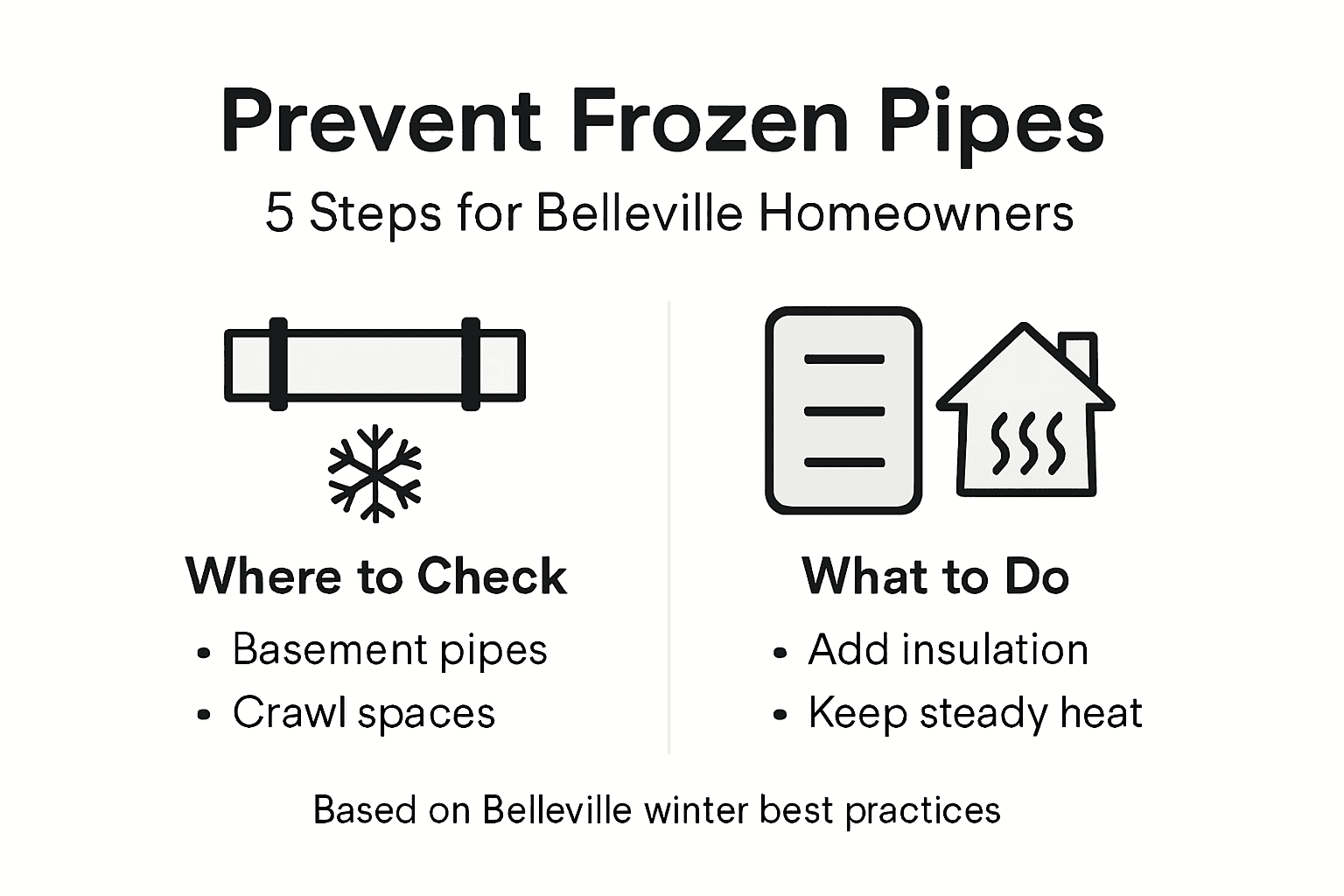
Before winter arrives in Belleville, you need to identify which pipes in your home are most at risk. The pipes that freeze first are the ones exposed to cold air or located in unheated spaces. Taking an afternoon to walk through your home and spot these vulnerable areas can save you thousands in emergency plumbing repairs.
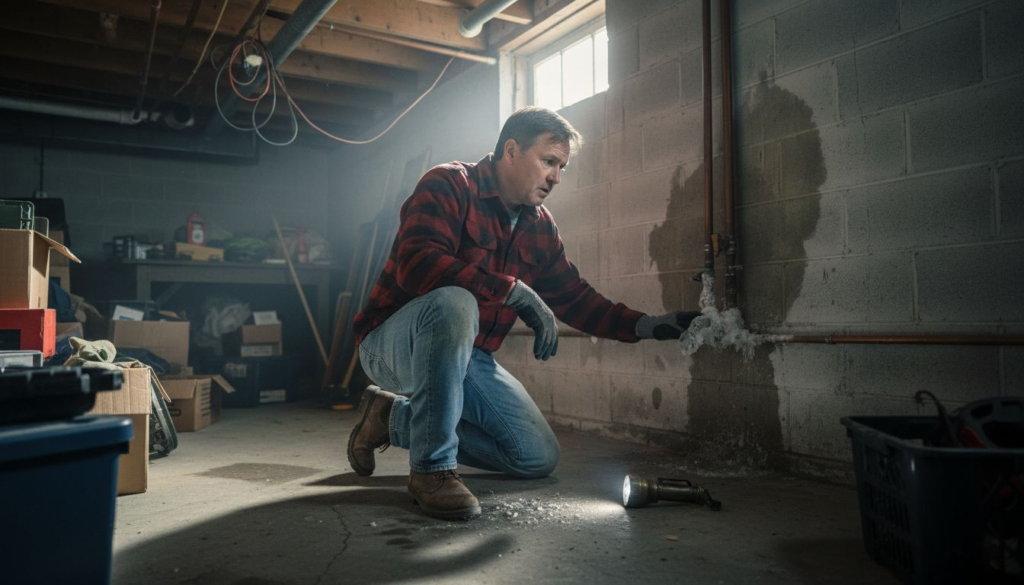
Start your inspection in the usual suspects: your basement, attic, garage, and crawl spaces. Look for pipes running along exterior walls, especially those with little or no insulation between them and the cold outside. Check under kitchen and bathroom cabinets on exterior walls too. These locations are freezing zones because cold air penetrates easily, and the pipes inside have minimal protection. Pay close attention to pipes in unheated interior areas like basement corners near windows or gaps in your foundation.
Don’t forget about outdoor exposure points. Walk around the outside of your home and locate any hose bibs, outdoor spigots, or water supply lines for sprinkler systems. These exterior connections are among the first to freeze when temperatures drop. Trace where the water lines enter your home from the meter or well. Any section that runs through an unheated garage or outside crawl space before entering your house needs your attention.
As you inspect, mark or photograph these vulnerable spots. Note which pipes lack insulation entirely and which have thin, damaged, or deteriorating insulation. Understanding why pipes freeze helps you recognize which areas need the most protection. Your goal is a complete map of your home’s weak points before the cold weather arrives.
Pro tip: Take photos or video of your vulnerable pipe locations with dates noted, then share this documentation with Davinroy Plumbing when scheduling your winterization service for accurate protection planning.
Step 2: Insulate pipes and seal drafts effectively
Now that you know where your vulnerable pipes are located, it’s time to protect them. Insulation is your first line of defense against freezing temperatures. Adding the right insulation materials and sealing air leaks around exposed pipes can mean the difference between a smooth winter and a costly emergency call.
Start with pipe insulation sleeves, which are affordable and easy to install. These foam or rubber sleeves slip directly over your pipes and create a protective barrier against cold air. For pipes in basements, attics, and crawl spaces, pipe sleeves are highly effective at maintaining warmer temperatures around the water lines. Simply measure your pipe diameter, purchase the appropriate size sleeves, and slide them over the pipes. You can secure them with duct tape or the adhesive backing they often come with.
For outdoor hose bibs and exterior pipes, foam insulation offers superior protection against harsh weather conditions. Avoid using newspaper, towels, or other absorbent materials because they trap moisture, which actually makes freezing worse. Foam stays dry and insulates effectively without creating additional problems.
Sealing drafts is equally important as insulation. Walk through your basement, garage, and crawl spaces looking for gaps, cracks, or openings where cold air enters. Caulk gaps around pipes where they pass through exterior walls, foundation penetrations, or into unheated spaces. Add weatherstripping around basement windows and doors. Pay special attention to kitchen and bathroom cabinets on exterior walls, where cold air can rush directly toward pipes. These small sealing projects take minimal time but deliver significant protection.
Consider heat tape or heat cables for pipes in the coldest areas of your home. These UL-listed products wrap around pipes and provide active heating during extreme cold snaps. They work automatically when temperatures drop and can be lifesaving for those particularly vulnerable sections.
Pro tip: Install insulation and seal drafts in late fall before harsh winter weather arrives, giving you time to address any problem areas before they become frozen pipe emergencies.
Here’s a quick comparison of pipe insulation methods and their effectiveness:
| Insulation Type | Best Use Location | Advantages | Drawbacks |
|---|---|---|---|
| Foam Sleeves | Basements, crawl spaces | Inexpensive, easy to install | Limited for outdoor use |
| Rubber Sleeves | Attics, garages | Durable, flexible fitting | Slightly higher cost |
| Foam Covers | Outdoor spigots, hose bibs | Weather resistant, stays dry | Needs replacement over time |
| Heat Tape/Cables | Coldest unheated areas | Provides active heating | Requires electricity |
Step 3: Maintain steady indoor temperatures
Temperature consistency is one of the most powerful weapons against frozen pipes. When your home cools down at night or you try to save money by lowering the thermostat during winter, you create the perfect conditions for pipes to freeze. Keeping your heating system running steadily protects pipes throughout your entire home, especially those in vulnerable areas.
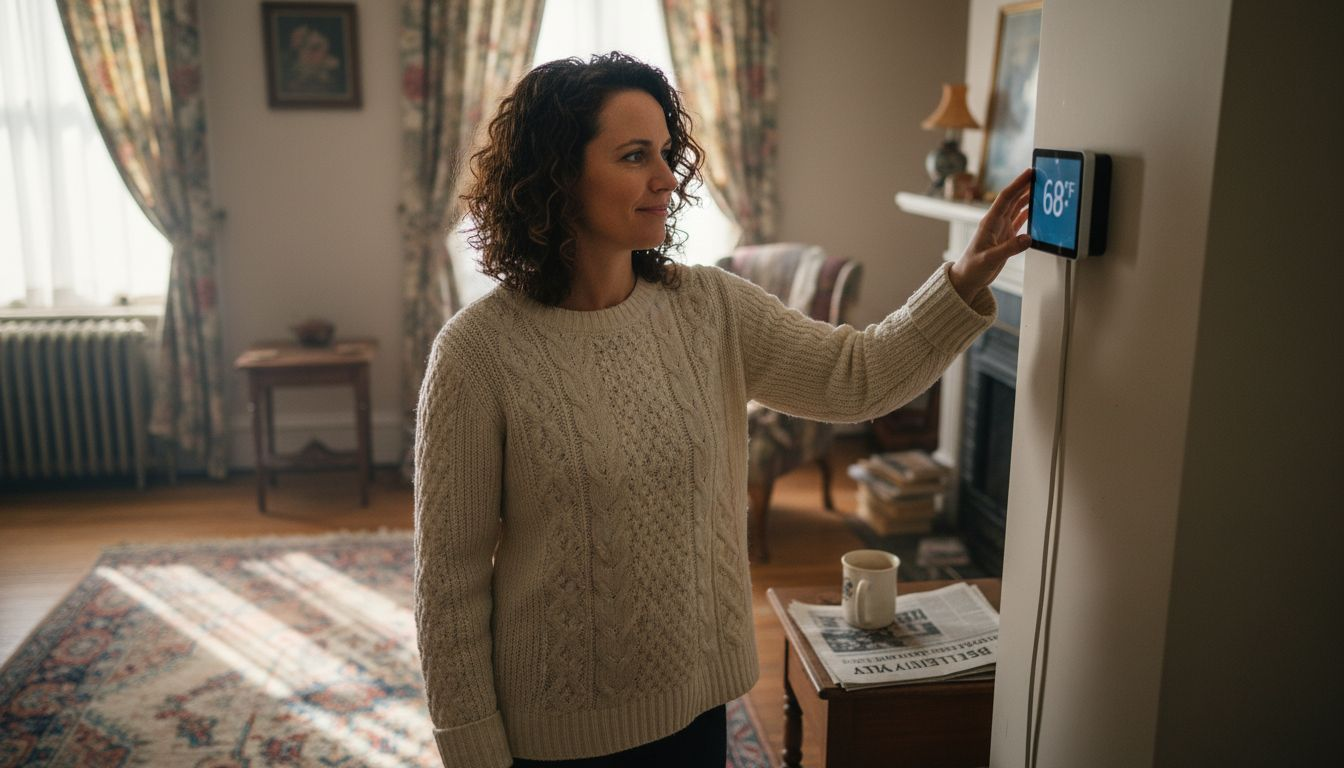
Set your thermostat to the same temperature day and night during cold weather. Even a drop of just a few degrees overnight can allow pipes in exterior walls or unheated spaces to freeze, particularly in Belleville when temperatures plunge below freezing. Maintaining consistent indoor warmth is far more cost-effective than dealing with burst pipes, water damage, and emergency plumbing repairs. Resist the temptation to lower your heat to save money during winter cold snaps.
Pay special attention to rooms you rarely use. Don’t close off bedrooms, guest bathrooms, or basement spaces to save heating costs. When these areas get too cold, the pipes within them become vulnerable. Keep cabinet doors open under sinks, especially those on exterior walls. This allows warm air from your home to circulate around the plumbing and keep water flowing freely. It may feel counterintuitive, but opening those cabinet doors creates a protective air pocket around your pipes.
If you plan to be away from home during winter, keep your thermostat set to at least 55 degrees Fahrenheit. Many people think shutting off heat saves money when nobody is home, but this is exactly when frozen pipes strike hardest. The small amount you save on heating won’t offset the thousands you’ll spend on repairs if pipes burst while you’re gone.
Monitor your home’s temperature, especially during extreme cold events. If you notice certain rooms staying colder than others, investigate why. Poor insulation, drafts, or blocked air vents could be creating cold spots where pipes freeze first.
Pro tip: Invest in a programmable or smart thermostat that maintains consistent temperatures automatically, giving you peace of mind even during severe winter weather in Belleville.
Step 4: Monitor water flow during cold snaps
When temperatures plummet, actively monitoring your water flow becomes a simple yet powerful prevention strategy. A small trickle of moving water can mean the difference between functioning pipes and a frozen disaster. During extreme cold events in Belleville, this technique requires minimal effort but delivers significant protection.
Identify faucets served by exposed pipes or pipes in vulnerable areas you identified earlier. These are typically faucets on exterior walls, in unheated garages, or in basement bathrooms. When a cold snap hits, slightly open these faucets so water drips slowly into the sink or bathtub. You do not need a full stream, just enough movement to keep water flowing through the pipe system. Letting water trickle through exposed pipes prevents ice formation even during the coldest nights.
The science behind this is straightforward. Moving water is far more difficult to freeze than stationary water. Even a slow drip maintains water movement through the pipe, reducing the risk of ice crystals forming and blocking the entire line. This technique also relieves pressure inside the pipes, which prevents dangerous buildup that can lead to bursting when ice does form.
Focus especially on the faucet farthest from your main water shut off valve. Open it slightly during extreme cold weather events. You may notice this creates a small water bill increase during winter, but the cost is negligible compared to the expense of repairing burst pipes. A few dollars in water usage beats thousands in emergency repairs and water damage restoration.
Monitor the flow regularly throughout cold snaps. If you notice a faucet has stopped dripping or the flow has slowed significantly, this could indicate freezing is beginning upstream. Act quickly by applying heat to that area or calling a professional immediately to prevent a burst.
Pro tip: During extreme cold warnings, place towels or containers under slowly dripping faucets to catch water and reuse it for cleaning or outdoor purposes, making this prevention step even more practical.
Step 5: Verify protection and troubleshoot issues
After implementing your prevention measures, you need to verify they’re working and know how to respond if problems develop anyway. Regular checks and quick troubleshooting can stop a minor issue from becoming a major disaster. This final step ensures your winterization efforts are truly protecting your Belleville home.
Walk through your home periodically during cold weather and visually inspect your protected pipes. Look for any signs of ice formation, frost accumulation, or swelling around pipes. Check that your insulation sleeves remain intact and properly positioned. Verify that heat tape is functioning if you installed it. Look under sinks and in cabinets to confirm doors remain open and warm air is circulating. These quick visual checks take just minutes but catch problems early.
If you suspect a pipe has frozen, act immediately. Turn on the faucet served by that pipe and listen for water flow. If nothing comes out, the pipe is likely frozen. Applying controlled heat with a hair dryer or heating pad can safely thaw the pipe from the outside. Never use open flames or torch devices, which create fire hazards and can damage pipes. Start heating at the point closest to the faucet and work backward toward the main water line, allowing time for ice to melt and water to flow.
Once thawed, inspect the pipe carefully for cracks, leaks, or damage. Check all joints and connections for signs of water damage even if the pipe appears intact. Small cracks may not show immediately but can develop into larger problems. If you find damage, contact Davinroy Plumbing right away for professional repair.
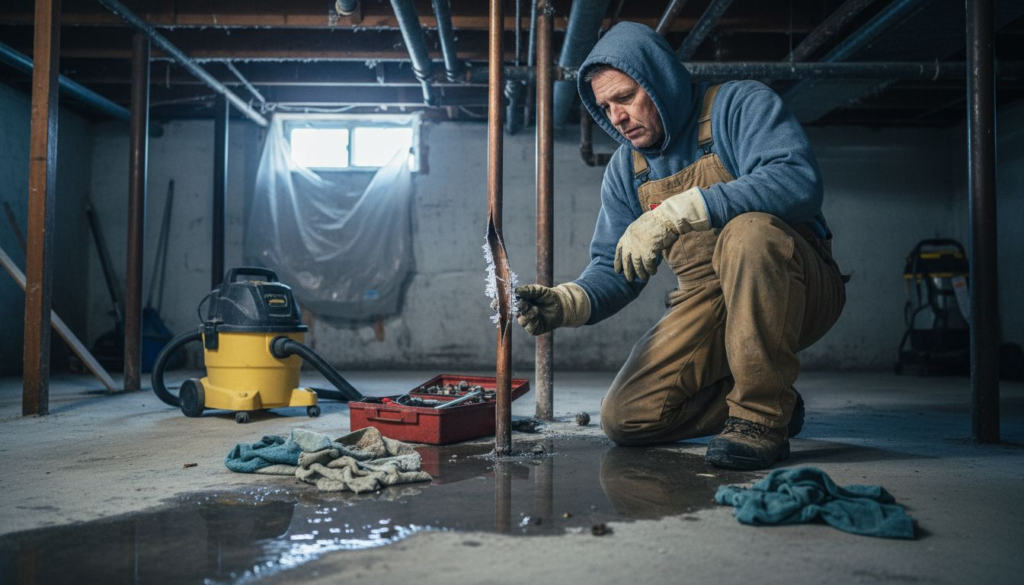
If a pipe bursts, turn off your main water supply immediately to minimize water damage. Do not wait for professional help to arrive. This quick action can save thousands in restoration costs. Then call a professional plumber to assess and repair the damage.
Pro tip: Keep a hair dryer or heat lamp specifically designated for pipe thawing emergencies in an easily accessible location so you can respond quickly if freezing begins.
Below is a troubleshooting reference for common pipe freezing indicators and recommended actions:
| Sign of Trouble | Possible Cause | Immediate Action | When to Call a Plumber |
|---|---|---|---|
| No water flow from tap | Pipe is frozen | Apply gentle external heat | If pipe doesn’t thaw |
| Frost on pipe surface | Cold air infiltration | Inspect insulation, seal | If swelling appears |
| Water leaks after thaw | Split pipe from freezing | Shut off main water supply | For repair assessment |
| Swollen or cracked pipe | Ice expansion damage | Turn off water, inspect | Always recommended |
Protect Your Belleville Home from Costly Frozen Pipe Disasters Today
Frozen pipes create serious risks that can lead to expensive water damage repairs and stress in your home. This article highlights key challenges such as identifying vulnerable pipes, applying effective insulation, maintaining steady temperatures, and monitoring water flow during cold snaps. Belleville homeowners know that even a small mistake can result in emergencies. You need reliable solutions that prevent freezing and give you peace of mind all winter long.
Davinroy Plumbing specializes in comprehensive frozen pipe repair services and preventive care designed specifically for homes in the Belleville, Illinois area. Our expert team can conduct thorough winterization inspections, properly insulate exposed pipes, and install professional-grade protection like heat tape. We understand the urgency because frozen pipes demand immediate action to avoid costly damage.

Don’t wait for a burst pipe to disrupt your life. Take the proactive step right now to safeguard your home by contacting Davinroy Plumbing. Visit https://davinroyplumbing.com to schedule your winterization service or emergency frozen pipe repair. Secure your home and reduce anxiety this winter with trusted local experts you can count on.
Frequently Asked Questions
How can I identify vulnerable pipes in my home before winter?
To identify vulnerable pipes, inspect areas like your basement, attic, garage, and crawl spaces for pipes exposed to cold air. Mark or photograph areas where insulation is inadequate and check for gaps in your home’s exterior that may allow cold air in.
What type of insulation should I use to protect my pipes from freezing?
Use pipe insulation sleeves made of foam or rubber for indoor pipes and foam covers for outdoor spigots. Secure them tightly around your pipes to maintain warmth and prevent freezing during harsh weather.
How can maintaining indoor temperatures help prevent frozen pipes?
Maintaining consistent indoor temperatures prevents pipes from cooling down too much, reducing the likelihood of freezing. Set your thermostat to the same temperature day and night, especially during cold snaps.
What should I do if I suspect a pipe is frozen?
If you suspect a pipe is frozen, turn on the faucet served by that pipe to check for water flow. If no water flows, apply gentle heat externally to thaw the pipe, starting near the faucet and moving backward toward the main line.
How can I monitor water flow during extreme cold to prevent freezing?
During extreme cold, slightly open faucets served by exposed pipes to allow a small trickle of water to flow. This movement helps prevent ice formation, reducing the risk of your pipes freezing.
What steps can I take if I find a pipe has burst?
If you find a burst pipe, immediately shut off your main water supply to minimize damage. Then, contact a professional plumber for assessment and repairs to address any issues effectively.