More than 80 percent of American households will face a plumbing emergency at least once every five years. For Belleville homeowners, choosing the right licensed plumber is about more than just quick repairs—it is a critical move to prevent expensive water damage and protect your home’s safety. This overview reveals what sets professional plumbers apart, why proper licensing matters in Illinois, and how informed choices safeguard your property’s value.
Table of Contents
- Defining the Licensed Plumber Profession
- Types of Licensed Plumbers and Their Specialties
- Key Skills and Expertise Homeowners Should Expect
- Legal Requirements and Licensing in Illinois
- Core Responsibilities in Residential Plumbing
- Risks of Unlicensed Work and Cost Implications
Key Takeaways
| Point | Details |
|---|---|
| Licensed Plumbers Are Highly Trained Professionals | They meet rigorous industry standards and are capable of managing complex plumbing systems safely and effectively. |
| Different Types of Licensed Plumbers Specialize | Residential, commercial, and specialty plumbers each focus on specific plumbing needs, requiring unique skills and expertise. |
| Legal Requirements for Plumbing in Illinois | Becoming a licensed plumber involves extensive training, certification, and ongoing education to ensure competence and protect public health. |
| Risks of Hiring Unlicensed Plumbers | Unlicensed work can lead to significant financial and safety risks, including liability for structural damage and legal issues that exceed initial savings. |
Defining the Licensed Plumber Profession
A licensed plumber represents a highly trained professional who has met rigorous industry standards and regulatory requirements to legally perform complex plumbing services. These experts undergo extensive training and certification processes to ensure they can safely and effectively manage intricate residential and commercial plumbing systems. Professional associations define and regulate these critical standards to protect public health and infrastructure.
The licensed plumber profession encompasses a comprehensive range of specialized skills and responsibilities. Professionals in this field are qualified to perform detailed tasks including consultations, system design, plan preparation, cost estimation, installation, and supervisory roles across various plumbing infrastructures. Plumbing licenses represent more than just a credential – they signify a commitment to technical expertise, safety protocols, and professional integrity.
Licensed plumbers undergo comprehensive training to master complex technical knowledge. Their licensing process ensures competency in critical areas such as storm drainage systems, sanitary venting, hot and cold water supply networks, and sewerage infrastructure. This specialized training enables them to inspect materials, assess system requirements, and execute precise installations that meet stringent local and state regulations.
Professional plumbers must demonstrate proficiency in multiple technical domains, including understanding building codes, interpreting architectural plans, utilizing specialized tools, and implementing advanced installation techniques. Their expertise extends beyond basic repair work to comprehensive system design, problem diagnosis, and long-term infrastructure maintenance.
Pro tip: Always verify a plumber’s current state license and professional certifications before hiring to ensure you receive high-quality, legally compliant service.
Types of Licensed Plumbers and Their Specialties
Licensed plumbers represent a diverse professional group with specialized expertise across multiple critical infrastructure domains. Plumbing professionals can be categorized into several distinct specialty areas, each requiring unique skills and technical knowledge tailored to specific system requirements and work environments.
Residential plumbers focus on home-based plumbing systems, handling everything from kitchen sink installations to bathroom fixture repairs. These professionals manage intricate water supply lines, drainage systems, and fixture connections in single-family homes and apartment complexes. Commercial plumbers, by contrast, work with more complex infrastructures in large buildings, managing extensive pipe networks, industrial-grade equipment, and sophisticated water management systems that require advanced technical understanding.
Specialty plumbers represent another critical category of licensed professionals. These technicians specialize in targeted infrastructure domains, including gas technicians who install and repair gas pipe systems, pipelayers responsible for underground pipe installations, steamfitters managing industrial liquid and gas piping, and sprinkler fitters dedicated to fire protection system design and implementation. Each specialty demands precise technical training and certification to ensure safe, compliant infrastructure management.
Belleville homeowners benefit from understanding these diverse plumbing specialties, as different projects require specific expertise. While a residential plumber might excel at home repairs, industrial or commercial projects demand the advanced skills of specialized technicians with targeted training in complex system design and maintenance.
Here’s a quick summary comparing the main types of licensed plumbers and their areas of expertise:
| License Category | Primary Focus | Typical Workplaces | Unique Expertise |
|---|---|---|---|
| Residential Plumber | Home plumbing | Houses, apartments | Fixture installation, water supply setup |
| Commercial Plumber | Complex systems | Office buildings, factories | Large-scale piping, equipment management |
| Specialty Plumber | Targeted systems | Varies by specialty domain | Gas lines, fire sprinklers, steam piping |
Pro tip: When hiring a plumber, always confirm their specific license category and professional specialization to ensure they are qualified for your particular project requirements.
Key Skills and Expertise Homeowners Should Expect
Licensed plumbers bring a comprehensive set of technical and professional capabilities that go far beyond simple repair work. Plumbing professionals possess sophisticated mechanical skills that enable them to diagnose, solve, and prevent complex infrastructure challenges in residential and commercial settings.
Homeowners should expect licensed plumbers to demonstrate advanced technical competencies, including precise blueprint reading, intricate system troubleshooting, and comprehensive understanding of local building codes. These professionals must possess exceptional problem-solving abilities, mechanical aptitude, and the physical dexterity to work effectively in confined spaces. Modern plumbing skills now include technological expertise with smart home fixtures, water-efficient systems, and advanced diagnostic technologies that require continuous professional development.
The most skilled licensed plumbers combine technical knowledge with strong communication capabilities. They can explain complex system issues in straightforward terms, provide transparent cost estimates, and recommend long-term solutions that address underlying infrastructure problems. Expertise extends beyond immediate repairs to include preventative maintenance strategies, energy efficiency recommendations, and proactive system assessments that help homeowners protect their property’s critical water and waste management infrastructure.
Professional plumbers in Belleville must navigate increasingly complex residential systems, integrating traditional mechanical skills with emerging digital technologies. Their expertise represents a critical intersection of hands-on technical ability, regulatory compliance knowledge, and customer service professionalism.
Pro tip: Request a detailed portfolio or work history from potential plumbers to verify their range of technical skills and professional experience before hiring.
Legal Requirements and Licensing in Illinois
Plumbing license requirements in Illinois represent a comprehensive regulatory framework designed to protect public health and ensure professional competence. The state mandates rigorous standards that plumbers must meet to legally practice their trade, creating a structured pathway from apprenticeship to professional licensure.
To become a licensed plumber in Illinois, professionals must navigate a multi-step process that typically involves extensive training and certification. State licensing laws require a minimum of 4 years of apprenticeship under professional supervision, demonstrating mastery of complex technical skills and safety protocols. Candidates must complete an approved apprenticeship program lasting between 48 to 72 months, successfully pass a comprehensive state licensing examination, and provide proof of high school education or equivalent.
The Illinois Department of Public Health (IDPH) serves as the primary regulatory body overseeing plumbing licenses. Annual license renewal is mandatory, requiring professionals to submit proof of continuing education and maintain current certifications. This ongoing requirement ensures that licensed plumbers remain updated on evolving technologies, building codes, and safety standards. The licensing process includes separate categories for apprentice plumbers, journeyman plumbers, and plumbing contractors, each with specific qualification criteria and professional responsibilities.
Belleville homeowners should understand that these legal requirements are not mere bureaucratic formalities but critical safeguards. By mandating comprehensive training, testing, and ongoing education, Illinois ensures that only qualified professionals can perform complex plumbing work, protecting residential infrastructure and public health.
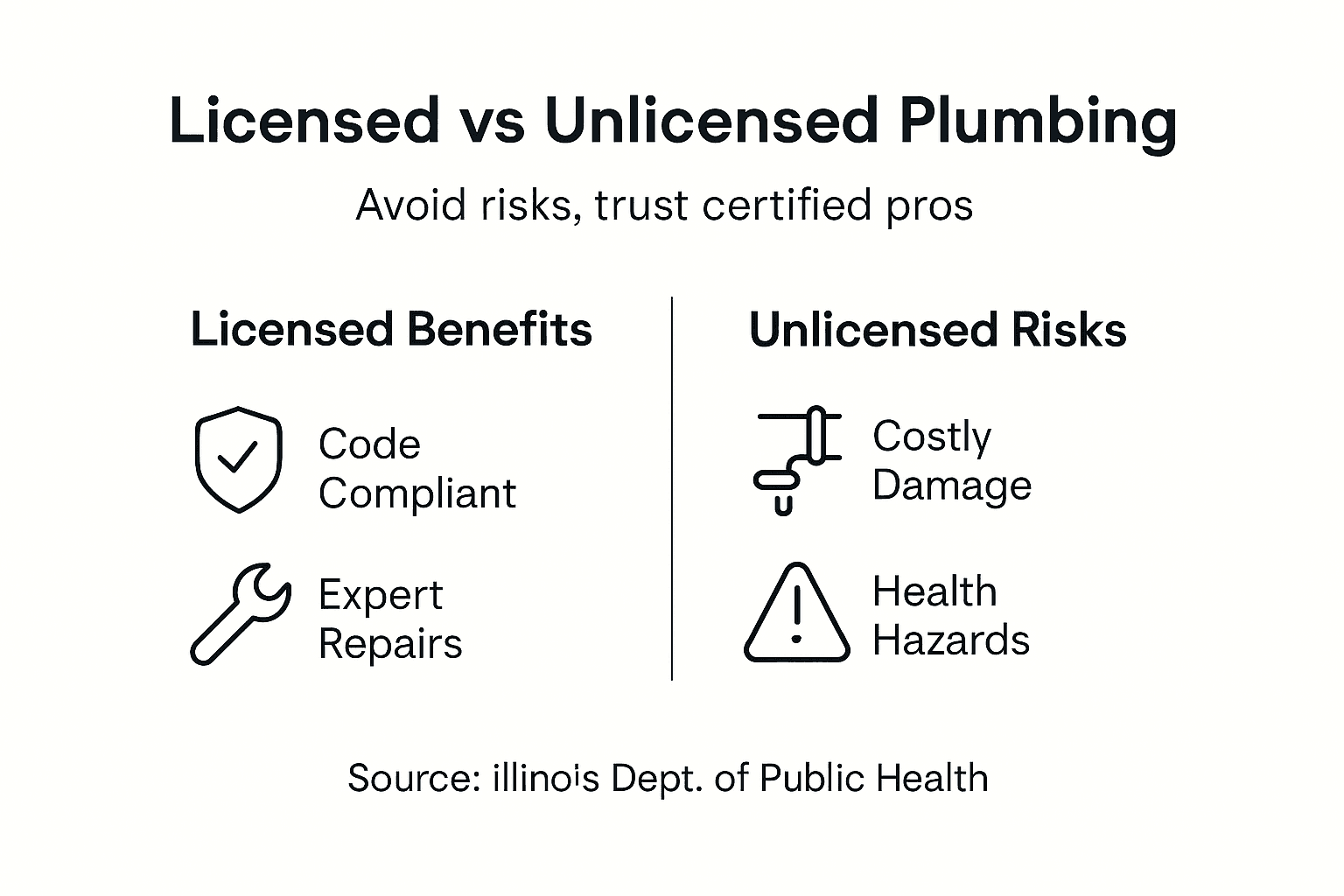
To clarify facts about licensing in Illinois, see this quick reference:
| Requirement | Detail | Purpose |
|---|---|---|
| Apprenticeship Duration | 48–72 months under supervision | Ensure skill mastery |
| Education Requirement | High school diploma or equivalent | Establish baseline qualifications |
| Annual License Renewal | Mandatory, plus continuing education | Maintain current expertise |
| State Regulatory Authority | Illinois Dept. of Public Health (IDPH) | Oversee and enforce standards |
Pro tip: Always request to see a plumber’s current state license and verify its validity with the Illinois Department of Public Health before hiring.
Core Responsibilities in Residential Plumbing
Residential plumbers perform critical infrastructure management that goes far beyond simple repair work. These professionals are responsible for maintaining the intricate water and waste systems that keep Belleville homes functioning safely and efficiently, addressing everything from minor fixture repairs to complex system installations.
The core responsibilities of residential plumbers include comprehensive system diagnostics, installation, and maintenance. Professionals must read and interpret complex blueprints, test existing plumbing infrastructures, and ensure full compliance with local building codes. Their work involves installing water supply lines, waste disposal systems, fixtures, and household appliances with precision and technical expertise. Plumbers diagnose and resolve multiple infrastructure challenges including fixing leaks, unclogging drains, replacing damaged fixtures, and maintaining critical systems like water heaters and piping networks.
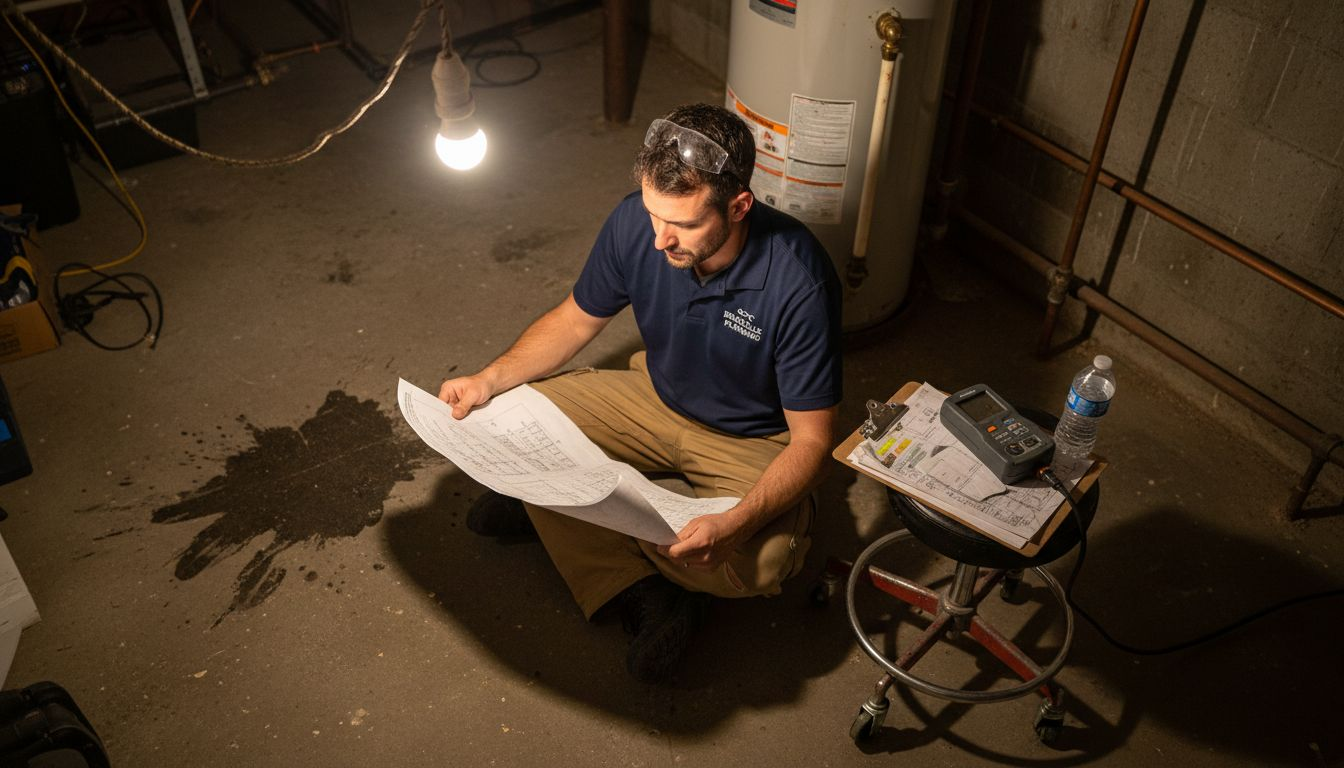
Beyond technical skills, residential plumbers serve as crucial advisors for homeowners. They provide expert guidance on system maintenance, recommend preventative strategies to avoid potential failures, and offer insights into improving home water efficiency. Their role involves not just immediate problem resolution but long-term infrastructure protection, helping Belleville residents understand and maintain their home’s critical water and waste management systems.
Professional plumbers must remain adaptable, handling emergency repairs and routine maintenance with equal competence. From responding to sudden pipe bursts to conducting systematic annual inspections, these professionals protect residential infrastructure through proactive and responsive services that safeguard both property value and homeowner comfort.
Pro tip: Schedule annual plumbing inspections to identify potential issues before they escalate into costly emergency repairs.
Risks of Unlicensed Work and Cost Implications
Homeowners face substantial financial and safety risks when choosing unlicensed plumbers. Unlicensed work can lead to significant liability beyond immediate repair costs, potentially exposing residents to long-term structural damage, health hazards, and complex legal complications that far exceed initial savings.
The financial implications of unlicensed plumbing extend well beyond initial repair expenses. Illegal plumbing work triggers multiple enforcement risks including potential fines, mandatory system remediation, and potential voiding of home insurance coverage. Unlicensed technicians frequently lack the technical expertise to properly diagnose and resolve complex infrastructure challenges, leading to temporary fixes that create more extensive damage over time.
Critical risks associated with unlicensed plumbing include compromised water quality, potential sewage contamination, structural water damage, and increased potential for catastrophic system failures. Professional licensed plumbers carry comprehensive insurance and bonding, providing homeowners with financial protection and professional accountability that unlicensed workers cannot offer. These protections ensure that any potential mistakes or system failures will be professionally addressed without additional financial burden to the homeowner.
Belleville residents must recognize that seemingly minor plumbing work can have significant long-term consequences. Improperly installed pipes, incorrect drainage configurations, and substandard fixture connections can create hidden problems that compromise home safety, reduce property value, and potentially create dangerous living conditions.
Pro tip: Always request and verify a plumber’s current state license and insurance documentation before allowing any work to begin.
Trust Licensed Experts for Your Belleville Plumbing Needs
Understanding the critical role of licensed plumbers highlights why Belleville homeowners must choose professionals who meet stringent Illinois licensing requirements and possess specialized skills for safe and effective plumbing work. Avoid costly risks linked to unlicensed work by relying on experts trained in system diagnostics, installation, and maintenance. Whether you need routine repairs or complex service like hot water tank maintenance or frozen pipe repair, professional plumbers ensure your home’s infrastructure is protected and functioning efficiently.
Discover how Davinroy Plumbing brings licensed expertise directly to your doorstep.

Reach out now to secure your home with trusted licensed plumbing solutions. Visit Davinroy Plumbing for expert plumbing services including toilet repair and emergency frozen pipe response. Do not wait until minor issues turn into expensive disasters. Call today for a licensed professional who prioritizes your safety and comfort.
Frequently Asked Questions
What is the role of a licensed plumber?
Licensed plumbers are responsible for managing complex plumbing systems, which include installation, maintenance, and repair of water supply lines, drainage systems, and fixtures in residential and commercial settings.
Why should homeowners hire licensed plumbers instead of unlicensed ones?
Hiring licensed plumbers is crucial as they have undergone extensive training, adhere to safety regulations, and provide insurance coverage, which protects homeowners from potential liability or additional costs associated with unqualified work.
What skills should I expect from a licensed plumber?
Homeowners should expect licensed plumbers to demonstrate advanced skills in blueprint reading, troubleshooting plumbing systems, understanding local building codes, and utilizing specialized tools, as well as strong communication abilities to explain complex issues.
What are the legal requirements for plumbers in Illinois?
Plumbers in Illinois must complete a minimum of 4 years of apprenticeship, pass a state licensing examination, and maintain their license through annual renewal, including continuing education to stay updated on plumbing codes and safety standards.