Frozen pipes and malfunctioning toilets can lead to costly repairs for American homeowners in Belleville, Illinois. Most emergency plumbing issues need urgent attention to keep damage and expenses as low as possible. Quick, informed steps make all the difference when water problems threaten your home’s safety and comfort. You will discover practical solutions to assess emergencies, stop water damage fast, and fix basic plumbing problems before they get worse.
Table of Contents
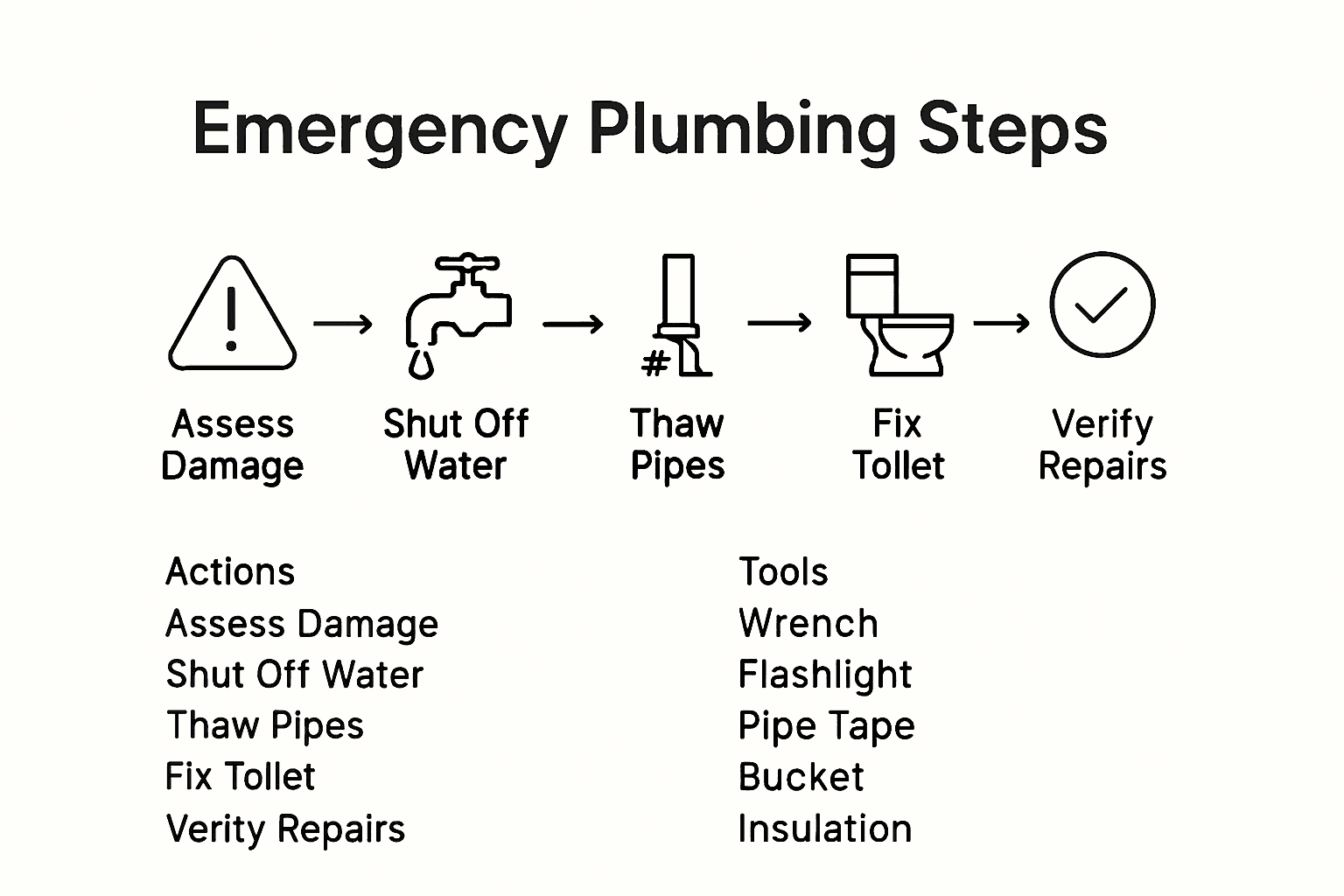
- Step 1: Assess Plumbing Emergencies Quickly
- Step 2: Shut Off Water Supply Safely
- Step 3: Implement Immediate Frozen Pipe Solutions
- Step 4: Repair Common Toilet Problems Effectively
- Step 5: Verify Repairs and Prevent Further Damage
Quick Summary
| Key Insight | Explanation |
|---|---|
| 1. Quickly Assess Plumbing Emergencies | Identify the type and severity of plumbing issues to take swift action and minimize damage. |
| 2. Know How to Shut Off Water Supply | Locate your main water shut-off valve and know how to use it to prevent major water damage. |
| 3. Implement Frozen Pipe Solutions | Use gentle heat to thaw frozen pipes and open faucets to relieve pressure immediately. |
| 4. Repair Common Toilet Problems | Troubleshoot toilet malfunctions by checking for leaks and adjusting internal components when necessary. |
| 5. Verify Repairs and Prevent Damage | After repairs, check for leaks and maintain a log of plumbing issues to prevent future problems. |
Step 1: Assess Plumbing Emergencies Quickly
Quickly identifying the type and severity of a plumbing emergency can prevent extensive home damage and reduce potential repair costs. Understanding how to perform a rapid initial assessment helps homeowners take immediate, strategic action when unexpected water system issues arise.
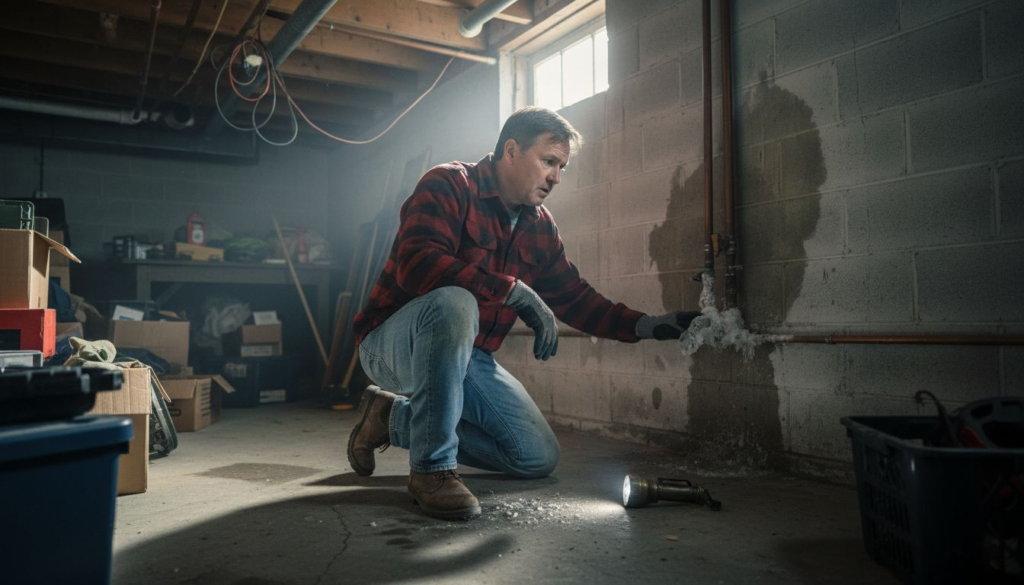
Plumbing emergencies can manifest in several critical ways, such as leaky pipes, frozen water lines, or potential contamination risks. Water emergencies include home issues that disrupt your normal clean water supply, requiring swift and targeted responses. Start by visually inspecting the affected area for visible signs of water leakage, unusual moisture, or unexpected pooling. Check under sinks, around toilet bases, near water heaters, and in basement areas where water damage might first become apparent.
Determine the emergency’s potential impact by evaluating water flow, pressure changes, and potential contamination risks. Listen for unusual sounds like hissing or dripping, and observe water color and clarity. Some situations demand immediate professional intervention, especially if you notice significant water volume, potential structural damage, or suspect pipe integrity issues. The National Standard Plumbing Code provides guidelines for recognizing and responding to critical plumbing system failures that can help guide your initial assessment.
Here’s a quick reference comparing common plumbing emergencies and their initial assessment indicators:
| Emergency Type | Visible Signs | Urgent Risks | Immediate Action |
|---|---|---|---|
| Leaky Pipes | Moist spots, pooling | Structural damage, mold | Shut water, inspect area |
| Frozen Water Lines | No flow, icy surfaces | Pipe bursts, water damage | Gentle heat, open faucets |
| Contamination Risks | Discolored water | Health hazards, system failure | Avoid usage, call pro |
Pro Tip: Keep a waterproof flashlight and a few basic tools like adjustable wrenches and pipe tape near your main water shutoff valve for quick emergency response preparation.
Step 2: Shut Off Water Supply Safely
Knowing how to quickly and safely shut off your home’s water supply can prevent catastrophic water damage during plumbing emergencies. This critical skill can save thousands of dollars in potential repairs and protect your home from extensive water-related destruction.
Locating and accessing your main water shut-off valve is a fundamental emergency preparedness step. Most homes have this valve in basements, crawl spaces, garages, or near the home’s foundation. Look for a main valve typically positioned where the primary water line enters your home. When you find it, ensure it can be turned easily by checking for rust or stiffness and keeping the area around it clear of obstacles.
To shut off the water, turn the valve clockwise using smooth, steady pressure. In emergency situations like burst pipes, turning off the water quickly helps minimize potential damage to your home’s structure and belongings. If you cannot locate your home’s shut-off valve or encounter difficulties, contact your local water provider immediately to request street-level water shut-off. After closing the valve, open faucets throughout your home to drain remaining water pressure and reduce potential pipe stress.
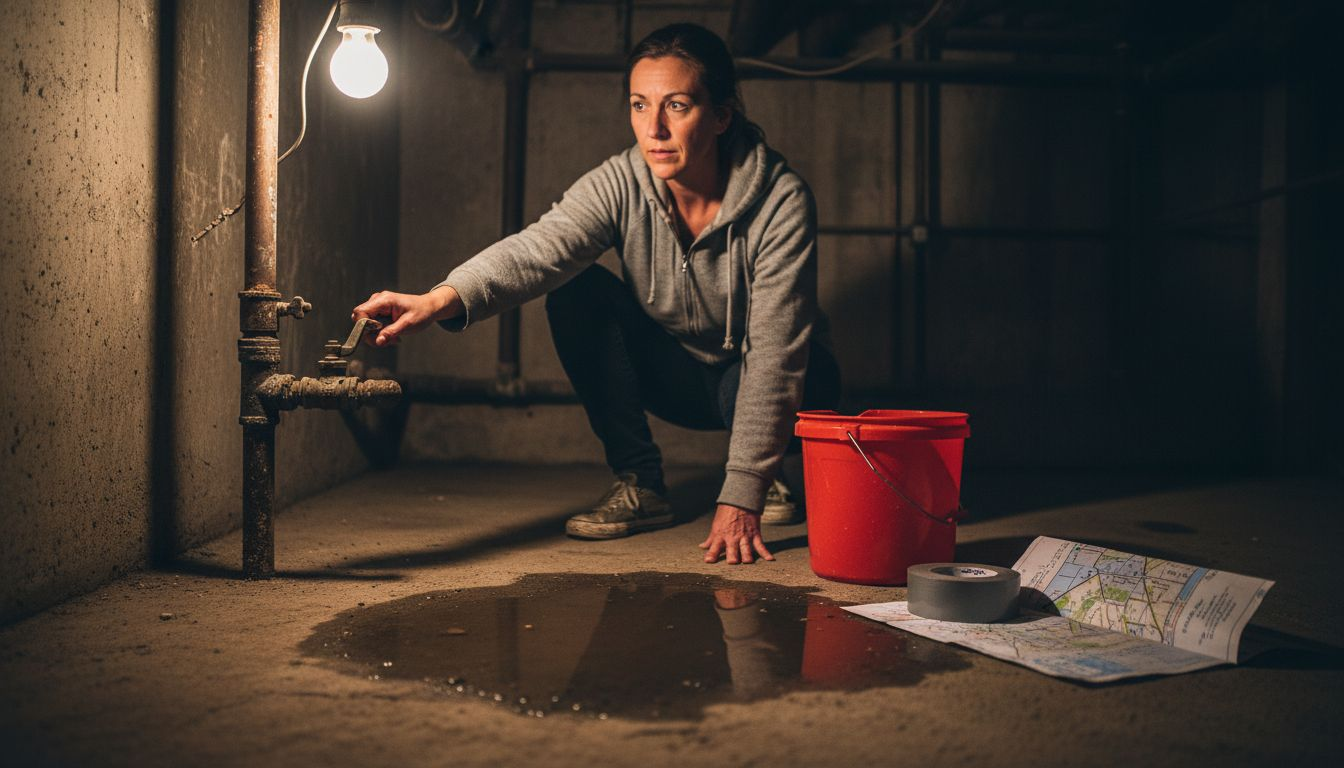
Pro Tip: Create a simple laminated map marking your home’s water shut-off valve location and attach it near your electrical panel for quick reference during emergencies.
Step 3: Implement Immediate Frozen Pipe Solutions
Frozen pipes can quickly escalate from a minor inconvenience to a major home disaster, potentially causing extensive water damage and costly repairs. Understanding how to respond immediately can protect your home’s plumbing system and prevent catastrophic pipe bursts.
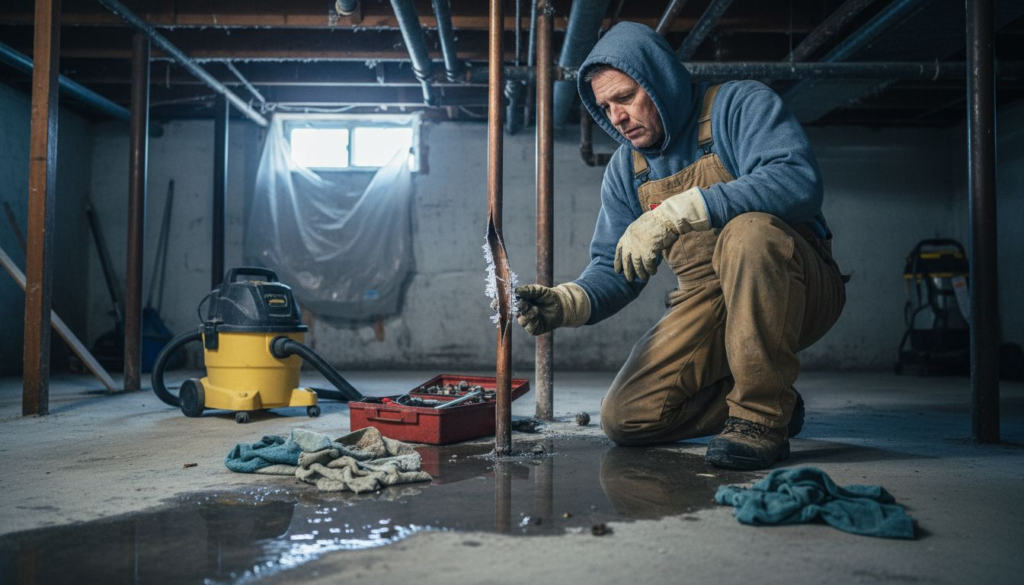
Emergency procedures for frozen pipes require careful and systematic intervention to minimize potential damage. Begin by locating the frozen section of pipe typically found in unheated areas like basements, attics, or exterior walls. Open the faucet connected to the frozen pipe slightly to allow water to trickle and relieve pressure. Then, apply gentle heat using a hairdryer, electric heating pad, or space heater positioned at least 6 inches from the pipe. Move the heat source back and forth to distribute warmth evenly and avoid concentrating heat in one spot.
Preventing pipe freezing involves maintaining consistent indoor temperatures and protecting vulnerable plumbing areas. If multiple pipes are frozen or you cannot safely thaw them, contact a professional plumber immediately. Never use open flame devices like blowtorches, as they can damage pipes and create fire hazards. After successfully thawing the pipe, check for any cracks or damage before restoring full water pressure.
Pro Tip: Wrap exposed pipes in foam insulation sleeves before winter and keep your home’s interior temperature above 55 degrees Fahrenheit to dramatically reduce the risk of frozen pipes.
Step 4: Repair Common Toilet Problems Effectively
Toilet malfunctions can quickly become frustrating and potentially costly home issues if not addressed promptly. Understanding how to diagnose and resolve common toilet problems can save you time, money, and prevent more significant plumbing complications.
Identifying and addressing toilet issues requires a systematic approach to troubleshooting internal components. Start by checking for leaks using dye tablets in the tank. Drop the tablet into the tank and wait 15 minutes without flushing. If color appears in the bowl without flushing, you likely have a faulty flapper valve that needs replacement. For running toilets, adjust the fill valve and check that the water level sits approximately one inch below the top of the overflow tube.
Low flow toilets often experience unique challenges that require specific maintenance techniques. When encountering repeated flushing or slow drainage, examine the toilet’s venting system and ensure no blockages are preventing proper water flow. Sometimes adjusting the float mechanism or replacing worn components can restore efficient flushing. If multiple attempts fail to resolve persistent issues, consulting a professional plumber might be the most cost effective solution.
Use this table to quickly check the effectiveness of common toilet repairs:
| Toilet Issue | Likely Cause | Test Method | Solution |
|---|---|---|---|
| Running Water | Faulty flapper | Dye tablet in tank | Replace flapper valve |
| Slow Drainage | Blocked vent | Repeated slow flushes | Clear vent |
| Weak Flushing | Fill valve issue | Low tank water level | Adjust fill valve |
Pro Tip: Keep a basic toilet repair kit with replacement flapper valves, fill valves, and adjustable wrenches readily available to address minor issues before they escalate into major problems.
Step 5: Verify Repairs and Prevent Further Damage
Successful plumbing repairs require more than just fixing the immediate problem. Thorough verification and strategic prevention are critical to protecting your home from potential recurring issues and expensive long-term damage.
Professional water damage restoration standards emphasize comprehensive inspection and documentation of repair processes. After completing any plumbing repair, carefully test the system by running water and checking for leaks, unusual sounds, or pressure inconsistencies. Use a flashlight to inspect repaired areas and surrounding surfaces for moisture, discoloration, or signs of potential future problems. Pay special attention to pipe connections, seals, and areas previously experiencing issues.
Effective maintenance involves implementing preventive strategies to minimize future plumbing complications. Consider adding pipe insulation in vulnerable areas, maintaining consistent indoor temperatures, and educating all household members about emergency shut-off procedures. Regularly scheduled visual inspections can help you catch potential issues before they escalate into major repairs. If you notice any persistent problems or are unsure about the repair’s success, consult a professional plumber for a comprehensive evaluation.
Pro Tip: Create a home maintenance log documenting all plumbing repairs, including dates, specific actions taken, and any observations to help track potential recurring issues.
Take Control of Your Plumbing Emergencies with Expert Help from Davinroy Plumbing
Plumbing emergencies like frozen pipes, leaking toilets, or sudden water contamination create real stress at home. The article highlights crucial steps such as quickly assessing the problem, safely shutting off your water supply, and effective immediate repairs. These essential actions can prevent costly damage but often require professional expertise to fully resolve. If you face challenges like these in the Belleville, Illinois area, Davinroy Plumbing is ready to provide fast, reliable solutions including frozen pipe repair, toilet repair, and hot water tank servicing.
Don’t wait until minor leaks or frozen pipes turn into major disasters. Reach out to Davinroy Plumbing now for dependable emergency plumbing services. Our experienced team ensures comprehensive repairs and peace of mind so you can protect your home from ongoing damage. Visit us online today and take the first step toward keeping your plumbing system safe and fully functional when emergencies strike.
Frequently Asked Questions
How can I quickly assess a plumbing emergency in my home?
To quickly assess a plumbing emergency, visually inspect areas like under sinks, around toilets, and near water heaters for leaks or moisture. Listen for unusual sounds and check the water color; if you notice significant leaks or damage, plan to shut off the water supply immediately.
What should I do to shut off my home’s main water supply during an emergency?
To shut off your home’s main water supply, locate your main shut-off valve, usually found in basements or near the foundation. Turn the valve clockwise using steady pressure to stop the water flow, then open faucets to relieve pressure in the system.
How can I effectively thaw frozen pipes in an emergency?
To thaw frozen pipes, locate the frozen section and open the connected faucet to relieve pressure. Gently apply heat using a hair dryer or heating pad, ensuring to keep the heat source at least six inches away from the pipe to prevent damage.
What are common toilet problems, and how can I troubleshoot them?
Common toilet problems include running water or slow drainage. Start by checking for leaks using dye tablets and inspect the fill valve level in the tank; if necessary, replace faulty components to restore function.
How do I verify that plumbing repairs have been successful?
After completing plumbing repairs, thoroughly test the system by running water and checking for leaks or unusual sounds. Inspect repaired areas for moisture and ensure there are no signs of recurring issues before restoring full water pressure.
What preventative measures can I take to avoid future plumbing emergencies?
To prevent future plumbing emergencies, insulate exposed pipes and maintain consistent indoor temperatures. Conduct regular visual inspections of your plumbing system to catch potential problems early and educate household members on emergency shut-off procedures.
Recommended
- When Your Garbage Disposal Needs a Lifeline: Emergency Repair Solutions – Davinroy Plumbing and Mechanical
- Belleville’s Emergency Plumbing Heroes: A Quick Guide – Davinroy Plumbing and Mechanical
- Toilet Troubles? Home Depot’s Unclogging Tips to the Rescue! – Davinroy Plumbing and Mechanical
- What Is Plumbing and Why It Matters Locally
- How to Handle Heating Emergencies: Step-by-Step UK Guide – Skan Plumbing & Heating