Your home might be silently losing up to 30% of its water through aging pipes and fixtures. For Belleville homeowners, this translates to inflated utility bills, potential safety hazards, and missed opportunities to boost property value. Upgrading your plumbing system isn’t just about fixing leaks—it’s a strategic investment that improves efficiency, protects your family’s health, and increases resale value by 5-10%. This guide breaks down when and why to upgrade your plumbing in Belleville, helping you make informed decisions that pay off for years.
Table of Contents
- Understanding The Need For Plumbing Upgrades
- Common Misconceptions About Plumbing Upgrades
- Comparing Plumbing Materials And Technologies
- Local Belleville Factors Influencing Plumbing Choices
- Planning And Executing Your Plumbing Upgrade
- Maximizing Benefits: Efficiency, Safety, And Home Value
- Ready To Upgrade Your Plumbing? Contact Davinroy Plumbing In Belleville
- Frequently Asked Questions About Plumbing Upgrades
Key Takeaways
| Point | Details |
|---|---|
| Water Loss & Savings | Outdated plumbing wastes up to 30% of household water; modern systems reduce consumption by 20-30%. |
| Property Value Boost | Professional plumbing upgrades increase home resale value by 5-10% according to real estate data. |
| Material Matters | PEX, copper, and PVC each offer distinct benefits for Belleville’s climate and soil conditions. |
| Local Climate Impact | Belleville’s cold winters increase frozen pipe risks by 30%, making material selection critical. |
| ROI Planning | Strategic upgrades typically recoup costs within 5 years through savings and increased home value. |
Understanding the Need for Plumbing Upgrades
Aging plumbing systems create hidden costs and safety risks that most homeowners underestimate. Old pipes are responsible for approximately 60% of indoor water damage incidents, turning minor issues into expensive emergency repairs. When galvanized steel corrodes or joints weaken, you’re not just losing water—you’re exposing your family to potential contamination and structural damage.
Modern plumbing technology delivers measurable improvements across three critical areas. Modern plumbing systems increase home value by 5-10%, making upgrades a smart financial move beyond simple maintenance. Water consumption drops by 20-30% with new fixtures and pipes, directly cutting your monthly utility expenses. Safety improvements reduce contamination risks from corroded pipes that leach metals into drinking water.
The efficiency gains compound over time. Lower water bills mean more money in your pocket each month, while reduced leak risks save you from costly emergency repairs. Working with Belleville plumbing professionals ensures upgrades meet local codes and address climate-specific challenges. These investments protect your home’s infrastructure while delivering immediate comfort improvements.
Key benefits include:
- Water waste reduction of up to 30% from eliminating leaks and inefficient fixtures
- Monthly utility bill decreases of 20-30% through improved flow efficiency
- Resale value increases of 5-10% when buyers see modern, reliable systems
- Safety improvements by removing lead and corrosion contamination sources
- Emergency repair costs slashed by preventing burst pipes and major leaks
Common Misconceptions About Plumbing Upgrades
Many Belleville homeowners delay necessary upgrades based on outdated beliefs about costs and materials. The reality? Most plumbing investments pay for themselves within 5 years through combined utility savings and increased home value. When you factor in avoided water damage repairs, which average thousands of dollars, the financial case becomes even stronger.
The myth that PVC can’t match copper durability falls apart under scrutiny. Properly installed PVC systems last 50-100 years in most residential applications, rivaling copper’s lifespan at a fraction of the cost. The key is professional installation that accounts for local soil chemistry and temperature fluctuations. Another persistent myth suggests upgrades only matter for old homes, but even 15-year-old plumbing can benefit from efficiency improvements.
Pro Tip: Document your plumbing upgrade with photos and receipts. This paperwork becomes valuable when selling your home, proving to buyers that critical systems have been professionally modernized.
Health and safety misconceptions also deter upgrades. Modern materials reduce water contamination risks by up to 90% compared to corroded galvanized steel. You’re not just fixing visible problems—you’re eliminating hidden hazards that affect water quality. Understanding common plumbing emergency misconceptions helps you recognize when upgrades prevent rather than just react to problems.
Common myths debunked:
- Upgrades cost more than they save (false: ROI typically achieved within 5 years)
- Only copper pipes are truly durable (false: PEX and PVC offer comparable lifespans)
- New homes don’t need upgrades (false: efficiency improvements benefit all ages)
- Plumbing upgrades are purely cosmetic (false: safety and health benefits are substantial)
- DIY approaches save significant money (false: improper installation creates costlier problems)
Comparing Plumbing Materials and Technologies
Choosing the right piping material determines your system’s longevity, efficiency, and maintenance costs. Each option brings distinct advantages suited to different applications and budgets. Understanding these differences helps you make informed decisions aligned with Belleville’s specific conditions.
Galvanized steel, common in homes built before 1970, corrodes from the inside out. This corrosion restricts water flow, contaminates drinking water with metals, and creates weak points prone to bursting. If your home still has galvanized pipes, replacement should be a top priority regardless of visible problems. The hidden damage often far exceeds what you can see.
Copper pipes offer proven durability with natural antimicrobial properties. They resist corrosion better than steel and maintain water quality for decades. The tradeoff is higher material and installation costs, but copper’s 50-plus-year lifespan justifies the investment for permanent installations. Copper also handles Belleville’s temperature swings without becoming brittle.
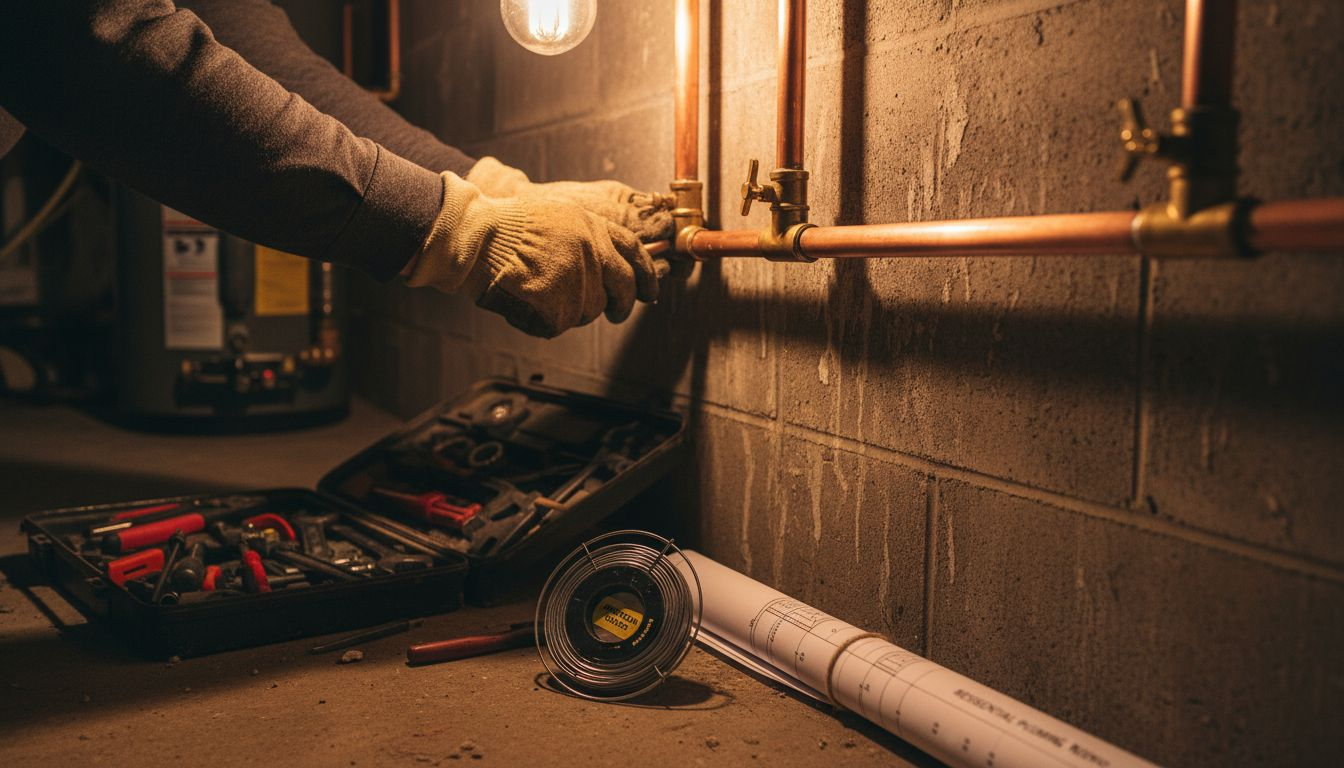
PEX (cross-linked polyethylene) has revolutionized residential plumbing with flexibility that reduces joint failures. It resists corrosion completely, handles freeze-thaw cycles better than rigid pipes, and costs significantly less than copper. PEX installation is faster and requires fewer fittings, reducing labor costs and potential leak points. For Belleville’s climate, PEX’s freeze resistance offers particular advantages.
PVC excels in drain, waste, and vent applications where pressure demands are lower. Chemical resistance makes it ideal for drain lines, and proper installation yields decades of trouble-free service. While not suitable for hot water supply lines, PVC handles cold water applications effectively at the lowest material cost.
Pro Tip: Mix materials strategically. Use PEX for supply lines where flexibility matters, copper for exposed areas requiring durability, and PVC for drain systems to optimize both performance and budget.
| Material | Lifespan | Freeze Resistance | Cost Level | Best Use |
|---|---|---|---|---|
| Galvanized Steel | 20-50 years | Poor | Low (legacy) | None (replace) |
| Copper | 50+ years | Moderate | High | Permanent supply lines |
| PEX | 40-50 years | Excellent | Medium | Supply lines, retrofits |
| PVC | 50-100 years | Good | Low | Drain, waste, vent systems |
Local soil composition and water chemistry affect material performance. Understanding Belleville plumbing material considerations ensures your choices align with regional conditions that impact corrosion rates and joint integrity.
Local Belleville Factors Influencing Plumbing Choices
Belleville’s cold climate creates unique challenges that directly impact plumbing material selection and installation methods. Winter temperatures routinely drop below freezing, and frozen pipe incidents increase by approximately 30% during severe cold snaps. This makes freeze resistance a primary consideration rather than an afterthought.
Soil conditions in the Belleville area vary but often contain enough moisture and minerals to accelerate corrosion in buried metal pipes. Clay-heavy soils retain moisture, creating constant contact that speeds galvanized steel degradation. Even copper, which resists corrosion better, can suffer from acidic or alkaline soil chemistry over decades. These local factors shorten pipe lifespan compared to drier or more neutral environments.
PEX piping with proper insulation offers the best defense against Belleville’s freeze risks. The material’s flexibility allows it to expand slightly when water freezes, reducing burst risks that plague rigid pipes. Insulating exterior wall cavities and crawl spaces provides additional protection. Professional installation ensures pipes are routed away from exterior walls where possible and protected where exposure is unavoidable.
Planning upgrades around seasonal weather patterns minimizes disruption. Spring and fall offer moderate temperatures ideal for work requiring temporary water shutoffs. Understanding Belleville plumbing emergency risks helps you anticipate problems before they escalate into costly repairs. The emergency plumbing role in Belleville becomes clearer when you see how preventive upgrades reduce crisis calls.
Local considerations include:
- Insulation requirements exceeding minimum code to handle extreme cold snaps
- Soil testing to identify corrosion accelerators before selecting underground materials
- Routing pipes through interior walls and insulated spaces whenever possible
- Installing freeze-prevention measures like heat tape in vulnerable areas
- Selecting materials proven effective in similar Midwest climates
Planning and Executing Your Plumbing Upgrade
Successful plumbing upgrades start with thorough inspection of your current system. Look for visible corrosion, water stains indicating past leaks, reduced water pressure, and discolored water suggesting pipe degradation. These signs help prioritize which sections need immediate attention versus future planning. Professional inspections reveal hidden problems in walls and under slabs that you can’t easily access.
Material selection should balance upfront costs against long-term performance. Factor in Belleville’s cold winters and soil conditions when comparing options. Calculate the 5-year ROI by estimating water savings, avoided repairs, and home value increases. A $3,000 upgrade that saves $400 annually on utilities and prevents a potential $2,000 water damage incident pays for itself quickly.
Budgeting requires realistic cost estimates for materials, labor, and permits. Get multiple quotes from licensed professionals to understand market rates. Consider financing options if needed, as the monthly savings often offset loan payments. Planning the project timeline around your household needs minimizes disruption—bathrooms can be upgraded sequentially to maintain functionality.
- Conduct a comprehensive plumbing inspection identifying all problem areas and priorities
- Research material options considering climate, soil, and budget constraints specific to Belleville
- Obtain detailed quotes from multiple licensed plumbers including materials, labor, and permits
- Calculate total cost versus projected savings and home value increase for ROI analysis
- Schedule work during moderate weather seasons to reduce complications and costs
- Hire experienced professionals who understand local codes and climate challenges
- Document all work with photos and receipts for future reference and resale value
Working with Belleville plumbing experts ensures code compliance and proper installation techniques. Licensed plumbers carry insurance protecting you from installation errors and know local inspection requirements. Their experience with Belleville homes means they anticipate challenges before they become problems.
| Upgrade Component | Typical Cost Range | Expected Lifespan | Annual Savings |
|---|---|---|---|
| Full House Repipe (PEX) | $4,000-$8,000 | 40-50 years | $300-$500 |
| Water Heater Upgrade | $1,200-$3,000 | 10-15 years | $100-$200 |
| Fixture Replacement | $500-$2,000 | 15-20 years | $50-$150 |
| Main Line Replacement | $2,000-$6,000 | 50+ years | $200-$400 |
Maximizing Benefits: Efficiency, Safety, and Home Value
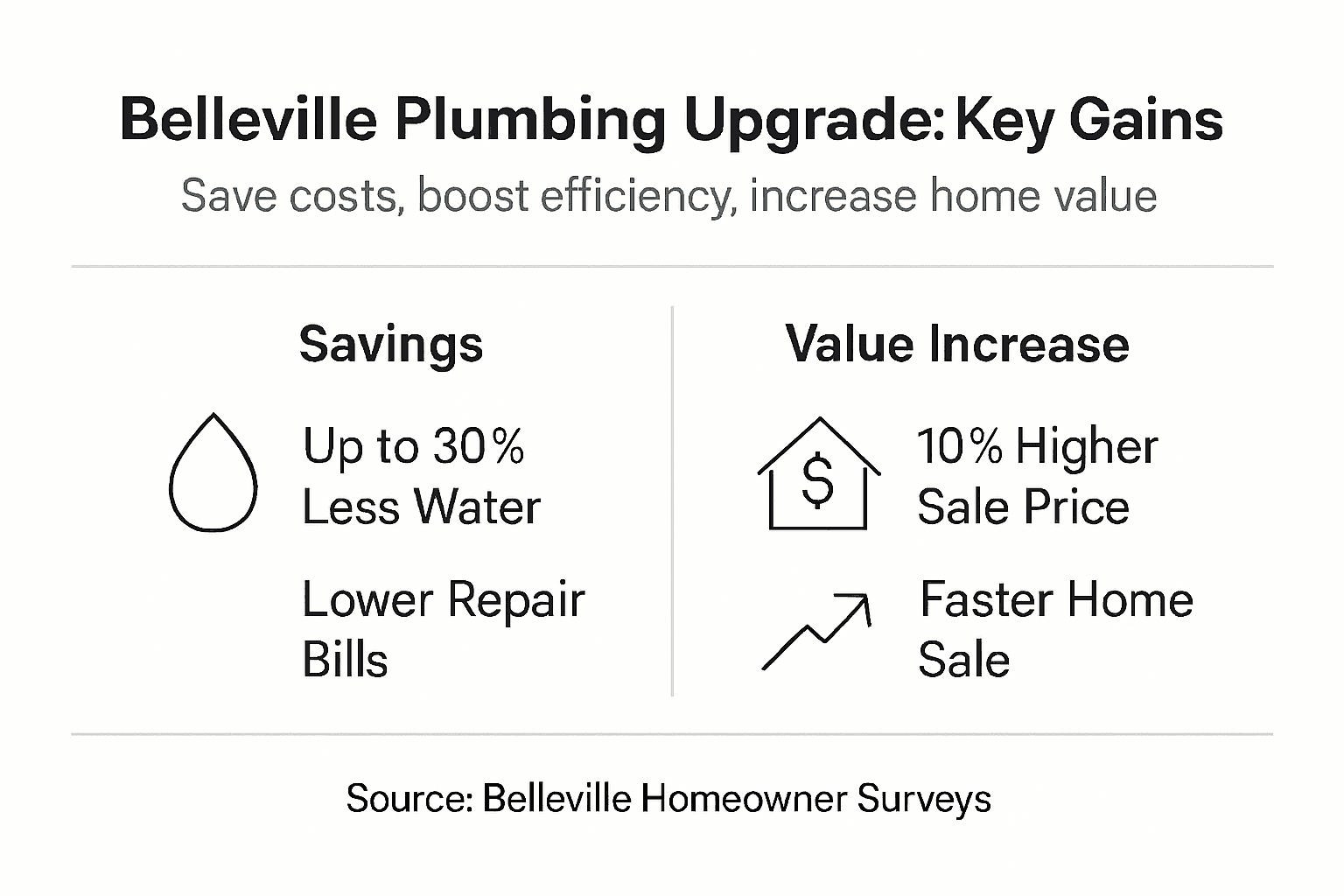
Plumbing upgrades deliver compound benefits that extend far beyond fixing immediate problems. Water efficiency improvements of 20-30% translate to hundreds of dollars in annual savings, money that stays in your pocket rather than flowing down the drain. These savings accumulate over decades, turning your initial investment into a continual return.
Health and safety improvements protect your family from invisible threats. Modern materials eliminate lead leaching and metal contamination that corroded pipes introduce into drinking water. Reduced leak risks mean less moisture supporting mold growth in walls and under floors. You gain peace of mind knowing your water supply is clean and your home’s structure is protected from water damage.
Real estate benefits materialize when you sell. Homes with modern plumbing sell for 5-10% higher value compared to similar properties with outdated systems. Buyers recognize that updated plumbing means fewer surprises and lower maintenance costs in their first years of ownership. Professional documentation of your upgrades strengthens your negotiating position and justifies premium pricing.
Emergency repair frequency drops dramatically with modern systems. Fewer burst pipes, clogged drains, and fixture failures mean fewer midnight calls to emergency plumbers. Your household runs smoother without the stress and disruption of plumbing crises. The plumbing impact on home value extends beyond sale price to include reduced ownership costs.
Maximized benefits include:
- Utility bill reductions of 20-30% through improved efficiency and eliminated leaks
- Water quality improvements by removing contamination sources from aging pipes
- Home value increases of 5-10% making upgrades a sound financial investment
- Emergency repair costs slashed by preventing common failure modes
- Insurance benefits as some carriers offer discounts for modern plumbing systems
Ready to Upgrade Your Plumbing? Contact Davinroy Plumbing in Belleville
Transforming your home’s plumbing from a liability into an asset requires professional expertise matched to Belleville’s specific challenges. Davinroy Plumbing brings years of local experience ensuring your upgrades withstand cold winters, address soil conditions, and deliver maximum efficiency gains. Our team understands how to balance material costs with long-term performance for optimal ROI.
We provide comprehensive solutions from initial inspection through final installation and testing. Whether you need a complete house repipe, targeted fixture upgrades, or emergency frozen pipe repairs, our licensed professionals deliver quality work backed by solid warranties. Access practical plumbing tips from Davinroy Plumbing to maintain your upgraded system for peak performance.
Explore our professional plumbing remodeling services to see how we integrate plumbing upgrades with bathroom and kitchen renovations for seamless results. When winter strikes, our frozen pipe repair services in Belleville provide rapid response to protect your home. Contact Davinroy Plumbing today to schedule your consultation and start maximizing your home’s safety, efficiency, and value.
Frequently Asked Questions About Plumbing Upgrades
What signs indicate my plumbing needs upgrading?
Watch for reduced water pressure, discolored water suggesting pipe corrosion, frequent leaks, and visible rust on exposed pipes. Water stains on ceilings or walls indicate hidden leaks requiring immediate attention. If your home was built before 1970 and still has original galvanized pipes, upgrading should be a priority even without visible symptoms.
How long does a typical plumbing upgrade take in Belleville?
A complete house repipe typically requires 3-5 days depending on home size and complexity. Partial upgrades targeting specific sections can be completed in 1-2 days. Weather conditions and permit processing can affect timelines, so plan accordingly. Most professional teams work efficiently to minimize disruption to your daily routine.
Are PEX pipes suitable for Belleville’s climate?
PEX performs exceptionally well in Belleville’s cold climate thanks to superior freeze resistance compared to rigid materials. The flexibility allows slight expansion when water freezes, reducing burst risks. Proper insulation in vulnerable areas provides additional protection. Many Belleville homes successfully use PEX for supply lines with excellent long-term results.
Can plumbing upgrades reduce my water bill significantly?
Yes, expect water consumption reductions of 20-30% from modern fixtures and leak elimination. A typical Belleville household saves $300-$500 annually on water and heating costs after upgrading. The exact savings depend on your current system’s condition and water usage patterns. Combined with avoided repair costs, the financial benefits are substantial.
Should I hire a licensed plumber for all upgrades?
Absolutely. Licensed plumbers in Belleville understand local codes, climate challenges, and proper installation techniques that protect your investment. They carry insurance covering potential errors and ensure work passes inspections. DIY approaches often create more problems than they solve, especially with complex systems requiring specialized knowledge.