Proactive Water Heater Replacement: Why Waiting Costs You More
Most homeowners don’t think about their water heater until something goes wrong—and by then, the situation is rarely convenient or cheap. A tank that finally gives out on a Sunday evening or the week before the holidays doesn’t just mean cold showers; it can mean water damage, emergency service rates, and a rushed decision on a replacement you haven’t had time to think through. Proactive water heater replacement means choosing to replace your unit on your terms—before it fails—so you can avoid the chaos, control your costs, and select the right system for your home rather than just the first available one. This guide walks you through everything you need to know to make that smart, well-timed decision.
Table of Contents
- Why Proactive Replacement Is Smarter Than Waiting
- Warning Signs Your Water Heater Is Nearing the End
- The True Cost of an Emergency Water Heater Failure
- How to Choose the Right Replacement Water Heater
- What to Expect During a Water Heater Replacement
- How to Extend the Life of Your New Water Heater
Key Takeaways
| Topic | What You Need to Know |
|---|---|
| Timing | Most tank water heaters last 10–15 years. Replacing proactively at the 10-year mark gives you control and avoids emergency costs. |
| Warning Signs | Rusty water, rumbling noises, inconsistent temperatures, and visible corrosion are reliable indicators that replacement is approaching. |
| Cost of Waiting | An unexpected failure can mean emergency plumber rates, water damage remediation, and temporary living disruptions that far exceed planned replacement costs. |
| Choosing a Replacement | Use your current unit’s shortcomings as a guide—this is the right moment to upgrade capacity, fuel type, or efficiency if your needs have changed. |
| Installation | A professional replacement typically takes 2–4 hours and should always be performed by a licensed plumber for safety and warranty compliance. |
Why Proactive Replacement Is Smarter Than Waiting
There’s a common homeowner mindset that goes something like: “If it isn’t broken, don’t fix it.” For plenty of things around the house, that’s perfectly reasonable. For water heaters, it’s a strategy that tends to backfire—and usually at the worst possible moment.
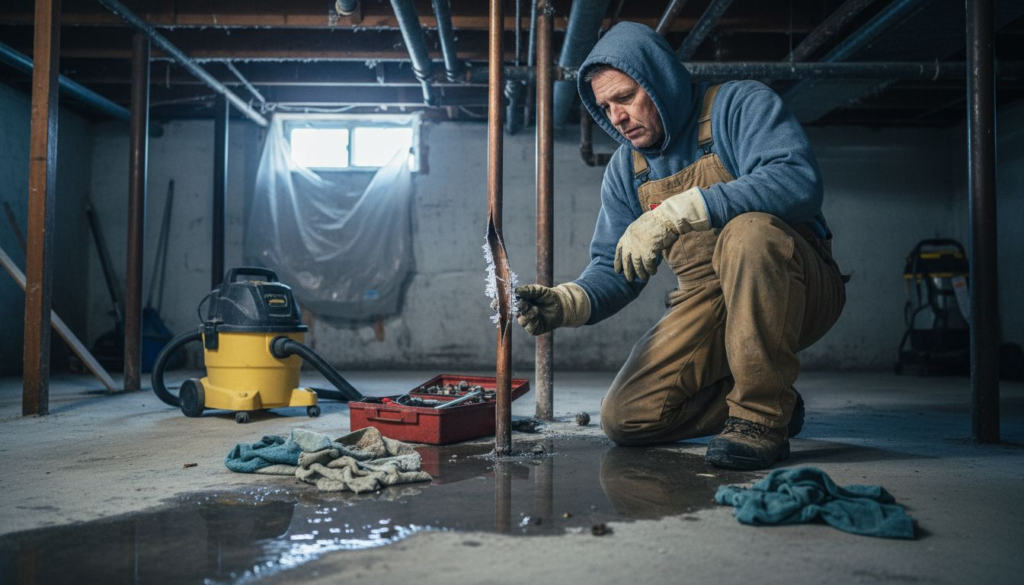
A water heater doesn’t announce its retirement in advance. It works reliably for years, slowly deteriorating on the inside, until one day it simply stops—or worse, it leaks. Tank failures can release 40 to 80 gallons of water into your home with very little warning. According to the Insurance Information Institute, water damage and freezing account for nearly 24% of all homeowner insurance claims, and a failed water heater is among the most common culprits. The damage to flooring, drywall, cabinets, and personal belongings can escalate quickly—far beyond what a planned replacement would have cost.
Proactive replacement flips that equation entirely. When you decide to replace on your own schedule, you get to shop without pressure, compare models thoughtfully, take advantage of rebates and efficiency incentives, and schedule installation at a time that works for your family. You avoid emergency plumber rates, which are often 1.5 to 2 times standard pricing for after-hours calls. And you avoid the ripple effects of a household suddenly without hot water while you scramble for a solution.
There’s also a financial case for acting before failure. An aging water heater that’s past its prime is almost certainly costing you more in energy than a modern, efficient replacement would. Sediment buildup in older tanks forces the burner to work harder and longer to heat the same volume of water. That slow efficiency drain isn’t dramatic on any single utility bill, but over the course of a year, it adds up. Replacing a 12-year-old inefficient tank with a modern high-efficiency model often delivers real, measurable savings from day one.
Pro Tip: Write the installation date of your water heater on a piece of masking tape and stick it directly on the unit. It sounds simple, but many homeowners genuinely don’t know how old their system is—and that date is the single most useful piece of information when deciding whether proactive replacement makes sense.
Warning Signs Your Water Heater Is Nearing the End
Your water heater usually doesn’t go silent before it fails. If you know what to look for, it gives you plenty of signals that the end is approaching. Catching these early is the whole game with proactive replacement—because by the time the warning signs are severe, you’re already in the reactive zone.
Age is the most reliable indicator. The U.S. Department of Energy notes that most conventional storage water heaters have a lifespan of 10 to 15 years. If your unit is approaching or past the decade mark, that’s your cue to start paying attention even if nothing seems obviously wrong yet. You can check the age using the serial number on the manufacturer’s label—most brands encode the manufacture year and month into the first few characters, and the manufacturer’s website can help you decode it.
Rusty or discolored water coming from your hot tap is a serious warning. It typically means the interior of the tank is corroding, and once that process starts, it progresses quickly. Some homeowners assume discolored water is a pipe issue rather than a heater issue, but a quick test helps: if the water runs clear from the cold tap but rusty from the hot, the heater is almost certainly the source.
Rumbling, popping, or banging noises during heating cycles are another telltale sign. These sounds usually indicate hardened sediment at the bottom of the tank. As mineral deposits accumulate over years of use, they create a layer that the burner has to heat through before it can warm the water above. That extra effort accelerates wear on the tank lining and heating elements, and the noise you’re hearing is the sediment cracking and shifting during the heating process.
Other signs worth taking seriously include water pooling around the base of the unit, a pressure relief valve that’s been discharging water, inconsistent water temperatures even when demand is low, and a pilot light that keeps going out on a gas model. Any one of these on a unit over eight years old is a meaningful reason to schedule a professional inspection rather than hoping the problem resolves itself.
| Warning Sign | What It Indicates | Urgency Level |
|---|---|---|
| Unit is 10+ years old | Approaching end of typical lifespan | Plan replacement soon |
| Rusty hot water | Internal tank corrosion underway | High — replace promptly |
| Rumbling or popping noises | Heavy sediment buildup | Moderate — schedule inspection |
| Water pooling at base | Tank seam or fitting leak | Very high — act immediately |
| Inconsistent water temperature | Failing thermostat or heating element | Moderate to high |
| Rising energy bills | Decreased heating efficiency | Low urgency but real cost impact |
Pro Tip: Set a calendar reminder every year to do a quick visual inspection of your water heater—check for moisture around the base, listen for unusual noises during a heating cycle, and look at the connections and valves for any sign of corrosion. Five minutes once a year can catch a problem months before it becomes a crisis.
The True Cost of an Emergency Water Heater Failure
It’s easy to put off replacing a water heater that’s still technically working. But the financial math of waiting versus acting proactively tells a pretty clear story—and most homeowners underestimate just how expensive an unplanned failure can get.
Start with the service call itself. Emergency plumbing rates for after-hours, weekend, or holiday calls can run 50–100% higher than standard scheduling. If your unit fails late on a Friday night, you’re either paying premium rates or going without hot water through the weekend. That alone can add $150–$300 to your total bill before a single part is touched.
Then there’s the water damage. A failed tank doesn’t always burst dramatically—sometimes it’s a slow seep that goes unnoticed for days. By the time you find it, you may be dealing with warped subfloor, saturated drywall, mold beginning in a wall cavity, or damaged cabinetry. According to Fixr’s water damage restoration data, the average water damage repair bill ranges from $1,300 to $5,600, with severe cases running much higher. Your homeowner’s insurance may cover some of this, but most policies require that the damage resulted from a sudden failure—not gradual leaking that went unaddressed. And of course, any claim affects your premium going forward.
There’s also the cost of disruption. A family without hot water while waiting for parts to arrive or a plumber to become available isn’t just inconvenienced—there are real costs in meals out because you can’t wash dishes, laundry at a laundromat, and the general friction of daily life interrupted. None of those show up on a plumbing invoice, but they’re real.
Contrast all of that with a planned replacement: you schedule a convenient time, the plumber arrives, the old unit comes out and the new one goes in, and you’re done in a few hours. No emergency surcharges, no water damage, no disruption beyond a brief window of planned downtime. The cost comparison is rarely even close.
| Expense Category | Proactive Replacement | Emergency Replacement After Failure |
|---|---|---|
| Unit + Standard Installation | $600–$1,800 | $600–$1,800 |
| Emergency Service Premium | $0 | $150–$400 |
| Water Damage Repair | $0 | $1,300–$5,600+ |
| Temporary Living Disruption | Minimal | $100–$500+ (laundry, meals, etc.) |
| Insurance Impact | None | Possible premium increase after claim |
| Realistic Total | $600–$1,800 | $2,150–$8,300+ |
Pro Tip: Before your current unit fails, take a few minutes to locate your home’s main water shut-off valve and make sure every adult in the household knows where it is. If a tank does fail unexpectedly, getting to that valve quickly is the single most effective way to limit water damage while you wait for help.
How to Choose the Right Replacement Water Heater
One of the real advantages of replacing your water heater proactively is that you have time to make a thoughtful decision. When you’re scrambling after a failure, you take whatever’s available and fits your space. When you plan ahead, you can actually evaluate your options—and that’s worth doing, because the right system for your home today might look different than what was installed ten or fifteen years ago.
Start by asking yourself whether your current system has kept up with your household’s needs. Have you added family members since the last installation? Do you find yourself frequently running low on hot water during busy mornings? Or conversely, are you an empty nester now running a system sized for a full household that no longer exists? Proactive replacement is the perfect opportunity to right-size your system rather than just swap like for like.
Consider whether the fuel type still makes sense. Energy prices shift over time, and so do the available technologies. If you’ve been running a standard electric tank heater, a heat pump (hybrid) water heater might now be a genuinely compelling upgrade—especially if you qualify for federal tax credits that can offset a significant portion of the cost. If you have natural gas access and you’ve been on electric, this is the time to evaluate whether a gas conversion pencils out over the system’s lifespan. Your plumber can help you run those numbers.
Think about the installation location too. If your current unit is in a tight mechanical closet, a tall tankless unit mounted on the wall might free up usable space. If it’s in a basement with adequate square footage and the ambient temperature stays above 40°F year-round, a heat pump unit could thrive there. These details matter, and a good plumber will walk through them with you during a consultation rather than just pulling a unit off the truck.
Finally, don’t overlook available rebates and incentives. Many utility companies offer rebates for upgrading to Energy Star certified models, and federal tax credits for qualifying heat pump water heaters remain available as of 2026. The Energy Star rebate finder is a useful starting point to see what’s available in your area. These incentives can meaningfully reduce the net cost of a more efficient unit, making the upgrade case even stronger.
Pro Tip: When you get quotes for replacement, ask each plumber to show you the EnergyGuide label for the unit they’re recommending and explain the estimated annual operating cost. That number, compared side by side between options, gives you a real apples-to-apples view of long-term cost—not just the sticker price on installation day.
What to Expect During a Water Heater Replacement
For many homeowners, one of the reasons they put off water heater replacement is simple unfamiliarity—they’re not sure what the process looks like and whether it’s going to be a big ordeal. The good news is that a straightforward water heater replacement, handled by an experienced licensed plumber, is typically one of the smoother home improvement projects you’ll go through. Here’s what the process generally looks like from start to finish.
Before the appointment, your plumber should confirm the unit being installed and verify that it fits your space and fuel type. If any upgrades to your gas line, electrical panel, or venting are needed, those should be discussed and quoted in advance—not discovered on installation day. A reputable plumber will also handle pulling any required permits, which matters for insurance purposes and home resale down the line.
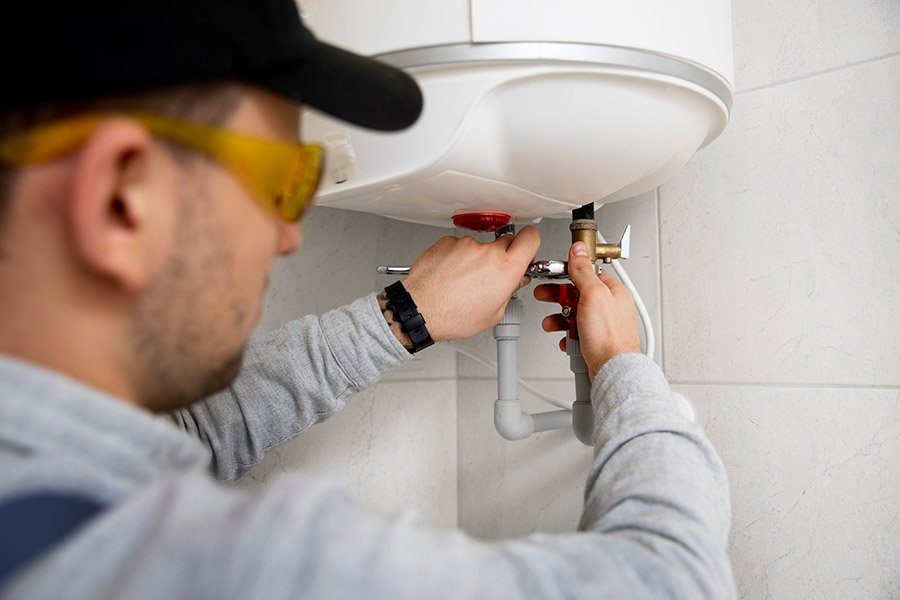
On installation day, the process begins with shutting off the water supply and fuel or power source to the existing unit. The old tank is drained—this takes some time, particularly with a full 50- or 80-gallon tank—and then disconnected and removed. Most plumbers haul away the old unit, so you don’t have to deal with disposal. The new unit is positioned, connected to existing water lines and fuel or electrical supply, and tested for proper operation before the plumber leaves. The entire process for a standard tank replacement typically runs two to four hours. A tankless installation or one that requires additional work on gas lines or venting may take longer.
After installation, your plumber should walk you through the new unit’s basic operation, show you where the temperature is set (the CDC recommends 120°F to reduce scalding risk and inhibit bacterial growth), point out the pressure relief valve and what to do if it activates, and leave you with documentation including the warranty information. If you have questions about maintenance—when to flush the tank, how often to check the anode rod—ask them before they leave. That’s the right moment to get those answers.
Pro Tip: Take a photo of your new unit’s model number, serial number, and installation date before your plumber leaves—and save it somewhere you can find it. If you ever need warranty service or want to look up maintenance schedules, having that information instantly available saves a lot of time digging in a utility closet.
How to Extend the Life of Your New Water Heater
Once your new water heater is in, the decisions you make over the following years have a real impact on how long it performs well. A unit that receives basic, consistent care regularly outlasts a neglected one by several years—and those extra years represent thousands of dollars of extended value from an appliance you’ve already paid for.
Flush the tank annually. Sediment from minerals in your water supply accumulates at the bottom of storage tank heaters over time. A yearly flush—where you drain a few gallons from the tank’s drain valve to clear out that buildup—keeps the heating element working efficiently and slows the corrosion process on the tank lining. It takes about 20 minutes and requires no special tools. Your plumber can show you how on installation day, or you can ask them to include it as part of a routine maintenance visit.
Check and replace the anode rod every 3–5 years. The anode rod is a sacrificial metal rod inside your tank that corrodes so the tank itself doesn’t have to. It’s one of the most important and most overlooked components of tank water heater maintenance. When the rod is depleted, the tank lining becomes the next target for corrosion. Replacing it on schedule—typically every three to five years, or more frequently in homes with very hard water—is one of the highest-impact things you can do to extend tank life. In hard water areas, having your water tested and considering a water softener can slow the depletion rate of the anode rod and reduce sediment accumulation dramatically.
Keep the area around the unit clear. Water heaters need adequate clearance for both safety and performance—particularly gas models, which need proper airflow for combustion. Storing boxes, seasonal items, or cleaning supplies directly against the unit is a common habit that can create both safety risks and maintenance headaches.
For tankless unit owners, descaling the heat exchanger annually is the equivalent maintenance task. In areas with hard water, mineral scale can build up on the heat exchanger coils and reduce efficiency significantly. A descaling kit and a recirculation pump are typically all that’s needed, or you can schedule this as part of an annual plumbing maintenance visit.
Pro Tip: Ask your plumber about a whole-home plumbing maintenance plan that includes an annual water heater inspection. Having a professional set eyes on the unit once a year catches small issues—like a softening anode rod or a valve showing early wear—long before they become expensive problems. The cost of a maintenance visit is almost always far less than what it prevents.
Don’t Wait for a Cold Shower to Tell You It’s Time
At Davinroy Plumbing, we help homeowners replace their water heaters on their terms—before failure, without the emergency stress, and with the right unit for their home and budget. Whether you’re due for an upgrade or just want a professional to assess what you’ve got, we’re here to help you make the smart call.
Frequently Asked Questions
When should I proactively replace my water heater?
Most plumbers recommend planning a proactive replacement when your unit reaches 10–12 years old, even if it’s still functioning. At that age, the risk of failure increases significantly, and replacing on your schedule rather than the heater’s timeline lets you avoid emergency costs and make a more informed choice about the replacement unit.
How do I know if my water heater is about to fail?
Key warning signs include rusty or discolored hot water, rumbling or popping noises during heating cycles, visible corrosion or moisture around the base of the unit, inconsistent water temperatures, and a pressure relief valve that’s been discharging water. Any of these symptoms on a unit over eight years old warrants a professional inspection promptly.
Is it worth upgrading to a more efficient model when I replace my water heater?
In most cases, yes. If your current unit is 10 or more years old, modern replacements—particularly heat pump water heaters and high-efficiency gas models—are significantly more efficient than what was available a decade ago. The energy savings over the new unit’s lifespan, combined with available tax credits and utility rebates, often make upgrading the financially smarter choice even compared to a same-type replacement.
How long does a water heater replacement take?
A standard storage tank replacement by a licensed plumber typically takes two to four hours from arrival to completion. Tankless installations, or jobs that require gas line upgrades, new venting, or electrical panel work, may take longer. A good plumber will give you a realistic time estimate during the consultation before any work begins.
Can I replace a water heater myself to save money?
While DIY replacement is technically possible, it’s not recommended for most homeowners. Water heater installation involves gas lines or high-voltage electrical connections, proper venting, pressure and temperature settings, and code-compliant permits—all of which require licensed expertise. Improper installation can void your manufacturer’s warranty, fail local inspections, and in serious cases, create carbon monoxide or fire hazards. The cost of professional installation is well worth the peace of mind.
How can I make my new water heater last as long as possible?
Annual tank flushing to clear sediment, anode rod replacement every three to five years, and keeping the area around the unit clear are the three most impactful maintenance habits. For tankless units, annual descaling of the heat exchanger is the equivalent priority. In hard water areas, a whole-home water softener can significantly reduce mineral buildup and extend equipment life across your entire plumbing system.