Burst pipes in the middle of the night or sudden sewage backups can turn a quiet Belleville, Illinois home into a scene of chaos. Plumbing disasters are more than just messy—they threaten property, disrupt daily routines, and can quickly spiral into costly repairs if not handled right away. Rapid emergency plumbing intervention is essential for stopping water damage and protecting your family’s health when time is of the essence. Find out how immediate action by experienced professionals can make all the difference.
Table of Contents
- What Defines Emergency Plumbing Services
- Common Plumbing Emergencies In Homes
- How Rapid Response Minimizes Damage
- Costs And Risks Of Delayed Action
- Choosing The Right Emergency Plumber
Key Takeaways
| Point | Details |
|---|---|
| Emergency Plumbing Services | These services offer 24/7 rapid response to urgent plumbing failures, preventing extensive property damage and health risks. |
| Common Emergencies | Major issues include water line ruptures, sewage backups, gas leaks, and sudden water heater failures that require immediate attention. |
| Importance of Quick Response | Timely intervention minimizes repair costs and serious damage, as water can lead to significant issues within hours. |
| Choosing a Qualified Plumber | Verify credentials, including licensing and insurance, to ensure you have a reliable professional for urgent situations. |
What Defines Emergency Plumbing Services
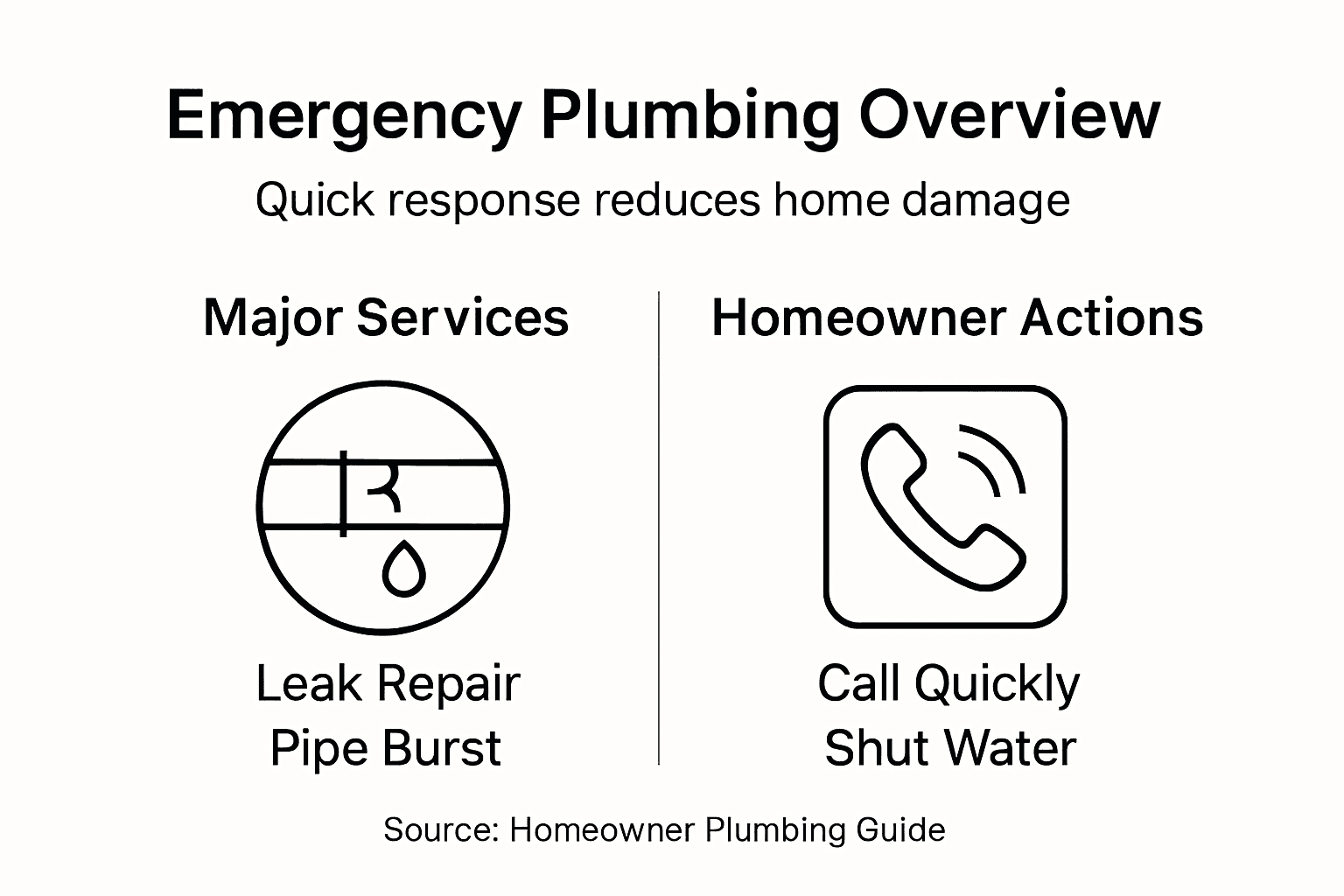
Emergency plumbing services represent rapid response interventions designed to address critical and immediate water system failures that pose significant risks to property and health. These services focus on resolving urgent plumbing issues that cannot wait for standard business hours and require immediate professional attention.
The core characteristics of emergency plumbing services include:
- Immediate response within 1-2 hours of contact
- 24/7 availability, including nights, weekends, and holidays
- Rapid diagnostics of critical plumbing failures
- Prevention of potential extensive property damage
- Restoration of essential water and sanitation systems
Specifically, emergency plumbing services address scenarios that demand urgent intervention, such as rapidly deteriorating water infrastructure that could compromise residential safety. These scenarios might include sudden pipe bursts, severe sewage backups, gas line leaks, or complete water system failures that threaten structural integrity and resident health.
Professional emergency plumbers are equipped with specialized tools and expertise to diagnose and resolve complex issues quickly. They understand that time is critical when managing potential water damage, which can escalate from minor inconvenience to major structural compromise within hours.
Key Emergency Plumbing Intervention Areas:
- Water line ruptures
- Sewage system blockages
- Gas line emergencies
- Critical pipe leaks
- Sudden water heater failures
Common Triggers for Emergency Plumbing Services:
- Extreme temperature fluctuations
- Aging infrastructure
- Unexpected mechanical failures
- Natural disasters
- Severe weather conditions
Pro tip: Always keep your emergency plumber’s contact information readily accessible, preferably saved in your phone and posted in a visible location at home.
Common Plumbing Emergencies in Homes
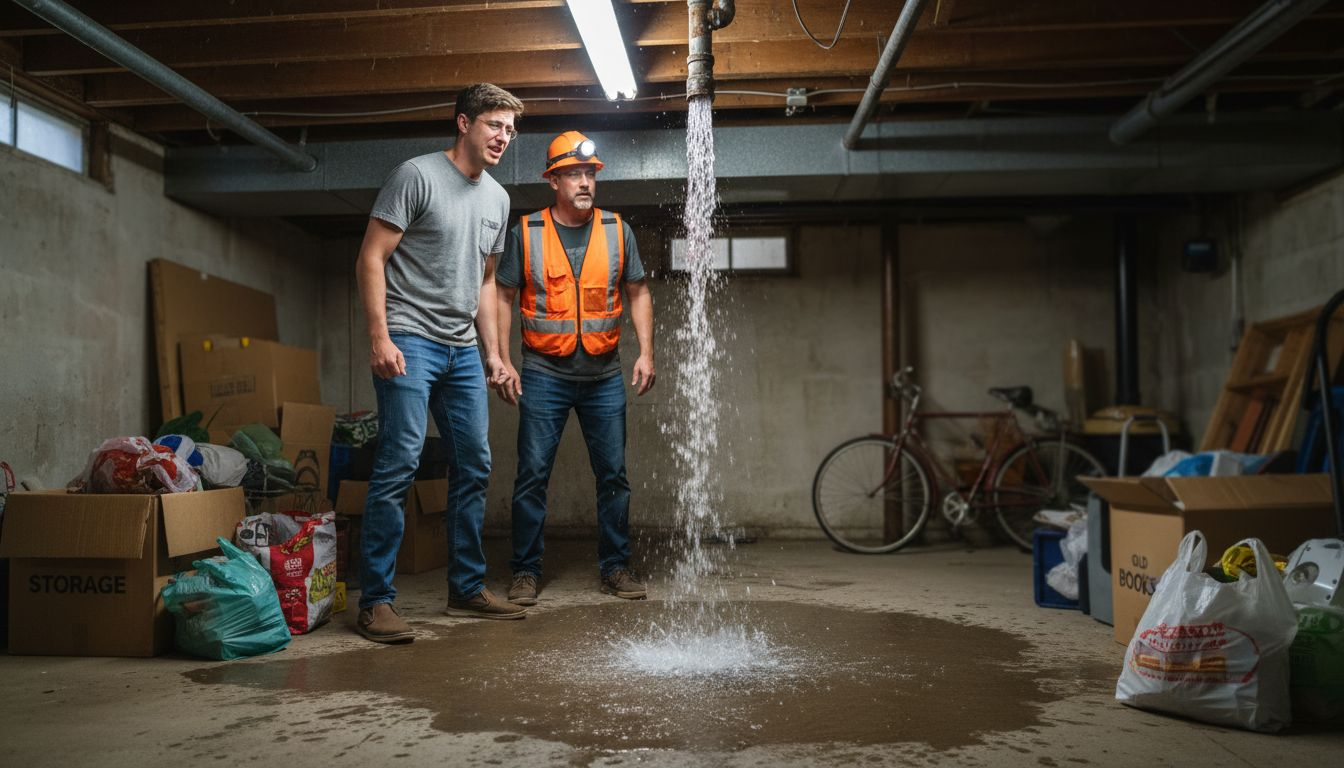
Homeowners face numerous critical plumbing emergencies that can rapidly escalate from minor inconveniences to major structural disasters. Residential plumbing failures represent significant risks that demand immediate professional intervention to prevent extensive property damage and potential health hazards.
Major Categories of Plumbing Emergencies:
- Water line ruptures
- Sewage system backups
- Gas line leaks
- Severe pipe bursts
- Complete water system failures
- Sudden drainage blockages
Critical plumbing emergencies can emerge from multiple sources, including aging infrastructure, extreme weather conditions, and unexpected mechanical failures. Water leaks pose particularly dangerous risks, potentially causing:
Here’s a quick reference to common home plumbing emergencies and their possible immediate impacts:
| Emergency Type | Immediate Impact | Urgency Level |
|---|---|---|
| Pipe burst | Flooding, water damage | Critical |
| Sewage backup | Health hazard, foul odors | Severe |
| Gas line leak | Fire/explosion risk | Extreme |
| Water heater failure | No hot water, leaks | High |
| Main line blockage | Loss of water access | Serious |
- Structural wood rot
- Mold growth
- Electrical system damage
- Foundation deterioration
- Interior wall and ceiling destruction
Warning Signs of Potential Plumbing Emergencies:
- Unexplained water puddles
- Unusual gurgling sounds in pipes
- Sudden water pressure changes
- Discolored water discharge
- Persistent musty odors
- Visible pipe corrosion
Homeowners should understand that water system disruptions can create immediate risks to daily living and household safety. Professional emergency plumbers are trained to diagnose and resolve complex issues quickly, preventing minor problems from becoming catastrophic home maintenance challenges.
Potential Consequences of Delayed Plumbing Emergency Response:
- Extensive water damage
- Significant repair costs
- Potential health risks from contamination
- Compromised structural integrity
- Reduced property value
Pro tip: Install water leak detection sensors in high-risk areas like basements, bathrooms, and near major appliances to catch potential emergencies before they escalate.
How Rapid Response Minimizes Damage
Time is the most critical factor in managing plumbing emergencies, where every minute can mean the difference between a minor repair and a catastrophic home disaster. Disaster preparedness strategies emphasize the importance of swift action to prevent widespread damage and reduce potential economic losses.
Key Benefits of Rapid Plumbing Emergency Response:
- Prevents extensive structural damage
- Reduces total repair costs
- Minimizes potential health risks
- Protects valuable home infrastructure
- Limits secondary damage from water exposure
Professional emergency plumbers understand that immediate intervention can dramatically reduce the scope and severity of potential damage. Water can create devastating consequences within minutes, quickly penetrating walls, floors, and foundational structures. A burst pipe releasing just 50 gallons of water can destroy drywall, compromise electrical systems, and create long-term mold growth risks.
Damage Progression Timeline:
- 0-24 hours: Minor water absorption
- 24-48 hours: Significant structural softening
- 48-72 hours: Mold development begins
- 1 week: Potential structural compromise
- Beyond 1 week: Extensive renovation required
Homeowners must recognize that emergency infrastructure restoration is not just about fixing pipes, but preventing cascading failures that can compromise entire home systems. Quick professional assessment can identify hidden damage, recommend immediate mitigation strategies, and prevent long-term structural integrity issues.
Warning Signs Requiring Immediate Response:
- Unexplained water pooling
- Sudden pressure drops
- Unusual sounds in plumbing systems
- Discolored water discharge
- Visible pipe deformation
- Unexpected increases in water bills
Pro tip: Develop a pre-planned emergency contact list with professional plumbers, ensuring you can make a single quick call during critical moments.
Costs and Risks of Delayed Action
Delaying plumbing emergency repairs can transform minor issues into catastrophic and financially devastating home maintenance challenges. Plumbing system failures demonstrate how procrastination can exponentially increase repair costs and potential property damage.
Financial Impact of Delayed Plumbing Repairs:
- Minor leak repairs: $150-$500
- Delayed repair water damage: $5,000-$25,000
- Structural restoration costs: $10,000-$50,000
- Mold remediation expenses: $2,000-$10,000
- Potential home value reduction: Up to 20%
Professional assessments reveal that water damage compounds rapidly, with seemingly insignificant leaks potentially causing thousands of dollars in structural compromises. A small unaddressed pipe leak can release hundreds of gallons of water, saturating walls, floors, and creating ideal conditions for mold and structural deterioration.
Potential Health Risks of Delayed Action:
- Bacterial contamination
- Mold spore proliferation
- Compromised indoor air quality
- Increased respiratory disease risks
- Potential waterborne illness transmission
Homeowners must recognize that water emergency interventions extend beyond immediate repair costs. Prolonged water system disruptions can create significant health risks, especially for vulnerable household members like children, elderly, or individuals with compromised immune systems.
Escalating Damage Timeline:
- 24 hours: Initial water absorption
- 48 hours: Potential microbial growth
- 72 hours: Structural material deterioration
- 1 week: Advanced mold establishment
- 2 weeks: Significant structural compromise
Warning Signs Indicating Urgent Action:
- Persistent musty odors
- Unexplained water stains
- Sudden increase in water bills
- Wall or ceiling discoloration
- Warping of wooden surfaces
- Unusual sounds in plumbing systems
Pro tip: Create a dedicated emergency repair fund with 3-6 months of potential repair costs to mitigate financial stress during unexpected plumbing emergencies.
Choosing the Right Emergency Plumber
Selecting an emergency plumber requires careful consideration to ensure swift, reliable, and professional service during critical home maintenance challenges. Professional plumbing credentials are essential for guaranteeing quality repairs and preventing potential additional damage to your home’s infrastructure.
Critical Qualifications to Verify:
- Current state licensing
- Comprehensive insurance coverage
- Positive professional reputation
- Specialized emergency response training
- Transparent pricing structure
- Verified customer reviews
- Immediate response capabilities
Homeowners should understand that not all plumbers are equipped to handle emergency scenarios. Urgent plumbing situations demand specialized skills, advanced diagnostic tools, and the ability to rapidly assess and resolve complex infrastructure problems. A true emergency plumber must combine technical expertise with quick decision-making capabilities.
Red Flags When Selecting a Plumber:
- No verifiable licensing
- Unwillingness to provide references
- Extremely low price estimates
- Limited communication channels
- No emergency contact protocols
Professional emergency plumbers recognize that complex repair scenarios require more than basic technical skills. They must quickly diagnose issues, understand potential cascading damage risks, and implement immediate solutions that prevent further home infrastructure compromise.
Recommended Screening Process:
To help with decision making, here’s a summary of key factors when choosing an emergency plumber:
| Screening Factor | Why It Matters | Questions to Ask |
|---|---|---|
| Licensing and insurance | Ensures legal and financial recourse | Is license/surety current? |
| Response time | Reduces damage and costs | How quickly do you arrive? |
| Pricing transparency | Prevents unexpected expenses | Will I get an upfront quote? |
| Diagnostic technology | Accelerates problem resolution | What tools will you use? |
- Request proof of current licensing
- Verify insurance coverage details
- Check online customer ratings
- Confirm emergency response time
- Ask about diagnostic technologies
- Understand pricing transparency
- Review warranty and guarantee policies
Key Communication Elements:
- 24/7 emergency contact number
- Clear service commitment
- Upfront pricing estimates
- Technical expertise demonstration
- Professional communication style
Pro tip: Compile an emergency plumber contact list before an actual crisis occurs, ensuring you have verified professionals ready to respond quickly during unexpected home maintenance challenges.
Protect Your Home with Trusted Emergency Plumbing Services
Facing sudden water line ruptures or unexpected drainage blockages can feel overwhelming and stressful. The article highlights the serious risks of delayed plumbing emergency response including extensive structural damage, costly repairs, and health hazards. At Davinroy Plumbing, we understand how critical immediate action is to prevent these escalating issues and ensure your home remains safe and secure.
Our skilled team offers rapid, professional solutions such as hot water tank service, frozen pipe repair, and toilet repair right here in the Belleville, Illinois area. With 24/7 availability and expert diagnostics, we help avoid the severe consequences discussed including mold growth and compromised foundation integrity. Don’t wait for minor leaks to turn into costly disasters.
Take control now with reliable emergency assistance from Davinroy Plumbing.

Need urgent plumbing help? Visit our website for immediate support and learn how our expert team can protect your home’s plumbing systems. Save our contact today so you are ready to act fast when every minute counts.
Frequently Asked Questions
What are emergency plumbing services?
Emergency plumbing services are rapid-response interventions for critical plumbing issues that require immediate attention, such as burst pipes, severe sewage backups, or gas line leaks.
How quickly can I expect an emergency plumber to arrive?
Emergency plumbers typically respond within 1-2 hours of contact to minimize damage and address urgent plumbing issues efficiently.
What are some common plumbing emergencies homeowners face?
Common plumbing emergencies include pipe bursts, sewage backups, gas line leaks, water heater failures, and complete water system failures.
Why is prompt response important for plumbing emergencies?
Prompt response is crucial as it prevents extensive structural damage, reduces repair costs, and minimizes health risks associated with water damage and contamination.